


Pediatric Specialty Care in Canada

Gifts of all kinds help Shriners Hospitals for Children Canada Provide the Most Amazing Care Anywhere

Specialty Care Provided at Canada


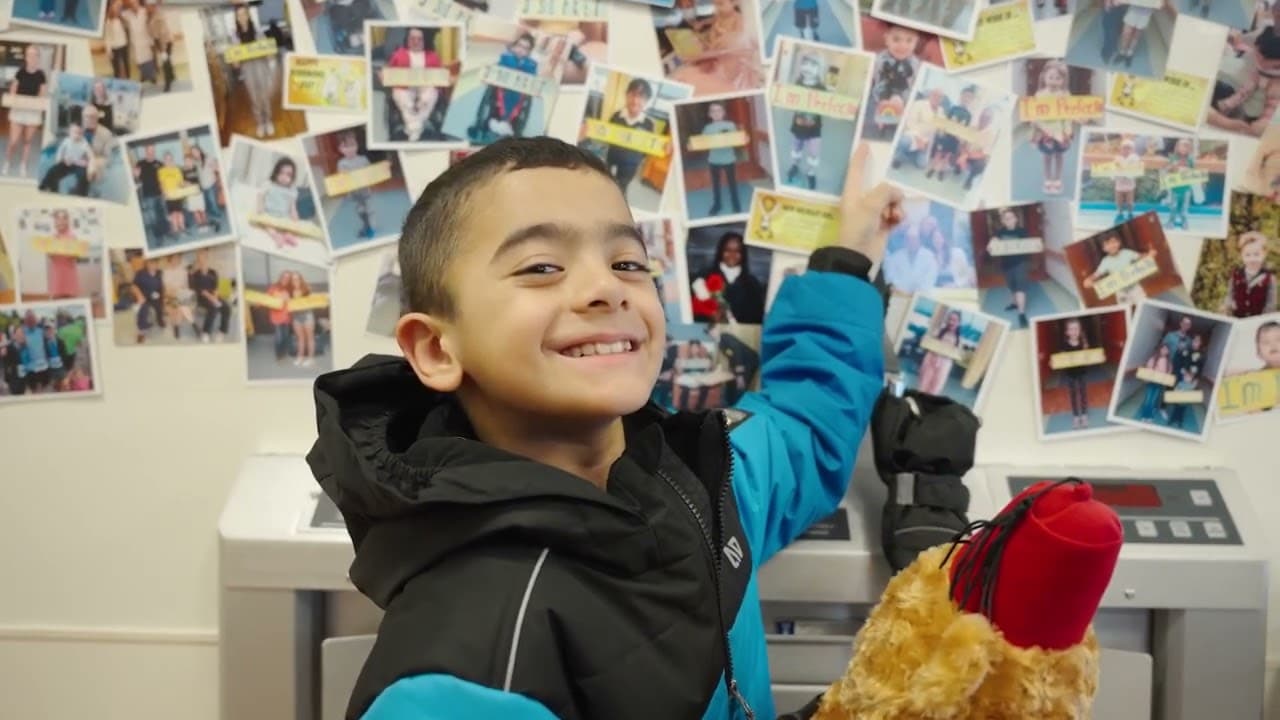
Welcome to Shriners Hospitals for Children Canada
Our mission at the Shriners Hospitals for Children Canada is to really make the lives of patients and families the best that it can be and really lift up patients who need our services to fulfill the most optimal version of themselves.
We take care of all orthopedic problems in pediatrics, but we super specialize in really rare conditions and complex conditions that involve orthopedics and other specialties.
A lot of the patients that will come to the motion lab are surgical candidates. So the surgeon may be able to do a great plan with just medical imaging, with the clinical history of the patient and some observation. Whereas the motion lab will bring real numbers that we can measure that the eye cannot catch necessarily. And so it allows us to be more precise in the diagnostic of the patient, and then it allows us to better plan the treatment.
Rehabilitation is not easy. It's a tough part. So when we do rehabilitation, we did the surgery, now we have the tough part, moving with difficulties. And it's saying, "Okay, now you're going to have to do something that you might not want to do." So how do we make that enticive for a patient to do this? And when I see parents writing back and saying, "Going to physio is the best part of my day," I said, "Oh, we're doing definitely something right."
Without Shriners, I know my leg wouldn't be straight. And Shriners, it's really special because there's only two doctors that can do this type of operation. So I know I couldn't just go to another hospital. It was here or I wouldn't do it. So everything is super for me and the future looks bright ahead.
Shriners is incredibly unique because we take the time for our patients. We take the time to listen, to understand what their needs are. Our team in social services, we try and make it as simple as we can for our families. Families coming from out of province, having a greeter meet them at the airport, drive them to the hotel. We make sure that our families are comfortable in what they do and in their decision of coming to our hospital, knowing that our people are the best that you can have right now.
Yeah. This place is definitely like a family because they treat you very nicely here. They treat you like you're one of them. When you come in for an x-ray, they're like, "Hey there, Michael. How are you?" Yeah, everyone that works here definitely has positive attitude, always smiles on your faces. I know a lot of people here. I love them like a family.
When you're a parent that has a child that's disabled, either a wheelchair or has some disability, it's tough on the parents. And when they come to the Shriners and they see other parents that have the same kind of child as they do, it's almost comforting in a way. And they can exchange ideas. I can't tell you how many patients became friends, from different backgrounds, completely. French or English, it doesn't matter, because they have the same kind of disability. They become friends because they see each other in the clinic together. And so we make sure to invite them at the same time. You know what I mean? We make that effort so that these conditions, that these kids feel good and that parents feel great about that. And I think that that's something that we pride ourselves in.
During the treatment when it's really hard on him because he goes through a lot of emotions, anxiety, we always have one nurse that comes to distract him, to play games with him. They bring their virtual goggles so that he doesn't think of the pain that he's going to go through. All these little details make the Shriners so special.
We cover a wide range from the molecular to the bedside of the patient. And that was the vision from the get-go. And I think that the best example that this vision works is that this facility has developed a standard of care for three pediatric metabolic bone diseases. So those now are the treatments that are used throughout the world that were developed here at Shriners Hospitals for Children Canada. And I think it is unique because it has a very high-performing research center, which not all hospitals have.
We are becoming experts. And in certain cases, we are identified as the leaders in North America in rare and complex bone-related disease. For certain, we have the biggest group of patient for osteogenesis imperfecta in North America. But that being said, we want to be identified as a leader in pediatric orthopedics so that when your kid has a rare disease or complex, it's obvious that you're going to come at Shriners. And we want to be that place in Canada. That's part of our vision.
Shriners is special because they have the family kind of vibe. Here you're really going to have care. You're going to be informed. You're going to have support. That is really important. They are human here, not just nurses, not just physicians, not just doctors. They are human. They have human values and this is what makes them different than others. The Shriners are really the one that has my heart.
[Hopitaux Shriners por enfants®; Shriners Hospitals for Children® Canada]
Meet Your Care Team - Shriners Hospitals for Children Canada
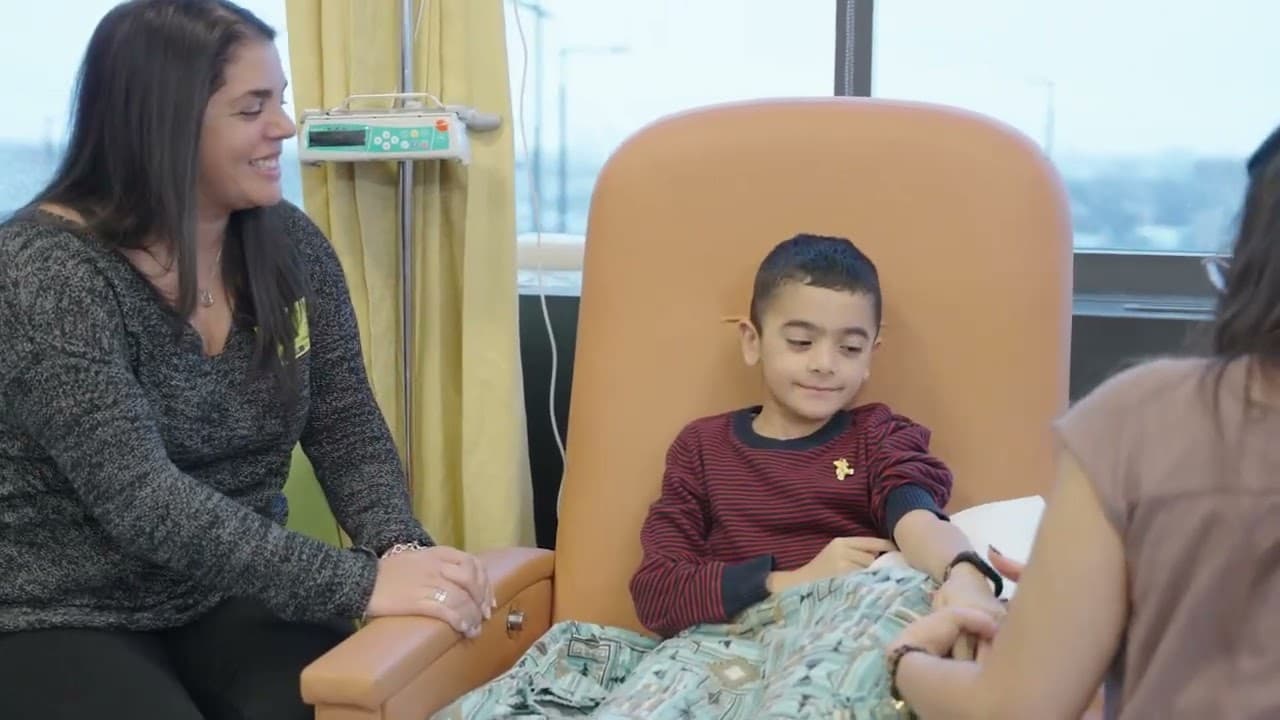
If your child is coming to Shriners Hospital, know that you are going to get the best care anywhere. We have a dedicated team of professionals who truly care about you and your child, and want to help you as best as they possibly can for your child to achieve their dreams, to achieve their optimal functioning, to achieve everything that they have wanted in life.
I've been in this industry for a long time, but I've been here only for two years at the Shriners. And it's incredible what I see because there's something that we don't necessarily see elsewhere. Everything is geared about the family and about the child, and it's all about their experience and their journey through the hospital.
So whether it's preparing them for the surgery, whether it's at the surgery level, whether it's after surgery level, and if it's just knowing them. They're not a patient, they're part of our family. So I think those are the keys. It's the culture. It's the way of everybody wanting to be around the patient and making that patient feel that experience as easy in a difficult moment that they go through.
It allows these kids to come here and feel special. Because the amount of funding that the Shriners provides us, and everybody else, allows us to give patients that extra special care. It's like a holistic approach. We don't just look at a foot. If we see the child's in trouble, we'll look at something else. We'll ask about their social history. And we can do that because we don't feel pressure. We have that luxury of taking our time, seeing these patients. That's ideal. And who benefits? The patients benefit because they get that special care and that quick care and access.
Here we are eight pediatric orthopedic surgeon. We all do general pediatrics, but each one of us has a focus, a subspecialty. So my special areas are children with osteogenesis imperfecta, which is a metabolic condition of various severity, but they are born with brittle bone disease. So they can develop very severe deformities, multiple fractures all along their life. And many of them, if severe, they are unable to stand or walk. And just seeing a child before the surgery not able to stand and walk. After the surgery, they walk in front of you. And their smile, it's a huge motivation, and the self-satisfaction and the gratitude from these people is just amazing.
We have three different profession involved at the motion lab for the patient and the analysis. So basically when the patient comes in the motion lab, they will be greeted by the engineer who's in the lab, but also the physical therapist. But then physical therapist will take charge of that patient. So asking questions for the history of the patient, and then they will guide the patients throughout the motion analysis. So it takes time to put the markers on the patient because you need to find the exact spot where to put that. They're really the cornerstone of the motion lab, although everyone is very important in the motion lab, but they will do more of the clinical work once a patient is there.
I love what I do here because it targets really the two things that I like to do. Seeing patients, and at the same time, doing research about that. And that combination is very special here. For me personally, I don't just want to sit in the lab. So I do go and see the patients with bone diseases and other conditions here in the hospital. If you can tell people what you found about them and what are the next steps based on your findings, that's very inspiring.
I love what I do because it makes a difference for all these families. And I feel that I can contribute in working with a team that provides excellent care.
I love what I do because I'm making a true difference in our patients' and family life. And that's really what drives me to run the motion lab is how can we better help those patient that comes visit us? And it's a never-ending process, and that's really what motivates me to do my job.
I will never leave this place. I'm very happy where I am, and I'm very grateful for the opportunity and the privilege that I'm working here. So yes, I love my job.
I love what I do because almost all the time my kids do better. Almost all the time I have somewhat, somehow changed their life for a better path.
[Hopitaux Shriners por enfants®; Shriners Hospitals for Children® Canada]
A Day in The Life - Shriners Hospitals for Children Canada
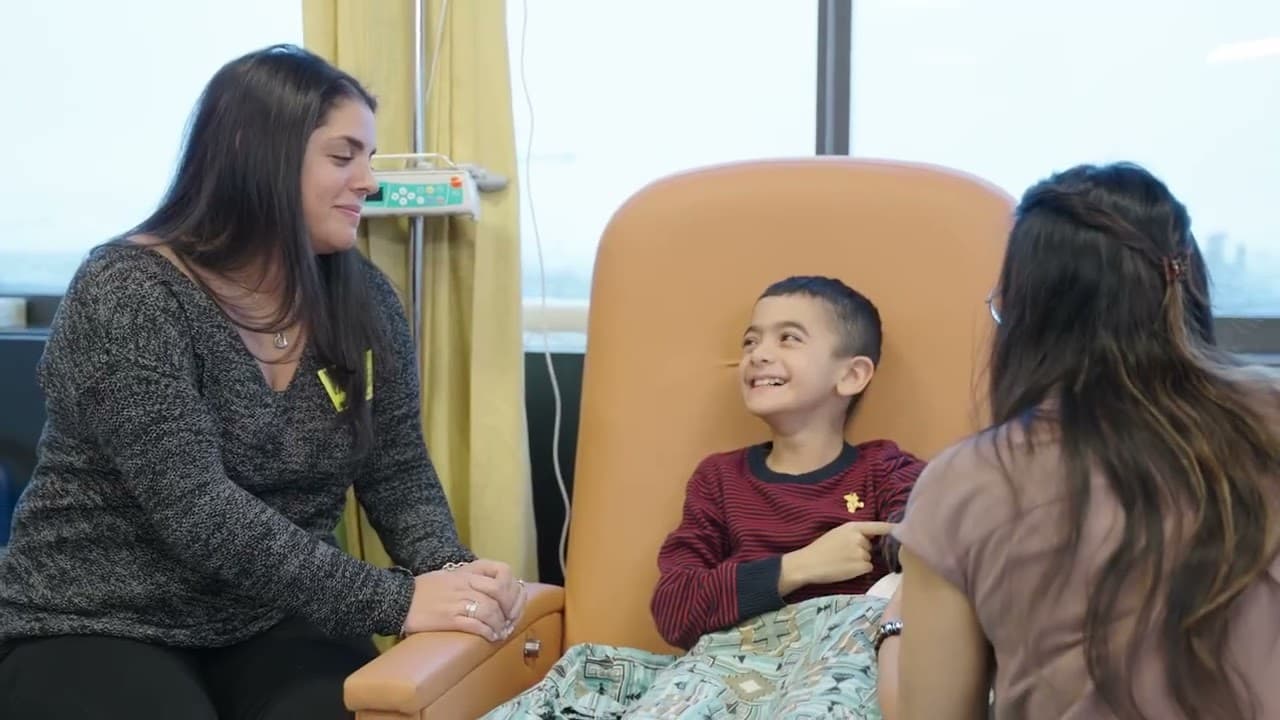
We're studying the phenomena of Shriners care, and we now call it the Shriners experience. We completely work with the family and the kids to make their experience at our hospital one of a kind. So as soon as we set up a first visit, right away they will be treated with compassion because that's a very strong component of who we are. Also, when children and family come, especially for those who travel, they're already surrounded by a Shriner volunteer. And even it starts at the reception, you can tell right away that you're being treated like a human being. We are listening to your needs. And from there, the journey starts.
So, from the moment you enter the door, many people say you feel differently when you walk into a Shriners Hospital. And that comes from the reception greeting, from the tailored care, from trying to coordinate services, to trying to ensure that you have as little disruption to your everyday life as possible, and that we understand your need. We understand that there are other pressures at home, that there are other demands on your time, but that you need to also care for a child that is in need of specialized treatment. So we try to go along with our patients and families in that journey and do it together.
When we have these complex kids, it's just not me that takes care of them, it's myself, it's the nurse, it's the OT, it's the PT, it's the social worker. If it's other specialties, they come in here. We have a phenomenal rhizotomy clinic, which involves cerebral palsy, and involves neurosurgeons, neurologists, and we work as a team. And then parents like when they see three different professionals taking care of their kid. And not only that, conversing after to discuss what's best for the child. I think as a parent with a child that has multiple issues, and if that issue has orthopedic issues and others, we're great for that.
Luckily, Shriners Canada had the treatment for this condition called osteogenesis imperfecta, it's type five, so it's a rare condition, but it's one of the mild ones. So, we come here once or twice a year to get his treatment done, and it takes about half a day, where he gets his injection, we meet with a lot of people, from the nurses, then we have physio that comes sees us, occupational therapists, social workers to come and make sure we, as a family, are doing well. We have the doctors, there's a big staff that always comes and sees us and makes sure that everything's going well with him.
For physiotherapy, what we do is, let's say for a person that has a physical disability, or has had an operation, well, we try to get them back to mobilize themselves, get them back to walk, get them back to doing their regular activities. So, we use techniques that are proven, that are scientifically proven that work, and if they can't, well, then we adapt. We look at different ways of doing things to help improve the function of the child so they can go back to their regular daily activities.
Since has been 19 years since I'm here. This is my home, literally. So, I don't know, everyone is really kind. They did ergotherapy, physiotherapy, surgeries on my wrists to me, to be able to move my hand, on my foot, to be able to walk... Because I wouldn't be able to walk or talk. So, I should be in a wheelchair, but now I'm not, I can walk, I can drive a bicycle, I can skate ice, I can do everything. And this is because of them that I'm here now.
I think families should know is that it's all around holistic care. Yes, you have the medical staff, you have the physical staff, but you also have the social services, you have the school services, you have the nutrition services. So, you don't get a care specific to the actual condition, but really everything that goes around. These are all the services that the Shriners provide that, it's not just when you're in the hospital, which is great and awesome, but the after as well
.
Another thing is that when you see your kids suffer, the staff will do everything so you can be at ease.
[Hopitaux Shriners por enfants®; Shriners Hospitals for Children® Canada]
Research: A fundamental pillar at Shriners Hospitals for Children Canada
The Shriners Hospitals for Children Canada research program is an integral part of the system-wide Shriners Children's research program, driven to find cures and treatments that allow us to provide amazing care to children everywhere.
The vision of the Research Center from the get-go has always been, it's not enough to just treat the disease. We need to understand what's behind the disease, and intervene in the most targeted way.
I think that the parents and the children benefit from the vision the Research Center was created with. What I like to say is the research of today represents the cures of tomorrow.
So Shriners Hospitals for Children Canada has specifically been dedicated to pediatric research, to make sure that we are focusing on what is important to children and young adults, and that we're able to take the research that's out there and apply it to what is important to their lives. For example, we've been a part of Solutions for Kids in Pain, which is a national nationwide strategy to help with pain management, and that we look at decreasing pain, anxiety, the whole potentially negative connotation that can come with having a procedural intervention. And we make sure that we're involved in cutting edge research so that our pediatric patients don't have to experience a discomfort when they come to us.
What research really brings is over time it will allow us to pinpoint better the treatment, because if we understand that some patient does not react well to some treatment, we might suggest new ones so that those patients can also benefit from a surgical treatment.
Research is really critical to the quality of our care, because through research you can learn what works and what doesn't work. And then to find ways that are better, that improve the quality of life of the children, of their parents. Research really challenges the status quo. So we can't be satisfied with the way we're doing things, but rather we must always strive for excellence and to change the way we're doing things if it means improving the services that are provided to the children we see and their families.
What we are doing now in particular is genetic testing, because the genetic field has exploded over the past 10 years. There is more techniques, they are getting cheaper, more accessible. So we can offer now genetic testing to basically all our patients where we expect to find any genetic cause of their condition. And that is also exciting, because you try to find what causes the problem in each patient.
Here at Shriners, we have children with OI of all the different types who come to us from different parts of Canada, the US, but also from around the world, who have come from at least 60 different countries. So we benefit from having all these rich types of children with OI that allows us then to quickly catalyze our efforts to make sure that the research that we're doing can make a global impact.
The support we get from Shriners through the peer-reviewed grant system allows us to do more research, and to go further in our knowledge on how to help the kids that we see every day.
[Hopitaux Shriners por enfants®; Shriners Hospitals for Children® Canada]

We Understand the Unique Medical Needs of Children


What's Happening at Shriners Hospitals for Children Canada

News
Quebec's University Football Community Unites for Children's Health at the 38th Annual Shrine Bowl

News
The Hidden Resource: How Child Life Services Helps Families Cope at Shriners Children's

Patient Story
Maddox's Unbreakable Spirit: Living with Osteogenesis Imperfecta

News
Shriners Hospitals for Children Canada Achieves a National First in Pediatric Motion Analysis
Help Us Provide the Gift of Hope and Healing

Keep In Touch
Join our mailing list to stay up to date on everything that's happening at Shriners Children's.