Pediatric Orthopedic Surgery Fellowship

Overview: Pediatric Orthopedic Surgery Fellowship
Dr. Vanna Rocchi:
The fellowship that you choose to go to is going to match you the best, and I without a doubt can say that I would choose this fellowship again and again.
Dr. Vedant Kulkarni:
The ideal pediatric orthopedic fellowship program provides the full breadth of experience that a fellow might experience in independent practice, but also gives them the depth so that they can become a subspecialist in an area of their interest. And that's really what the Shriners and UC Davis Pediatric Orthopedic Fellowship does. The fellowship provides a tremendous amount of flexibility. We intentionally have just one fellow a year for 11 staff, and many of the staff have practices both at UC Davis and at Shriners. That really allows a fellow to tailor their experience even on a day-to-day, on a week-to-week level, so that they're seeing the most beneficial case for their education.
Dr. Jon Davids:
The fellowship program is embedded into the broader program here at Shriners, and the institution's mission really has three elements. One is taking care of children. The second is performing research, and the third is training healthcare professionals. And so the fellow is involved in all three of those elements during their time here with us.
Dr. Brian Haus:
The benefit of the relationship between the two institutions is that the fellow gets a really full experience. UC Davis is a very busy Level I Trauma Center. It's the main trauma center in Northern California, all the way up until the middle of Oregon, and then all the way through Nevada.
Dr. Michelle James:
The strengths of our program are the teaching ability of the faculty.
Dr. Jon Davids:
Any child who is having surgery to improve their ability to walk will have a gait study beforehand. The data is analyzed and interpreted by a multidisciplinary team. When the child comes to surgery, we review the data in the conference to justify why we are doing what we are doing. And a number of our previous fellows have developed a passion for it during their fellowship, and have gone on to jobs at other children's hospitals where they have started gait labs of their own.
Dr. Brian Haus:
Another thing that makes our fellowship very strong is our sports experience. Myself and Dr. Friel, we're both specifically fellowship trained in sports medicine. We do as complex as they get that you would get in a sports fellowship. You're going to get that as part of your peds fellowship. So our fellows come out of here, if they're interested in sports, they come out and they can do pretty much everything.
Dr. Vedant Kulkarni:
The minimum requirements for graduation from a Pediatric Orthopedic Society of North America accredited fellowship like ours is 250 cases per year. And our fellows are able to vastly exceed that number of cases, going upwards of nearly 400 cases or above during their fellowship year. Among our 11 faculty, each of them has a wealth of subspecialty experience. So that case number not only reflects a large volume of cases, it reflects a high level of complexity. And that is so important as they leave here, to have had experience with the most complex cases, so that they're able to hit the ground running from day one in their practice.

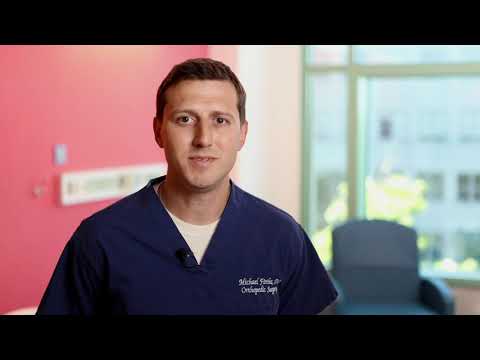
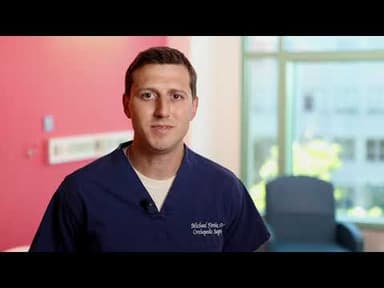
Meet our 2023 Pediatric Orthopedic Surgery Fellow, Mike Firtha, M.D.
Mike Vertha: Hello, my name is Mike Vertha. I'm the current pediatric orthopedic surgery fellow at the UC Davis and Shriners fellowship program. I chose this fellowship because I thought this would be a great place to train and get the full breadth of orthopedic knowledge to help me in my future as a pediatric orthopedic surgeon, and it's been everything that I've wanted and more.
So one of the big highlights of this program has been the morning educational conferences. So we have structured lectures in the mornings, and then we also have pre and post-op conference that I've found to be just a really great learning environment. It's very collaborative, it's very educational, and you really get to learn about the thought process from true experts in the field and just hear how they approach complex care for patients.
So I think in a lot of ways it's really helping prepare me for my future. One big advantage is the lifelong mentorship that I think I'm going to receive from here. I'm really developing relationships and getting to work alongside people that I know I'm going to be able to reach out to in the future and really will be able to help me in the future.
One big thing that I think has been an advantage of this fellowship is the opportunity to do junior level attending call the second half of the year. So that has allowed me to really get an intro into what next year's going to be like when I'm on my own, but still having that safety net of having resources to, I can send a text message or call an attending and get feedback on my plan and things like that. So it's a good experience to be able to get to experience what it's going to be like next year, and I think that's going to be really important for moving on as an attending next year.
So I moved to Sacramento with my wife and my two girls who are two and four years old, and we've absolutely loved Sacramento. Sacramento as a city is incredible in that there's great parks, good schools, there's great food and lots of things to do around the city. But what we've really enjoyed is the opportunity to take weekend trips to pretty much anywhere you'd want to go. You have wine country nearby, there's great opportunities for skiing. You have Tahoe. And then there's the Bay Area and everything that's associated with that. You can go to the beach in Monterey, and everything's just a short drive away for a great weekend trip, so we love that.
So one thing for fellowship applicants to think about, I think, is to remember that this is your last opportunity to get a formal educational environment, and it's really good to be at a place where you're going to have full range to any cases that you want to see. One of the benefits of this program is that I think being the only fellow in a really large orthopedic department allows you to pretty much be involved in any case that you want to be involved in. You don't have to fight any other fellows for cases. You don't have to be told where to go. You get full range on whatever you want to see, and I think that's important during a fellowship.
My favorite memory. At the end of the year, it's always kind of a nice time to reflect on the year, and I've had the opportunity to hang out with Dr. Leshkar and Dr. Kalkarney in their homes, and my wife and daughters have went over to their house and gotten to spend time with them and their families. It's just great to develop full relationships where these are people that have been teaching me over this past year, but now I get to continue to foster these relationships and have them to continue to learn from in the future.
I guess just thank you for the opportunity to be a fellow here. It's been an incredible experience. I really am grateful for the opportunity to be here. The fellowship has definitely been everything that I hoped for and more, and I just feel really lucky to get the opportunity to train here.
[Shriners Children's Northern California logo]

Fellow and Attending Perspectives: Pediatric Orthopedic Surgery Fellowship
Abby Howenstein, M.D.:
It was really the wide scope of things that they offer here. They have specialists for everything. And then the partnership with UC Davis with a level one trauma center right across the street. I was able to do as much trauma as I wanted, see everything from limb deformity to hip preservation to general pediatric orthopedics. So really everything was offered and so many attendings offered me the opportunity to see so many different points of view and ways to manage different conditions.
Michelle James, M.D.:
Our partnership with UC Davis is absolutely essential to our function. It started in the mid 1990s with a group of people who had a really amazing vision of how Shriners could partner with UC Davis on, as we say, both sides of the street. It has grown, it has changed, but it still persists as a, I think, almost unique advantage to both institutions.
Claire Manske, M.D.:
Between the two institutions there's nothing in pediatric orthopedics that you're not going to see. It's an incredibly broad and diverse patient population that we serve. Both sides of the street, meaning UC Davis and Shriners Hospital really are experts in taking care of those broad, diverse conditions.
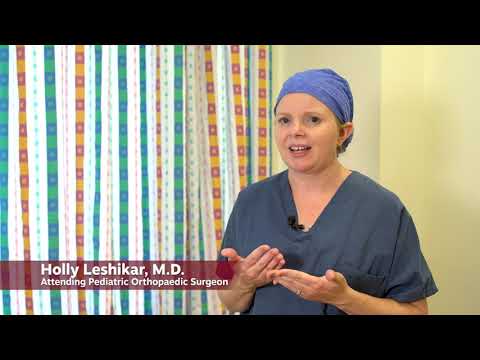
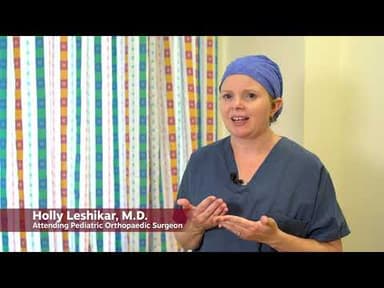
Holly Lesikar, M.D.:
It's a really unique fellowship and I think that's because oftentimes you have a place like Shriners where you have all the zebras and you have some of the most unique pediatric orthopedic conditions. And that's what you're doing day to day and that's all you see. And sometimes that comes with a lower volume. When you combine it with the busiest level one trauma center in California, it becomes all of a sudden a incredibly high volume program with not just the zebras, but the day to day things that you're going to be seeing in any sort of practice that you go into.
Abby Howenstein, M.D.:
Every subspecialty represented, and there's really a thought leader in all of pediatric orthopedics represented in each one of those. And all of the attendings are really excited to have you around to teach you to offer up their experiences. And even beyond that, once I unfortunately have to leave, they have offered to always be willing and always be ready to answer any questions I might have going forward when I'm out on my own.
Joel Lerman, M.D.:
I have really have an incredible group of partners and really good teachers, really good surgeons. They're all people I'd be happy to send my own kid to.
Holly Lesikar, M.D.:
We see our roles as teachers in the fellowship program, basically to take somebody who is probably a phenomenal resident and been a great learner, their whole residency, and then build them into a pediatric orthopedic surgeon.
Nicole Friel, M.D.:
The fellows are totally dedicated to what they're doing. So we work with their residents as well, and they're wonderful to work with, but the fellows come in with usually a plethora of experience and they're great surgeons already and we're just building on top of that with, just kind of, their charisma to learn even more about our patients.
Claire Manske, M.D.:
They're just such eager learners, they come in just as wanting to be a sponge, wanting to just take advantage of everything this opportunity has to offer, everything this fellowship has to offer. I love when they get excited about taking care of the patients that we treat, really getting invested in the child's care and taking care of that patient and families.
Michelle James, M.D.:
They are far enough along in their training that they look at it with new eyes and might question things that we do, and sometimes those are really good questions and we need to reconsider the way that we take care of kids. So I enjoy it from both angles I learned from them and hopefully they learn from me.
Abby Howenstein, M.D.:
It's really great having so many attendings here who all really want you to be around and are really excited to teach you. And it offers a lot of flexibility, so it's kind of a choose your own adventure type situation. Where if there's something really exciting case I get to be there and there is no question about other people getting in the way or that type of thing. It's really a ability to know what I want to do with my future and make sure I'm getting that education. We have everything from hip arthroscopy, which isn't offered in many pediatric orthopedic fellowships to the P-A-O and many times on the same patient. And then we see the surgical hip dislocation side of things. So really any pathology involved that my need hip preservation is represented here. And again, I'm the only fellow so I'm involved in all of those cases if I want to be.
Abby Howenstein, M.D.:
One of the beautiful things about Shriners is not only does it have a general pediatric orthopedics base, but it also has the once in a career type cases that come along and you get to see those multiple times per year. So, being able to treat the really crazy conditions helps me be ready for the general stuff that I will probably see once I get out into practice.


Loading component...


We Understand the Unique Medical Needs of Children
Keep In Touch
Join our mailing list to stay up to date on everything that's happening at Shriners Children's.