The Inpatient Rehabilitation Unit: Relearning Life
With the immediate surgical and wound concerns managed, Gideon’s journey truly took root in the inpatient rehabilitation unit (IRU).
“We [in the IRU] are the bridge from this horrible, traumatic, life-altering event to the life after,” said Maya Evans, M.D., medical director of the IRU. “When you consider the position patients were in before their stay, inpatient rehabilitation is magic.”
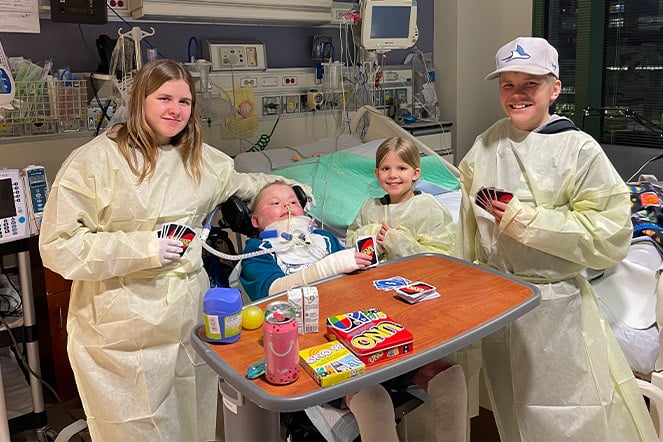
For Gideon, that magic was hard-won. Upon admission, he was unable to sit up to a 90-degree angle, use the toilet independently, or walk. His hips were extremely tight from months of limited mobility. The IRU, led by physicians including Dr. Evans, is grounded in the belief that traumatized children heal best with a multidisciplinary care team. Gideon’s days were highly structured, involving at least three hours of intense therapy six days a week with physical therapists, occupational therapists and recreational therapists.
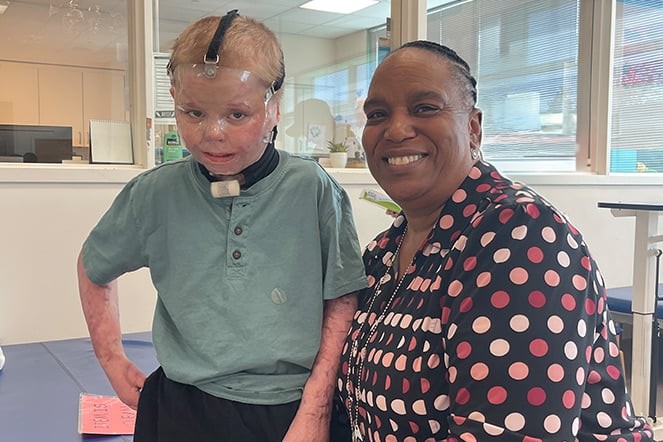
His main therapists – Celyne, Trang and LaTanya – became his coaches and cheerleaders. They worked with him on everything from hip flexibility to building the core strength needed to sit upright. The family documented his progress on social media, sharing videos of his determined efforts during rehabilitation exercises. He progressed from being bed-bound to using a walker and, after four months of daily therapy, to walking on his own.
“When he came, he couldn’t sleep or sit up 90 degrees,” said Mirja. “When we left, he didn’t need his wheelchair! It’s amazing.”
Re-entering the World
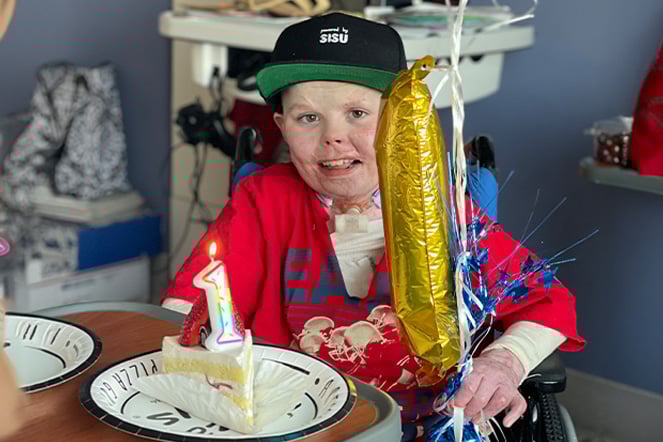
After five months of intense, comprehensive care, Gideon was discharged on June 27 – his 11th birthday. The timing was a perfect celebration of his resilience. But his discharge was not a goodbye. Gideon continues to be a Shriners Children’s patient, returning for follow-up appointments to manage the next phases of his care, including potential laser treatments and ongoing orthotic needs with custom splints and pressure garments.
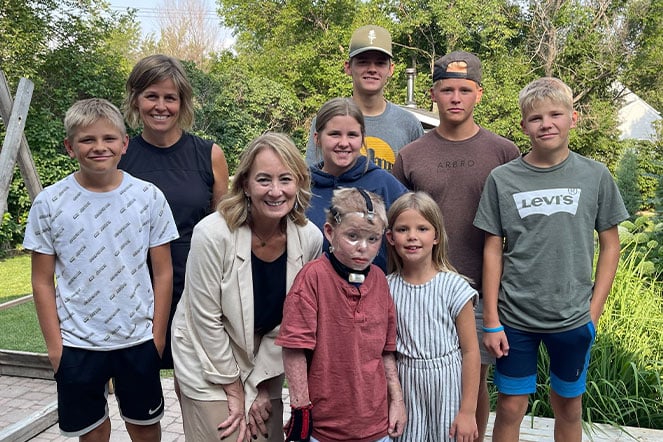
An essential part of supporting a child’s overall health and well-being is addressing the emotional and social transition back to their community. For Gideon, that meant returning to his small K-12 school in North Dakota. Shriners Children’s Northern California’s school re-entry program, led by education and transition coordinator Kerry Marini, is designed to make this overwhelming process smoother and more positive. Kerry traveled to North Dakota to educate Gideon’s entire school community – teachers, classmates and all 100 students – about his injury and his recovery.
“When Kerry said she would come to North Dakota, I said, ‘Really?’” said Mirja. “And I just started crying. I was like, yeah, that’s crazy.”
Gideon’s parents now reflect on their Shriners Children’s experience not just as a single episode of medical treatment, but as a lifelong partnership.
“It feels so awesome to be here,” said Mirja. “Plastics, burns, basic X-rays. Being home and worrying and worrying, then coming here? I don’t worry as much.”
For Gideon and his family, Shriners Children’s was the bridge that carried him from surviving back to living, and remains the steadfast guide supporting his every step forward.
Today, Gideon’s life is filled with the sounds of his favorite hobbies – the swift clicking of a controller as he plays video games and the familiar narration of his Harry Potter audiobooks, which he has listened to over 15 times. He’s back to reading comic books and dreaming of adventures, both digital and real. His journey required the courage of a hero, and now with the ongoing support of his Shriners Children’s team, he can focus on growing, learning and enjoying life.