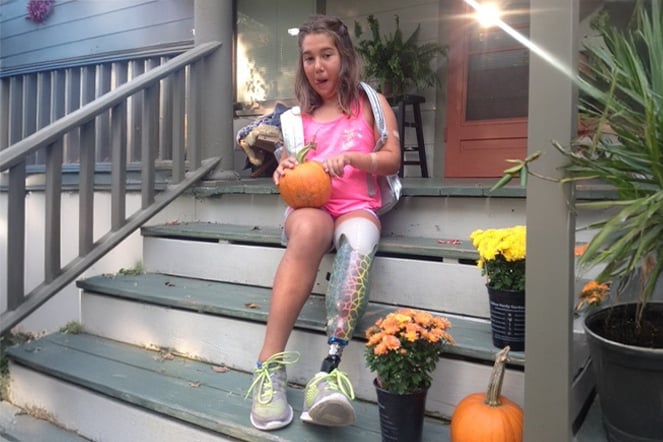
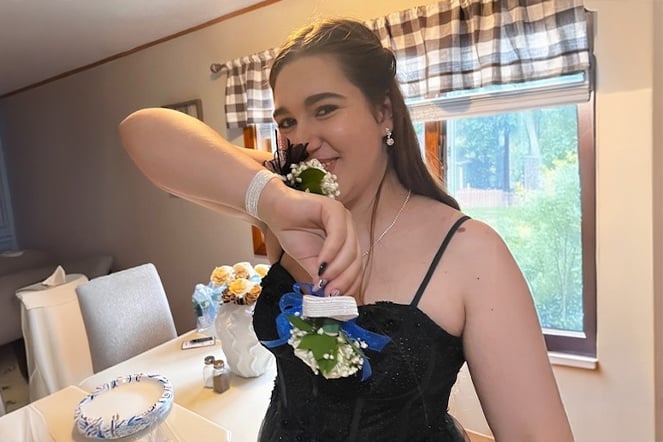
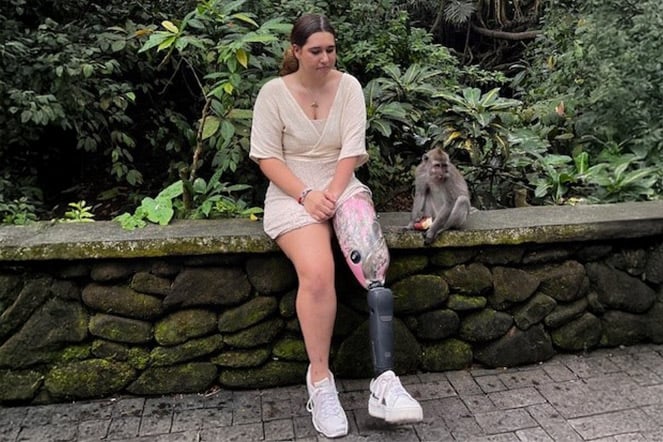
Attending the prom is a high school tradition that many teenagers look forward to with great excitement and anticipation. For Aleia, her junior prom was especially meaningful. Thanks to the Pediatric Orthotic and Prosthetic Services (POPS) team at Shriners Children’s New England, she was able to hit the dance floor with her friends wearing a prosthetic knee that has opened many new possibilities for her.
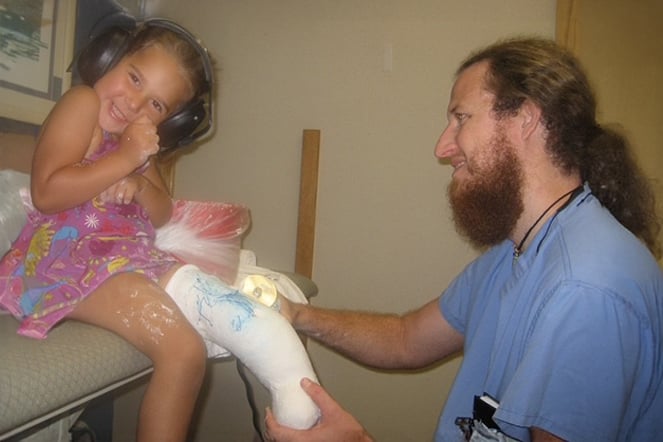
Aleia became a patient at Shriners Children’s New England at the age of 3 after a partial amputation of her left leg. Aleia’s parents traveled from their home in Syracuse, New York, to meet with Brock McConkey, CPO, prosthetics and orthotics manager at Shriners Children’s New England in Springfield, Massachusetts. He was committed to working with them to determine what prosthesis would best meet Aleia’s needs. “Brock has always been creative and open-minded, and so willing to work with us to figure things out,” said Aleia’s mom, Nicole. “That’s why we drive all the way out here.”
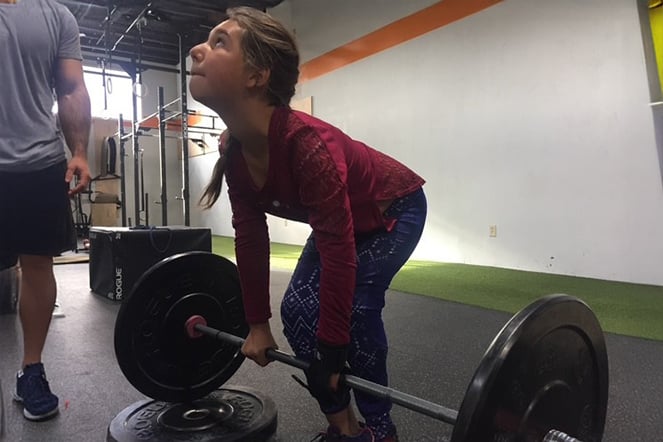
As Aleia got older and pursued more activities, she found her mobility was sometimes limited by the prostheses she was wearing. Her family began to discuss the possibility of a microprocessor knee, or MPK, with her care team, which had grown to include physician assistant Adam Iwanski, PAC, and Lael Luedtke, M.D., orthopedic surgeon and medical director at Shriners Children’s New England.
The MPK has a built-in computer that adjusts to a patient’s unique gait and allows them to walk with more efficiency and stability. It gives patients the ability to better control their stance and shift their weight with greater ease. “As patients enter their teenage years, it’s important to start evaluating the wear and tear on their sound side,” said Brock. “If you rely too heavily on one limb over time, you will wear it out. Looking long-term, technology like the MPK really helps to reduce that strain.”
According to Brock, before a patient receives the MPK they go through a trial to learn how it works, what it feels like and if it will meet their needs. “We first look at the activities they are involved in to determine if the computerized knee would be beneficial,” he said. “During the trial, we want to make sure the patient feels the benefit, and we want to help them be successful by learning to use the MPK to its fullest potential.”
Before she could participate in a trial and receive the MPK, Aleia first needed to undergo further surgery on her left leg. Dr. Luedtke performed a through-knee amputation to allow for additional prosthetic options, including the MPK.