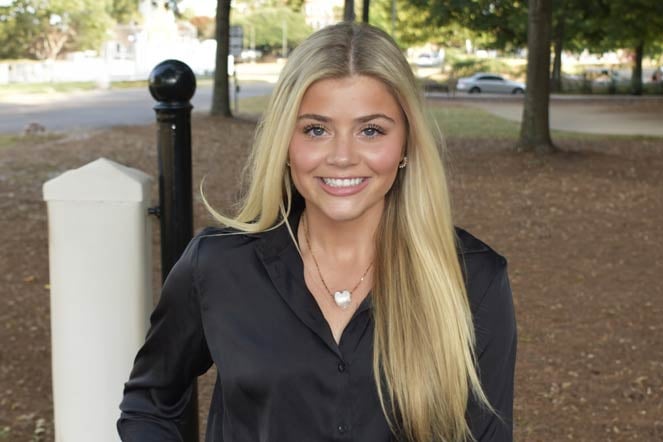
Allie was always described as an active, spunky, sassy and caring child.
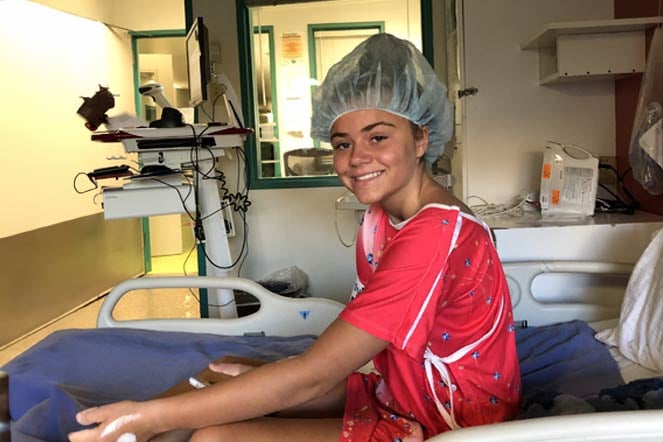
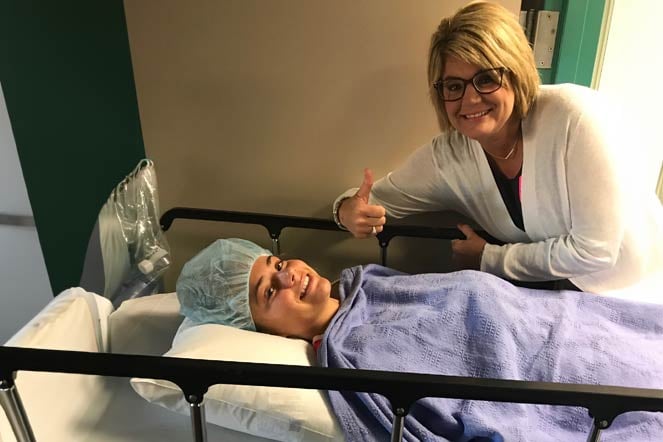
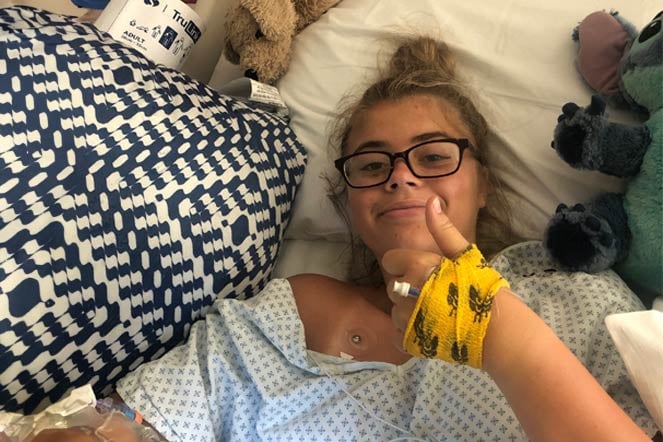
Growing up, she was always busy, participating in dance, soccer and softball teams. She was even a cheerleader for a short time. So, when she found out that she had scoliosis and needed to undergo spine surgery, she thought it would delay, or even stop, many of her plans.
As a preteen, Allie noticed that her right ribcage poked out more than normal. She told her parents and they took her to a local doctor, who told her it was nothing alarming. The physician said she had a tiny curve in her spine, but that it was not in a concerning range that needed treatment. However, like most children, she became self-conscious about her physical differences.
“I became more aware of the fact that other people’s ribs were not protruding out of their shirts,” Allie said.
Allie remembers one night falling asleep as her mom scratched her back. She said her mom traced her spine with her fingertips, felt a curve, and immediately knew that something was wrong. The next morning at school, Allie’s mom asked the nurse to examine her, and the nurse concluded that Allie might have a severe case of scoliosis. She was then referred to Shriners Children’s Shreveport.
Allie said she knew nothing about scoliosis at the time of her diagnosis. Her questions were endless, from wondering if she would lose her ability to walk, to thinking she had some form of serious disease.
“The word ‘scoliosis’ was like Greek to me,” Allie recalled. “I immediately assumed the worst. The questions in my 12-year-old brain were never-ending.”
After her first appointment at the Shreveport facility, Allie remembers feeling like her life was over. The doctor told her that she would need to wear a back brace to try to prevent her spine curvature from increasing any more.
“Imagine telling a 12-year-old that she was going to have to wear a noticeable, uncomfortable back brace 23 hours a day,” she said. “I felt as if my life was over. I remember feeling embarrassed, ashamed and weird.”
Like most preteens, Allie attempted to argue with her parents about not wearing the brace, but she said it did not work. She ended up wearing the back brace for an entire year until the summer of 2017. Initially, she said the curve in her spine seemed to stop growing, and she remembers feeling relieved and thinking this part of her healthcare journey was over.
Allie would continue to attend her six-month checkups throughout 2018, but towards the end of that year, she remembers feeling like the curve in her spine was getting worse. Not wanting to undergo surgery, she kept her concerns a secret from her parents.