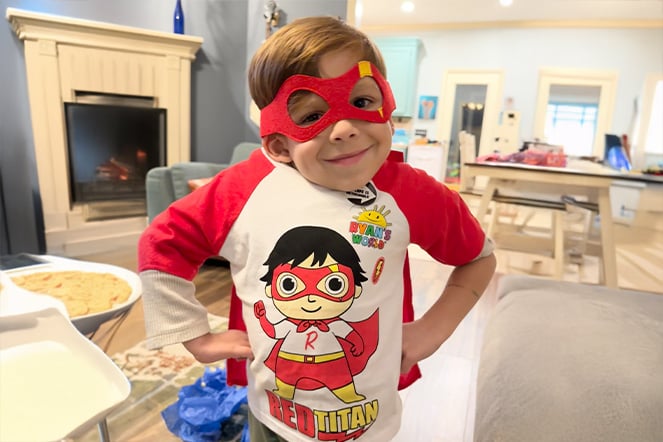
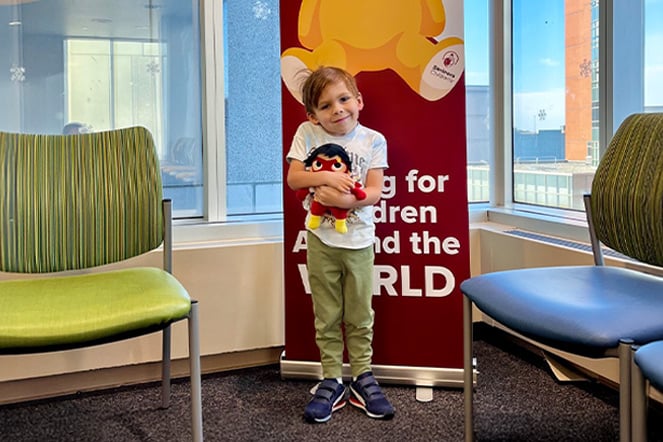
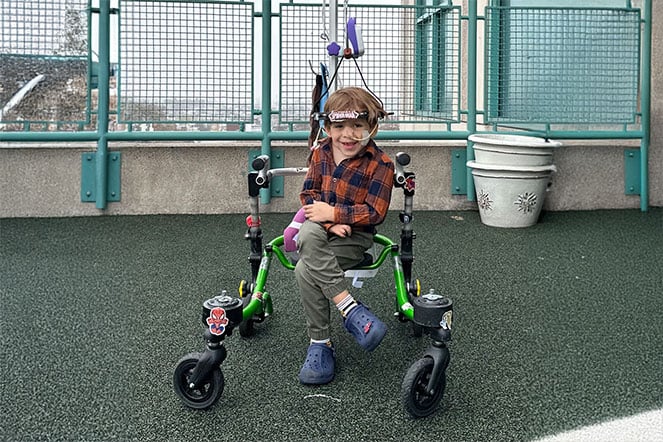
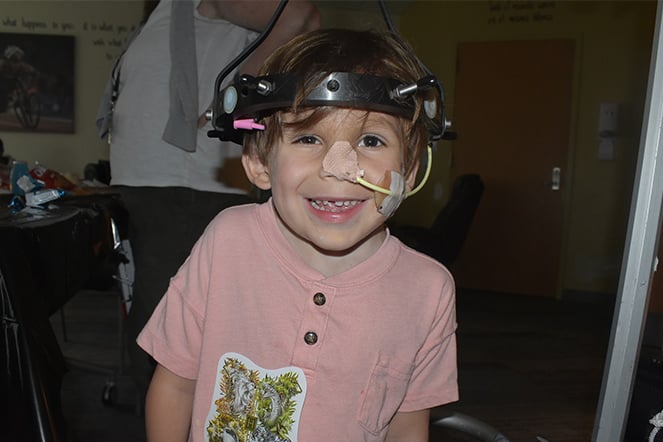
Brooks is a vivacious 5-year-old boy from Mississippi who does not let his complex medical journey stop him from accomplishing everything he wants to.
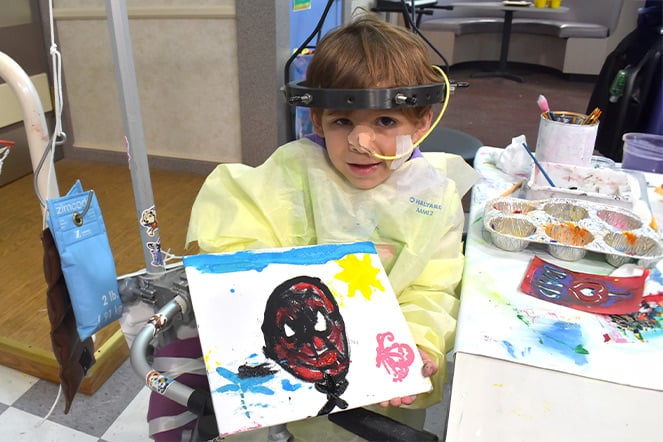
He can still run down the hospital hallways in his halo traction, jump up and down in excitement, ride a bike, play air hockey, paint, play basketball with the other patients and shoot webs like Spider-Man. He is strong, confident and wise beyond his years.
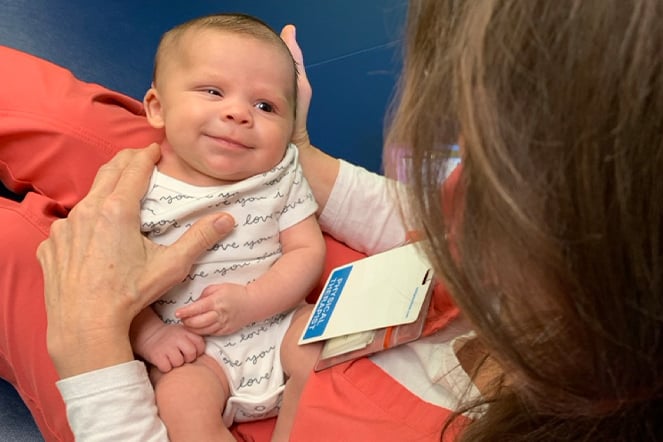
Brooks' parents want to make it clear to other parents going through complex medical situations that, “It’s a journey where you’re figuring out all the different pieces – and sometimes it takes a long time for the puzzle to come together.” In their case, when Brooks was born, the only indication that he might have varying medical needs was when one of his eyes was completely shut.
Several doctors examined the eye itself and determined he had no vision issues. Then at Brooks’ six-week checkup, his pediatrician noticed that his neck wasn’t properly turning. This led to the diagnosis of torticollis, a condition in which a child's head continually tilts to one side. It occurs in about one in every 300 children, and affects firstborn children and twins more frequently. As a result of this diagnosis, Brooks went to physical therapy when he was 6 weeks old for help moving his neck. His physical therapist realized that his lack of neck movement was a bone issue, not a muscle issue. After this discovery, Brooks was taken to get X-rays and an MRI.
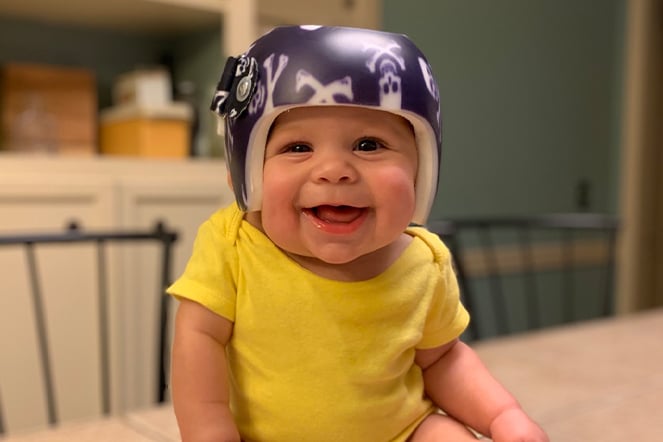
After these scans, the doctors diagnosed Brooks with Klippel-Feil syndrome, a rare condition which occurs when bones in the neck abnormally fuse together before birth, and Sprengel’s deformity, a congenital disorder that causes one shoulder blade to be raised higher than the other. When Brooks was 6 months old, he was diagnosed with plagiocephaly, also known as flat head syndrome, which led to Brooks wearing a helmet to ensure the proper shape of his head as he grew.
As time passed and Brooks learned to grip, his parents noticed that he was unable to make a fist or grip with his right hand. Because of their research and access to a collaborative medical team, Brooks' family was able to gain more knowledge about the connections between his lack of grip, his nerve damage and his fusion at the C6, C7 and T1 vertebrae.
Once he was diagnosed, Brooks’ mother, Melody, began researching to try to determine a cause of the nerve damage, and has been working with their medical team to learn even more. She and her husband, Shaun, are determined to find answers to unanswered questions as Brooks’ complex medical needs evolve and change. Despite his nerve damage, Brooks is incredibly adaptive when he needs to grab a hold of things he would typically need two hands for. He will grab objects with his left hand and use his face or body to support the other side, or he will use his left hand and push against his right palm for balance.
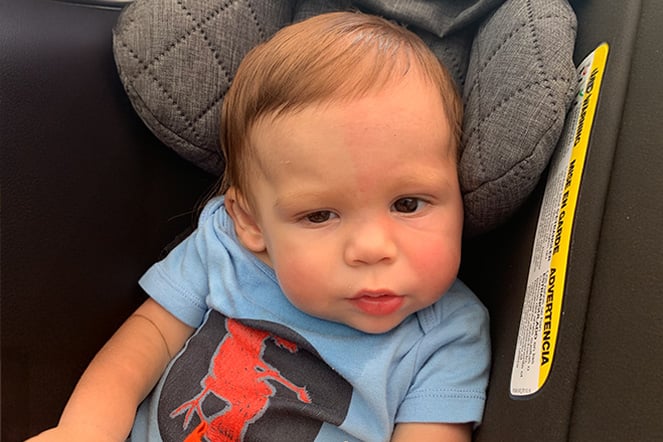
Another nerve condition Brooks has, which is also caused by the fused vertebrae, is Horner's syndrome. Horner’s syndrome is caused by damaged nerves that prohibit sweat production on one side of Brooks’ face as well as causing a drooping eyelid. The effects of this condition can be seen on extra hot days in Mississippi after an afternoon playing outside, when Brooks will have sweat in his hair and half a flushed face on only his left side.
While in Mississippi, Brooks was referred to neurosurgeon Kristin Weaver, M.D., a former spine fellow who trained with Steven Hwang, M.D., at Shriners Children’s Philadelphia. When Brooks was a little over a year old, Dr. Weaver referred him to Shriners Children’s, where he and his family have traveled every year since June 2021 to see Dr. Hwang and Scott Kozin, M.D.
The Wahabi Shriners from Jackson, Mississippi, have also been a great help throughout Brooks’ journey. Shaun, Brooks’ dad, said, “They have generously helped us with our transportation needs from Mississippi in order to receive the care we need at Shriners Children's in Philadelphia.”