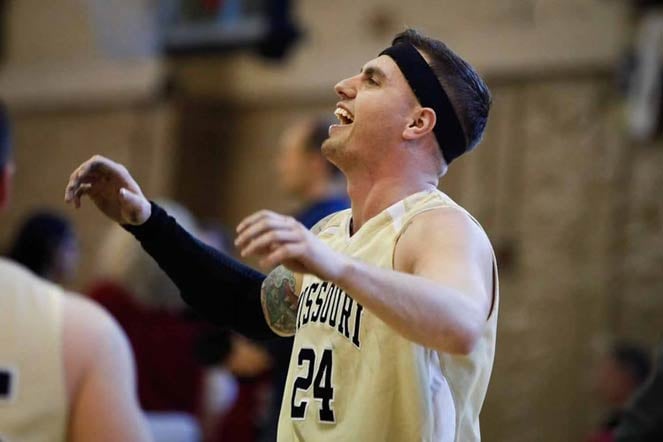
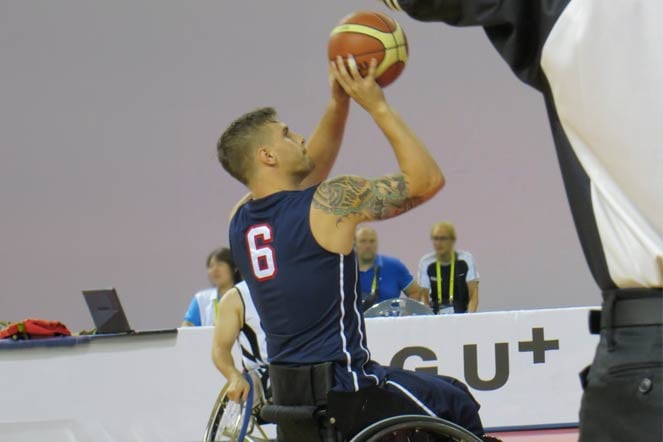
While on the team, he was given the once-in-a-lifetime opportunity to travel the world, visiting South Korea, Colombia, Turkey and more. He even helped Team USA bring home the gold in Bogotá.
Playing simultaneously at Mizzou for five years, and Team USA for three years, he had the jerseys and fame. Nevertheless, amid all of the hustle and bustle, Carter’s flame for the sport slowly died out. He needed a break. He took a six-year hiatus from sports and was ready to call it quits, until an opportunity arose to play in a golf scramble.
His family needed a fourth player for their team, and Carter invited his friend Laura, a former college golf athlete. Their future dates often surrounded the game of golf.
The two married and had two children. By all typical standards, Carter began to live a “normal” life. He and his wife enjoyed much of their time on the golf course, competing against one another for fun.
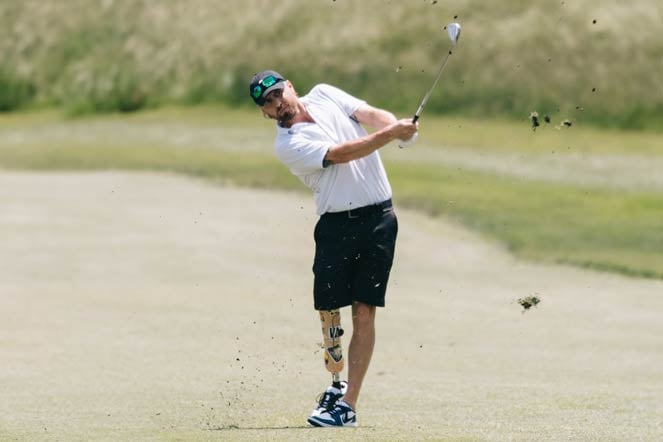
When Carter saw the U.S. Adaptive Open on television, a new adaptive sport captured his heart. He finally saw other incredible athletes that looked like him. Carter’s flame was back, and bigger than ever. This time, he fell for a different adaptive sport. He began to take golf more seriously, and Laura started to caddie, making it a family affair.
For the past two years, he's set his sights on a new goal – the U.S. Adaptive Open. Now, he is qualifying for major adaptive golf tournaments, proving he can truly do anything he puts his mind to.
“Name an adaptive sport, it’s perfect because it’s given this person that would have been a high-level athlete, a chance to compete against other high-level athletes, and it be an equal playing field,” Carter explained.
“I think it's great that he found a way to keep his love of sports alive and continues to evolve and adapt in sports,” said POPS manager Darren Rottmann, BOCP, CPOA, who served Carter when he was a patient.
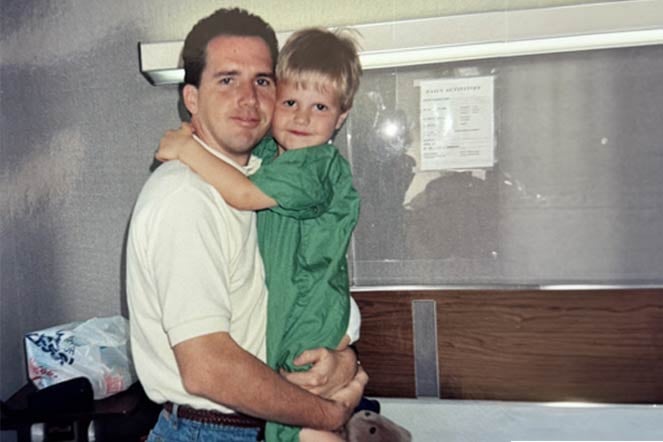
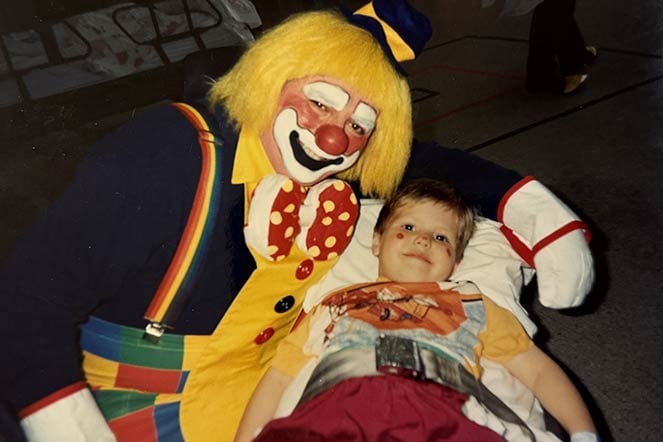
Though amputation took hard work and perseverance, he speaks fondly of his time at Shriners Children's, often sharing our mission with others. “It was the friendliest place. You are special to everybody there,” Carter said.
“You know how many traumatizing moments I had at that hospital, and for me to look back with glowing, happy memories – that is only because the teams that were there, and are still there today,” Carter said.
Now, Carter has made it his mission to inspire the next generation of adaptive athletes.