


Two Teen Girls, Two New Scoliosis Braces
Two Teen Girls, Two New Scoliosis Braces
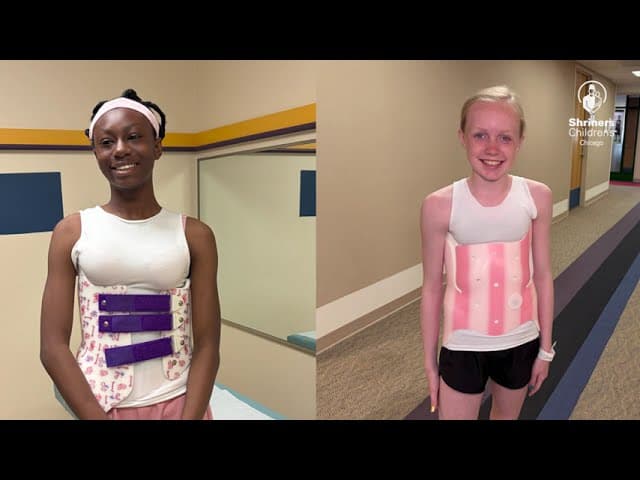
[Shriners Children's Chicago Logo] Narrator: Two 13-year-old girls, two new scoliosis braces, one similar attitude.
Anissa: Don't let it um discourage you to do anything you want to do.
Nora: The brace isn't that scary. Just takes a little getting used to.
Narrator: Anissa can hardly contain herself.
Anissa: It's so pretty.
Anissa: This is my first time getting a bag and I love it so much.
Speaker: Arms up for me.
Narrator: Anissa had unexplained severe back pain. After she was diagnosed with scoliosis, her family brought her to Shriner's Children's pediatric spine team.
Anissa: Sometimes when it would hurt my back, I will have to sit out from certain activities I do.
Narrator: She will wear her new brace only at night to manage a 22-degree curve in her spine.
Shriners Children's Logo; John Ghazi, MD; Pediatric Orthopedic Surgeon: The most common is adolescent idiopathic scoliosis, [music] which occurs after the age of 10.
Narrator: Pediatric orthopedic surgeon Dr. John Gazi says idiopathic scoliosis is a curvature of the spine with no known cause or underlying disease. It's often discovered during teenage growth spurts. Dr. Gazi shows us Anissa's X-ray.
John Ghazi, MD: So, she has this left thoracic-lumbar curve and then when she's in her brace, it corrects that curve.
Nora: I really hopeI get the pink striped one.
Narrator: Nora received her brace from her hospital's on-site POPS clinic. She will wear her pretty and pink brace for 20 hours every day.
Nora: It's not that bad right now, but it's also like my first ever time.
Narrator: Kids with idiopathic scoliosis typically wear braces to manage their curve until they're done growing.
Nora: It's a little like tight [music] and might take some getting used to.
Narrator: Shriner's Children's Pediatric Orthopedic Surgeons treat more than 10,000 patients with scoliosis every year across our health care system. The care for most teens like these two starts with a brace and sometimes progresses to surgery.
Shriners Children's Logo; Kristin; Nora's Mom: There's just a peace of [music] mind that has come with being a Shrine nurse.

