


The Courage to Win: The Stories of Macie and Colton
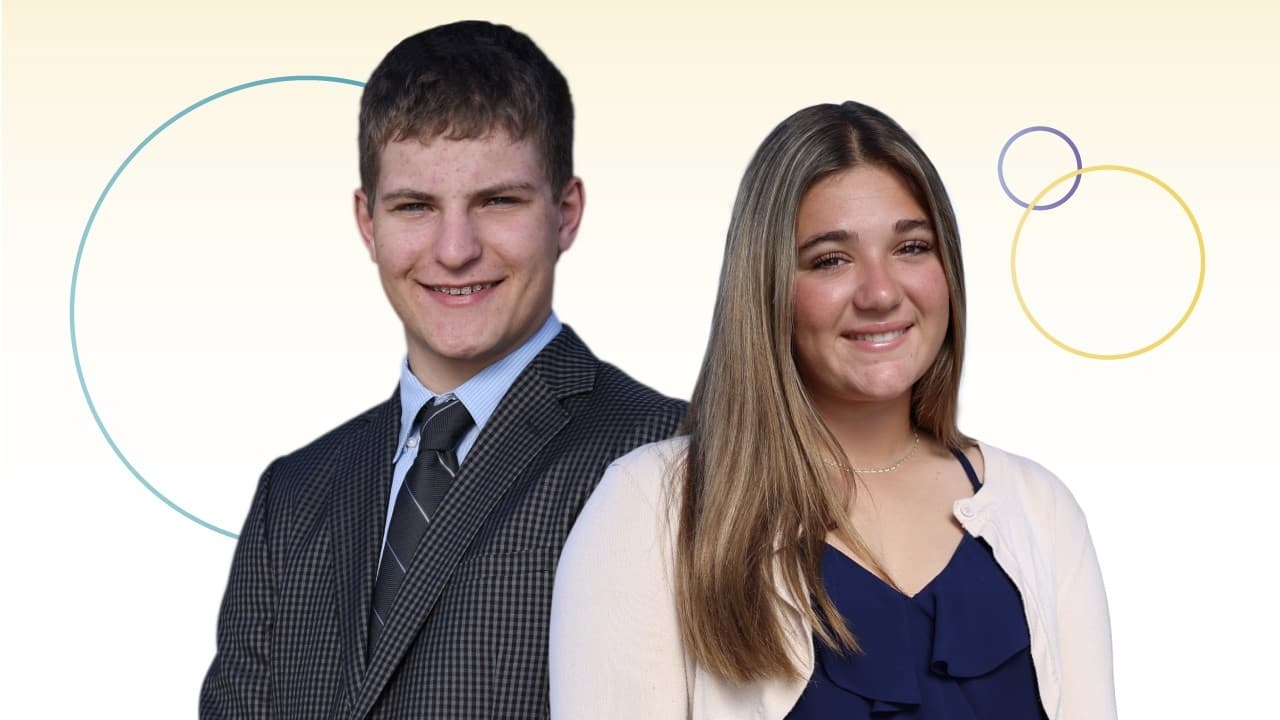
The Courage to Win: The Stories of Macie and Colton
Michelle, Macie’s Mother:
Macie has always been a strong, healthy, active, fun kid from the beginning. She was my first and I was so in love with every little move that she made and everything she did was so cute. Macie loves sports. She started playing softball at the age of seven. She picked it up really easily.
Boyd Farmer, Softball Coach:
I knew from the minute her very first swing that God blessed her with athleticism. Almost all of the girls that play with us at our level are pretty gifted athletes. Macie's another level. She's another level up.
Michelle:
When Macie was 10, we went in for a physical with her doctor, just like any other day. We were having a great time playing ball, hanging out, doing fun stuff, swimming. And, uh, and then it felt like life just stopped that day. The day we found out that she had scoliosis.
Macie, International Patient Ambassador:
When I first got diagnosed, I was scared that it wasn't going to allow me to play softball or any sports anymore, which was very intimidating for me because that was my life, that was what I did, that was my hobby, that was what made me happy.
Michelle:
You know, at that age, at 10, she didn't always wanna wear her brace at night and she would cry, "Mommy, just this one night, I don't wanna wear it. " And that, that fear became reality when, when they said the curve had gotten worse. And, um, when I tell you that I lost my mind the day he said he, that she would need surgery, I've never cried that hard, ever. All I can think about is all the kids I've taken care of after their spinal fusions. And that's what I thought, that's where I thought we were going.
[Bottom third left: Vicki & David, Macie’s Grandparents]
David:
It shocked me. I knew it was bad. I mean, it just, it upset me. It was unbelievable. Just the, the feeling that I got.
Michelle:
Uh, actually the first page I came to was Shriners Children's in Philadelphia and all of the amazing things that they had to say about Dr. Samdani. I gave them a call that day. I scheduled a consultation with him and within a few months we were in Philadelphia and I met Dr. Samdani and almost immediately knew that he was the one that was gonna really help my child. Since I knew that I had to do something to help her to where she didn't have any problems as an adult or in the future, we chose to do the VBT procedure.
Amer F. Samdani, M.D., Neurological Surgery, Chief of Staff Shriners Children’s Philadelphia:
So Macie was the ideal candidate for VBT because she had the correct curve magnitude, the right location in the lower part of her spine. She had growth remaining. And perhaps most importantly, it was a family that really understood what the pluses and minuses of the procedure was because this is a newer procedure.
Michelle:
When they told me she was finished, it was just such a relief. Um, finally got to go in and see her. She looked great. She looked so comfortable, so well taken care of. From that point on in the ICU and the next few days, the doctors and nurses were phenomenal.
Macie:
After recovery, I started getting back into sports six weeks after. And my coach at the time, my assistant coach at the time was a physical therapist and he was so excited to work with me and get me back into what I was doing before. I pitched in my first tournament of the season two months after my surgery and my coach started me in my first game, first inning of the first tournament. And I threw that first pitch and I knew that this had worked and I was back. And I think I struck out the first batter. And that's when I knew that I was back.
David, Macie’s Grandfather:
Without the Shriners working with Dr. Samdani, funding his research, helping him develop this procedure that helped Macie, it wouldn't have happened. You can't get anywhere without funding. And people that need funding that Shriners is helping to develop this procedure, they're working on other procedures. Um, it wouldn't happen. We wouldn't, we wouldn't have Macie back playing ball if Shriners hadn't funded the research for Dr. Samdani.
Michelle:
She can do anything that she sets her mind to and she makes it look easy. She wants to accomplish a goal and she sets out to do it and almost always does it even better than I expected.
Allison, Macie’s Best Friend:
Macie will be a good International Patient Ambassador because she has a great story and she's willing to share it with other people and give kids hope for their future.
Macie:
I am so excited to be an International Patient Ambassador for Shriners Children's because I want to give someone hope one day and I want to share my story because I wanna spread the amazing work that Shriners does. Without Shriners Children's, I don't think I'd be where I am today. I don't think I'd be able to play softball and have zero restrictions and zero complications. I think this was the best thing that could have ever happened to me because I can still go out and do everything that I ever wanted to do. With Shriners Children's being here, I not only have a full support system, but I also have a whole new life that was provided for me through them. And I think that's the most powerful thing that anyone can do for someone.
Becky, Colton’s Mother:
Before we had Colton, uh, you know, it was just Jim and I and Dakota. And we, we wanted, you know, to continue to grow our family. You know, and so we were happy when we found out we were expecting him and then, you know, the changes that brought along, you know, the uncertainty of not knowing once we found out there was maybe some issues.
Colton, International Patient Ambassador:
As my legs were measuring different lengths and just looked like something was gonna be wrong so they gave us the preliminary diagnosis of fibular hemimelia. Well, uh, we were supposed to be delivered in Wichita due to my mom going into labor six weeks early, I was delivered in Hayes, Kansas, just 15 minutes from here. So, uh, pretty much then the diagnosis was confirmed, fibular hemimelia. I had legs were different lengths, four toes, uh, ankles growing abnormal ankle. Knew something was wrong.
Jim, Colton’s Father:
Both Becky and I were like, you know, we, we feel like we got good insurance and we think we ought to save Shriners monies and care for the people that don't have the good insurances or maybe no insurance and, and need that help. And, uh, my dad's cousin, whose name is Dana, Dana told my dad, he said, "It's not about the money. It's about getting the best care anywhere.
Becky:
You know, fast forward to when he was a year and 19 days old, we went back to St. Louis, for his amputation surgery.
Jim:
In the waiting room, in walks a nurse and handing your 1- year-old over to a nurse and out she walks the door with your baby. Needless to say, we cried. We asked, "Are we doing the right thing?" And then we prayed. And he answered it.
Perry L. Schoenecker, M.D., Orthopedic Surgery:
The foot was amputated when he was 12 months old. We had to also straighten out the shin bone. In Colton's situation, in retrospect, it was very much the right decision. It's worked out exceedingly well for Colton and we're glad we were able to participate in the shared care of this patient.
Colton:
How are you?
Speaker 1:
I'm so good.
Becky:
When we went back in February of 2010, they told us he'd be walking. Within an hour to an hour and a half after being fit with that first prosthetic, because before his surgery, he was not able to walk. He was pulling himself up on furniture, but not walking.
Darren Rottman, Certified Prosthetist, POPS Director, Shriners Children’s St. Louis:
And by the end of the appointment, Colton is walking out the door with helping mom and dad heading to physical therapy and, uh, you know, I, I think it was just a moment for everybody where they all just, we all took a, a breath, a sigh of relief and, and they realized everything was gonna be good and - They just stretch out. It just depends on who you are. So I grabbed his hands and kinda helped him along. And within probably no longer than 35 minutes maybe, he was walking, holding my hands.
Becky:
Has it always been an easy road? No, it hasn't. There's been questions by him.
Speaker 7:
Uh-oh, uh-oh. Shut up, shut him down.
Becky:
But he's a very strong-willed kid and it's helped him to get through the amazing support system of family. His family's very important to us. The support system of them, the support system of the Shriners Children's staff and doctors has been very amazing.
Colton:
There was a time when I was probably 7 or 8 years old. Um, it was hard. I was kinda the point where I was gaining my personality and who I was and, uh, was the kinda the time and, point in time when people were mean. And, uh, I wanted to be normal. And, uh, that was really hard for me. And, uh, so I went to my dad one day and I said, "Dad, I want two other legs." And he said, "Buddy, if you had two other legs, you wouldn't be able to do the thing that you can today."
Dakota, Colton’s Brother:
He's just another kid and not gonna let his leg define him because that's not who he is. Who he is the person that's in his mind and his heart, and that's who he shows himself to be, too.
Colton:
When I'm outside, I feel just happy. Happy's the biggest one and I feel just open and I feel free and I feel like there's nothing that can stop me just because, you know, God created it and it's one of the most beautiful things he's ever created in.
Matt Carroll, Industrial Arts Teacher:
Colton's a competitor and he's, he's a strong kid and, uh, he's pretty de tournament too. So, um, he has, he has the option. The state allows him to use the golf cart if he wants to. And he's refused it every time. Um, you know, we played at a state tournament last year. We played a course that has a lot of hills, a lot of walking, very difficult. And it was hard on him, but he, he didn't wanna use it as an excuse. He wanted to make sure that he was on the same field as everyone else, and so that he did, didn't have that advantage.
Colton:
I think my biggest, uh, sports career goal right now is, uh, to play in the Kansas Shrine Bowl because to our knowledge, there's never been a Shriner's patient to play in the game. And I think that'd be a really good way to end my high school football career to play in the Shrine Bowl. I can't wait to become a Shriner because it's the greatest way to give back to the hospital for what they've done for me. To me, being an International Patient Ambassador is such, so much on a bigger level just because I'm gonna be able to reach so many other people that's gonna help them make their decision or take that first step to be seen by Shriners Children's. And I'm excited to get to talk to so many families and so many other patients and so many Shriners and just get those stories of what they've gone through because I know for a fact what I've gone through is very minimal to what other patients have gone through.

