


Bone Deep: A Multidisciplinary Approach to Osteogenesis Imperfecta
On this episode of Pediatric Frontlines, orthopedic surgeon Cynthia Nguyen, M.D., and pediatrician Manu Raam, M.D., both from Shriners Children's Southern California, share their groundbreaking research on surgical techniques and medications to treat osteogenesis imperfecta.
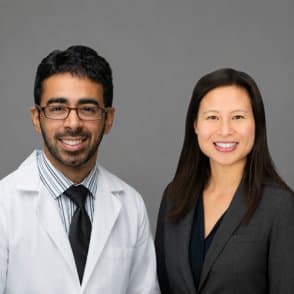
Bob Underwood, MD (Host): Welcome to Pediatric Frontlines from Shriners Children's, where we explore the best in pediatric care. I'm your host, Dr. Bob Underwood. Osteogenesis imperfecta, or OI, is a rare genetic disorder that makes bones fragile, but its effects extend well beyond fractures, influencing growth, mobility, and many other aspects of a child's health.
Today, we'll explore how surgeons and medical specialists work together to improve outcomes for children with OI and how research is shaping the next generation of treatments. Joining us today are two specialists in osteogenesis imperfecta and the co-directors of the Osteogenesis Imperfecta Program at Shriners Children's Southern California, Dr.
Manu Raam, a pediatrician, and Dr. Cynthia Nguyen, a pediatric orthopedic surgeon. They work side by side, collaborating closely in both research and care of children with OI. Doctors, welcome to Pediatric Frontlines
Cynthia Nguyen, MD: Thank you so much for having us. This is, one of mine and Dr. Raam's favorite topics to talk about, so we're very excited to be on this episode
Manu Raam, MD: Thank you. It's a pleasure to be here
Bob Underwood, MD (Host): Yeah. It's, it's exciting to have you both on. Now, OI touches nearly every organ system involved in growth and mobility. And from where each of you sit, both surgical and medical, why does OI management require this kind of team approach? And how do your two research programs at Shriners Children's intersect with each other?
Manu Raam, MD: Yeah, I feel very fortunate to be part of a multidisciplinary clinic like we run at Shriners. it's a smaller children's hospital, so we have the advantage of our patients not getting lost in a sea or maze of different departments. They can just go down the hallway to get a bone density study done and their X-rays.
Then they come to their patient room where Dr. Nguyen and I will spend a considerable amount of time with every patient, together, and we can bounce ideas off of each other that way. We can come up with a combined medical surgical plan on the fly. so it's very useful to be able to do that. I will say that in OI, there's a large diversity of presentations.
There are some patients for whom fractures are the core underpinning of their disease and the most problematic aspect. So for them, it can be a combination of medical treatment, trying to reduce their fracture frequency, as well as surgical treatment to perform open reduction in an internal fixation or to, do rodding surgeries for those patients, that can be very useful.
Conversely, we have another subset of patients for whom it's actually chronic pain that's the worst aspect of their disease. For them, it can be a combination of physical therapy plus also medical therapy that can make the biggest difference. And then for those patients who find that decreased mobility is the most problematic feature, it can be all three.
they can benefit from physical therapy, they can benefit from medical therapy as well, and then also they may require surgical rodding procedures or to straighten their legs when they're ready to start walking. There are situations where we have patients who need to be optimized with medical therapy.
They may need to receive a few infusions of IV bisphosphonate therapy before they're ready for a surgical procedure. And then finally, we have patients who present to us for the first time with weeks or months of chronic pain. Sometimes those types of pain can be attributed directly to a specific surgical anomaly that requires surgical correction, and sometimes they need medical therapy because the pain is actually from their underlying disease and not from a specific anatomic abnormality.
So you can see many combinations and permutations through which, the disciplines can communicate and work well together to address many features of their disease.
Cynthia Nguyen, MD: Yeah. Honestly, I wish every single one of my patients with all different conditions had access to this type of multidisciplinary clinic 'cause it's not only myself and Dr. Rahm putting our brains together and texting and emailing each other even on weekends and holidays to try to figure out the best thing to do for patients, but we can walk down the hall and talk to our prosthetics and orthotics and our bracing folks.
We can just go up one flight of stairs and talk to our physical therapists. And, so being able to collaborate with everyone involved in a patient's care is just so valuable, especially for patients with a complex condition like OI
Bob Underwood, MD (Host): That's absolutely wonderful to see how you guys work together and really approach this as a team. So Dr. Nguyen, one of your recent studies looked at rodding surgery where metal rods are placed inside a child's bones, and it helps prevent breaks and supports them as they grow. Now, you compared rods that expand along with the child's growth versus rods that, that don't.
What did you find, and what does it mean for families deciding on this type of surgery?
Cynthia Nguyen, MD: Yeah. So, that's a study that we're really proud of. and in general, there are two big categories of types of rods that we can use for these procedures. one type kind of is designed to expand with the child's bones as they continue to grow. the other type are static, so they stay the same length no matter what.
They're basically just kind of one piece of metal. and both rods work, but there's been a lot of other studies showing that telescoping rods for patients who are still growing, tend to last longer and lead to fewer surgeries. A lot of these studies are really well done. however, before ours, no one had really followed these patients over a long term, like a long time, which for orthopedic surgeries is roughly about 10 years.
The other studies just followed for a much shorter period of time and then extrapolated their data to predict what would happen over a child's lifetime. But luckily, through Shriners, we're able to link up the electronic medical records of all of our facilities, and so we have a big patient sample to work with.
And we were able to tease out all the patients that had at least 10 years of follow-up, and confirm that those earlier kind of short-term studies were correct, that kids who were still growing, who got telescoping rods over this long time period of 10 years, did end up needing fewer surgeries than kids that got, static nails.
And so that kind of confirmed that telescoping rods for this growing patient population was better. And what this means for families who are, being presented with the option and the recommendation to have surgeries is that, if your child is young and has a lot of growth remaining, you know, if possible, it's preferable to use the telescoping rods, if they have access to them.
And this can also help families sort of gear their search for a, a surgeon that, is able to provide that type of care, which at any Shriners, we, we do have access to that and at major medical academic centers as well
Bob Underwood, MD (Host): And it's phenomenal to have that level of access. Now, you also studied surgical repairs near the hip and upper thigh and found that repairs in this area actually tend to fail and need to be redone more often. So what is driving that, and how has it changed the way you approach surgery in these regions?
Cynthia Nguyen, MD: Yeah. So that was a, a study that was published in January in Journal of Pediatric Orthopedics. and that was looking at, fractures and osteotomies in the upper third of the femur, the thigh bone. and actually, the results and the complication rates depend on where in that proximal femur the fracture or osteotomy is done or, or the fracture happened.
we found that fractures in the subtrochanteric and intertrochanteric area, so not at the very top, but you know, a little bit lower down, those in general did pretty well, with a pretty low complication rate, in the acute period after the surgery. Long-term, those kids may require some revision, but overall, those were pretty predictable in how they healed.
the fractures that caused a little bit more issue, were the ones that happened in the femoral neck, portion of the femur, and those had a pretty high rate of needing revision surgery. we found that factors that seem to influence that rate, include things like the angle of the fracture itself.
fractures, that were more vertical had, unfortunately, a higher rate of needing revision surgery. and so that's something that's fracture kind of pattern dependent. something that was more surgeon or surgery dependent, was that the better the reduction was or the better you got that fracture realigned, the lower the rate of complication.
So those are important things to note, and hopefully can guide counseling of patients and also some surgical planning as well
Bob Underwood, MD (Host): You recently presented a study called Can't Blame the Bone on a technique called guided growth, which is used to gradually correct how a child's legs or joints are lining up as they grow.
The title of your talk hinted at a surprising conclusion. What did you find about how well this works in kids with OI and why?
Cynthia Nguyen, MD: Yeah. So, this study was actually inspired by a question that two different other orthopedic surgeons, posed to me, which was, basically that they wanted to know how affected guided growth with implants, which is a technique that we often use, to correct deformities, how well that technique would work in kids with osteogenesis imperfecta.
and there previously was a well-done series showing that guided growth can be effective, but their numbers are really quite low. So even though we had the results of that previous study done at outside institution, I thought, you know, maybe we should actually look within our Shriner system, aggregate, you know, a large number of patients who have had this tech technique done just to confirm that, yes, this, this is effective.
And then also to answer some questions, that we wanted to know, including what happens after the guided growth implants are removed, and whether we can kind of tease out, some additional important information to guide decision-making to have this procedure, and the follow-up after. what we found was that overall, guided growth is an effective technique for kids with osteogenesis imperfecta, and that the rate of correction, for these kids is similar to kids who don't have, OI.
However, there are some things that may impact, the rate of correction for each individual, including the severity of their osteogenesis imperfecta, and also whether or not they have an implant that crosses the growth plate that's being guided. So overall, we think it's a technique that works well in this patient population, but surgeons should still continue to look at kiddos on a case-by-case basis and, and counsel, the families what to expect.
Bob Underwood, MD (Host): Excellent. Now you also have a new study on scoliosis or curvature of the spine in children with severe OI. Now looking at how it progresses and how well surgery works for it. So what can you share about that study?
Cynthia Nguyen, MD: Yeah. So that study is gonna be presented at the Scoliosis Research Society annual meeting in October. that specifically looks at scoliosis in kids, with type III osteogenesis imperfecta. previous studies have kind of taken the whole population of kids with, OI and scoliosis and kind of studied them as a group.
but we knew from clinical experience that kids who have, this more severe version of OI may have a different, journey. And so we wanted to specifically look at scoliosis, in, in patients with that form of, of OI. so we did a retrospective review, and what we found is that if, a growing person has type III osteogenesis imperfecta and they do have scoliosis, there's a 90% chance that before they're done growing, they're going to have a curve that reaches the surgical threshold of 50 degrees.
So, we know that the vast majority of these kiddos with scoliosis and this particular type of OI probably should be told that, "Hey, you know what? We're gonna continue to monitor this, but you have a very high chance of requiring surgery later." In our study, we also looked at the kids, that went on to have spine fusion for that condition.
and we found that their rate of complication was, as expected, higher, than those of kids who don't have type III OI. but we also had some hopeful pearls, for surgeons who take care of these patients, including, the efficacy of certain techniques, including doing halo grab detraction, and then also, hopefully a little bit of guidance as to, what levels, can be fused and, and what to expect
Bob Underwood, MD (Host): So stepping back, what's the common thread across all of these studies in how you're thinking about the number of surgeries that these kids go through over their lifetime, and how do you talk families through that?
Cynthia Nguyen, MD: every family is different. one of the really awesome things about being, an OI expert, getting to know these wonderful patients and their families is that we follow them over time. and so we have kind of frequent, conversations, about, what we recommend. and sometimes surgery is necessary.
and so all of my studies have been based on questions that either other surgeons or patients have posed to me. and the overarching goal is I wanna be able to prep my patients, and their families for whatever treatment they may need. I want them to have as much information as possible going into it, so they can prepare.
And then I also want to be able to tease out whether there are any technique improvements or implant improvements that may help make these surgeries more effective, and hopefully decrease the number of procedures these kids need over their lifetime
Bob Underwood, MD (Host): Right. So Dr. Rahm, your team has been part of an international clinical trial testing a new medication for OI called sotrovimab. Now, what is this drug trying to do for these kids, and what did being a trial site involve for you and your patients?
Manu Raam, MD: Yeah. So some important context here. we currently only have one major class of medications as a standard of care for the medical treatment of OI, and this would be a group of medications called bisphosphonates. This family of medications is an anti-resorptive therapy. It works by reducing the amount of bone resorption, and that has the secondary effect of increasing the bone density.
And so you can understand that this group of medications doesn't actually cure OI. It doesn't reverse any feature of the core collagen defect, but it does try to create stronger bone through this anti-resorptive mechanism. But you can imagine this type of therapy would come with certain limitations, as of course, it's not reversing any kind of underlying defect in collagen, and it's only targeting bone resorption and not really bone formation.
So in recent years, there's been more interest in anabolic therapies, therapies that increase the amount of bone that's being produced and not just preventing the slowdown of the resorption of the bone. So, sotrovimab is an anti-sclerostin antibody, and it has a sister drug named romosozumab, and these two drugs have a dual action.
They work on both anti-resorption as well as new bone formation. The hope is that the quality of the bone that's created with this type of medication may be different than that created through bisphosphonates alone. So in terms of the clinical trial, this started off with a recruitment effort trying to find subjects who met the inclusion criteria, followed by a double-blinded randomized controlled period during which patients were receiving either sotrovimab or a placebo, but did not know which of the two they were receiving, and investigators did not know either.
That took place for about eighteen months, and now we've transitioned on to an open-label extension study where every patient is receiving sotrovimab and knows that they are receiving it. I think the most important thing to highlight about this is the amount of effort it takes from the families and the patients to be part of this trial.
These patients have to come for monthly IV infusions, which in pediatrics is a very big deal, very arduous for families. And so most of all, we're just very grateful for the patients and the understanding that the subjects and their families have b- been demonstrating the whole time.
Bob Underwood, MD (Host): Yeah. Now these trial results came out recently and, and they were mixed. The drug did improve bone density, but it didn't clearly reduce how often kids broke their bones, which was the primary outcome the study was designed to measure. So how do you explain results like that to a family, and what do you take away from it as a researcher?
Manu Raam, MD: Yeah, I would respond in a few different ways. so first, I would say that assigning fracture frequency as the primary endpoint is very ambitious. I think it's good in clinical trials to be ambitious and to show an effect like that if one were to exist. but that being said, I think it's important to also keep in mind that no major osteogenesis imperfecta drug to date has demonstrated a strong fracture reduction in OI.
And that holds true even if you look at the pooled data from the randomized control trials for bisphosphonates like IV pamidronate or zoledronic acid. Even these medications, they s-- are suggestive perhaps of a decrease in fracture frequency, but they haven't consistently demonstrated a very strong effect magnitude.
And there are some studies that tend to show lack of a difference. So I think that's very important to keep in mind. The second point I would make is that it's very difficult to study fracture frequency in a vacuum. And so a typical example of this would be a hypothetical patient, let's say they're eighteen months of age with osteogenesis imperfecta, and let's say they haven't been treated so far, and they may also not be walking yet, which is typical of a patient of that age because there is some element of developmental delay in OI as well.
So let's say in the past twelve months, they've had about two fractures before any treatment has been started. And then let's say we start them on a bisphosphonate medication, and in the next twelve months, let's say they then start walking and maybe even running or jumping, and they have four fractures in the next year.
Does that mean that their treatment failed because they had more fractures in the year following treatment compared to the year before? Well, not necessarily. A, a family might also say, "Well, they're getting into more trouble. They're falling more. They're running and, and breaking bones more easily for that reason."
And maybe they also note that it takes more to- trauma to cause a fracture than it did before. So from that standpoint, I would say we have to interpret that context and that nuance to understand whether it's truly a treatment failure or not. And that kind of context is very difficult to include when you do a very quantitative analysis in a clinical trial.
And so you can understand that there's a little bit of complexity there that, I think is a little bit hard to see when you look at a just a pure number. And the third thing I would say is that, as I mentioned before, OI has a very heterogeneous presentation. So there are definitely some patients for whom fractures are the most problematic issue, but there are also other subsets of patients for whom it may not be fractures that are the most meaningful to them, but maybe chronic pain or quality of life measures.
And given that these are being studied in the secondary and tertiary endpoints of the study, I think we're all anxiously awaiting that follow-up data, to understand in what direction this medication may be taken.
Bob Underwood, MD (Host): Sure. Absolutely. Now, does this change how you and others in the field think about this general approach of trying to strengthen bone directly to prevent fractures? Where does that leave new medical treatments for OI right now?
Manu Raam, MD: Yeah, I think it's interesting because we're in the middle of an overall paradigm shift in OI. I think from an investigational standpoint, we're changing focus from trying to strengthen bone purely through increases in bone density and moving on to therapies that create better quality bone through a variety of different mechanisms.
And ultimately, we're hoping that this will actually transition to true disease-modifying therapies that actually address the underlying core collagen defect directly. And you see some hint of this in some of the most ambitious projects to date, which are very much in their infancy, but these would be projects like stem cell-based therapies.
For example, in Sweden, investigators are undergoing a phase one slash two, trial called Boost B4 that's stem cell based. And there's also some preclinical gene therapy based trials, so they're looking at OI knockout mice who have OI because they knock out the collagen gene, and they're giving them gene therapy based treatments trying to prove that their bone strength is similar to wild type mice or mice without OI.
So that will be very interesting to follow in the future
Bob Underwood, MD (Host): Sure will. Yeah, absolutely. Now, the current standard medications for OI, you already mentioned are bisphosphonates, and they work differently than the new drug, as you mentioned. So do the results of this more recent study change how or when you will be using bisphosphonates?
Manu Raam, MD: Yeah, I think it's important to highlight that we currently, as I mentioned, only have one major class of medications to treat OI, and I think it's important to have more than one type of medication in your toolbox just due to the vast diversity of presentations. as I mentioned, if there's an agent out there that has a better effect on chronic pain than bisphosphonates, even if it doesn't help with fractures necessarily, I think that's important to know, and it's good to have more, more, variety of different tools, to treat OI with.
the other thing to mention would be that there may be different modes of administration in the future. So all of the major treatments that we're using right now are IV based or intravenous, and this is very traumatizing to, to families to have a pediatric patient getting an IV-based treatment every three months.
They are looking at a study looking at a drug called so-- romosozumab, which is also, you know, a sister drug for sotrovimab, but is subcutaneous. So that would be very interesting if you have a subcutaneous therapy in the future. Bisphosphonates also work well for some groups of people. we have sometimes administered bisphosphonates and see a vast reduction in fracture frequency with some subgroups.
And with other patients, we see that they're getting pamidronate like clockwork every three months, and they're not seeing any difference in their fracture frequency. So we still don't understand what explains why some patients respond in one way and some respond in a different way, and having different medications in our toolbox, again, helps with that issue as well.
And I think it will be important looking at studies studying combination treatments. so for example, last year there was a study called TOPAZ, which looked at starting patients off on a therapy called teriparatide, which is an anabolic therapy that directly builds new bone, followed by zoledronic acid, the anti-resorptive therapy, to maintain the gains.
Unfortunately, this study didn't show a change in fracture frequency, but I think studies like this might be interesting to study other combinations of treatment in the future to determine whether they could be more useful than using one agent in isolation
Bob Underwood, MD (Host): Yeah,
absolutely wonderful, applications for it. So that brings us kind of to the next question, which really brings these things together. If medications like this eventually do reach patients, how do you imagine it changes surgical decisions like when a child needs rodding or spine surgery?
Cynthia Nguyen, MD: Yeah. So with each patient that we have, Dr. Ramaniuk kind of sit and, and talk about them together. and the indications for surgery are, are going to vary, but in general, it's based on, for scoliosis kind of progression of the curve beyond a certain amount, or for lower extremity rotting surgery, it's gonna be based on function, as well as fracture frequency and deformity.
And so if these medications can, you know, slow down the progression of a scoliosis or slow down the progression of a lower extremity deformity or cause fewer fractures, then, you know, hopefully surgeries can be delayed or, or even avoided altogether, and, and how great would that be?
Manu Raam, MD: Yeah. From my standpoint, I think as you transition to true disease-modifying treatments, what we would be really interested in also, not just fractures, would be also looking at long-term complications of OI. So complications like scoliosis, bowing deformities, and also another one called basilar invagination, when the base of the skull, due to its fragility, ends up herniating upwards and causing pressure on the brain stem, which can be life-threatening.
So we would like to know in the future, would these future treatments help reduce the incidence of those complications and prevent these things from happening in the first place, which would be very fantastic
Bob Underwood, MD (Host): It, it really would. And the next question may be self-evident. Looking ahead, what would be the ideal combination of surgery and medicine, and what would that look like for a child with LI? And where is your research headed next?
Cynthia Nguyen, MD: from a surgical standpoint, the ideal situation would be for my job to be obsolete completely, and I could spend time fly-fishing or something instead because kids wouldn't need surgery anymore from me. but until that happens, you know, we're gonna continue plugging away, trying to figure out the best strategies with the tools that we have for now, whether that means, you know, better rods if kids still need rods.
the FD rod is the current gold standard here in the United States, and that was invented by Dr. Francois Fossier, who was chief of the Montreal Shriners. That's a very Shriner's implant. maybe the next big advance in intramedullary rods for OI kids will come from a different shrine. and until the day that, Dr. Rom and his colleagues figure out a way to, get rid of the, the collagen defect that causes OI, you know, the surgeons like myself, and my colleagues will keep on plugging away, trying to make surgeries better and more efficient
Manu Raam, MD: Yeah, from a pediatrician standpoint, I think we're just really excited for the potential to be able to participate in future clinical trials. I think all of these investigational therapies are going to be multi-center international trials, just trying to get enough sample size for a very rare disease.
So it's gonna be a team effort. There are gonna be hundreds of investigators involved in any breakthrough that comes through on the medical side. And it's just a very exciting time to be a researcher at this point
Bob Underwood, MD (Host): It's phenomenal, and you guys are doing great work. Dr. Ram, Dr. Wen, thank you so much for being with us today
Manu Raam, MD: Thanks for having us. Our pleasure
Cynthia Nguyen, MD: Thank you so much for talking with us
Bob Underwood, MD (Host): for more information, including a full range of care disciplines, please visit shrinerschildrens.org. And to hear more Pediatric Front Lines episodes, please subscribe wherever you listen to podcasts
About the Speakers
Cynthia Nguyen, M.D.
Cynthia Nguyen, M.D., is an orthopedic surgeon at Shriners Children's Southern California. Dr. Nguyen is a native Californian, growing up in the San Francisco Bay Area. After graduating as valedictorian of her high school, she received her undergraduate degree in microbiology, immunology and molecular genetics, magna cum laude, from the University of California, Los Angeles. She earned her medical degree from Baylor College of Medicine.
Dr. Nguyen completed her residency in orthopedic surgery at Case Western Reserve University/University Hospitals Cleveland Medical Center, where she discovered her passion for treating musculoskeletal disorders in pediatric patients. She then proceeded to the University of Utah/Shriners Children’s Salt Lake City for a fellowship in pediatric orthopedic surgery. After this fellowship, she traveled to Accra, Ghana, to complete a spine surgery preceptorship under the tutelage of Nana Prof. Oheneba Boachie-Adjei at the Foundation of Orthopedics and Complex Spine (FOCOS).
Dr. Nguyen has experience treating children with a wide variety of pediatric orthopedic conditions. She has a special interest in patients with skeletal dysplasia and oversees the osteogenesis imperfecta clinic at Shriners Children’s Southern California, along with pediatrician Manu Raam, M.D. She has authored numerous articles and books, and presented at national and international conferences.
Dr. Nguyen loves working at Shriners Children's Southern California because it allows her to provide the highest quality of care to all pediatric orthopedic patients, including communities that may usually struggle with access.
Outside of work, she enjoys spending time with her family, cooking, hiking and backpacking.
Learn more about Cynthia Nguyen, M.D.
Manu Raam, M.D.
Manu Raam, M.D., is a pediatrician who focuses on treating children with special healthcare needs in both resource-limited international settings and local lower-income and underinsured communities. He is the medical director of the osteogenesis imperfecta program at Shriners Children’s Southern California and supervises the medical management of patients with genetic bone disorders, including X-linked hypophosphatemic rickets and other skeletal dysplasias. He is a primary investigator in phase III clinical trials pertaining to the above diagnoses.
He also focuses on the pediatric care of patients with spina bifida, muscular dystrophy, cerebral palsy, arthrogryposis and craniofacial conditions. Apart from his role at Shriners Children’s, he is also a clinical associate professor of pediatrics at the Keck School of Medicine of the University of Southern California, and a pediatrician at Children’s Hospital Los Angeles, where he treats general pediatric patients as well as those with spina bifida and rehabilitation-related diagnoses.


Keep In Touch
Join our mailing list to stay up to date on everything that's happening at Shriners Children's.
Next Steps
Share Your Story

Give to Shriners Children's

