


Care in Action: The World's Largest Motion Analysis Centers Program
On this episode of Pediatric Frontlines, Ross Chafetz, PT, Ph.D., corporate director of MAC at Shriners Children's, discusses the growth of the program as well as its innovations, from portable labs to a published gait model.
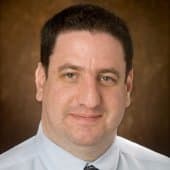
Bob Underwood (host): Welcome to Pediatric Front Lines from Shriners Children's, where we explore the best in pediatric care. I'm your host, Dr. Bob Underwood, and with me is Ross Chafetz, physical therapist and doctor of physical therapy, who is the corporate director of the Motion Analysis Centers at Shriners Children's and the director of the Motion Analysis Center at Shriners Children's Philadelphia. And today, we're talking about Motion Analysis Centers, or MACs, how they work, why they matter, and how they're changing the way we care for children with movement disorders. welcome to Pediatric Front Lines.
Ross Chafetz, PT: Hi. Thank you for having me this afternoon.
Host: Absolutely. And so how would you define what a modern MAC does? How is it different from traditional gait observations or video assessments in a clinic?
Ross Chafetz, PT: So traditionally, a physician or a physical therapist, when they want to see how a kid is walking, they would, they would essentially just have them walk down the hall, and they would take notes and say, "Oh, this kid seems like they're bending their knee, and we'll take a guess. Maybe it's 10 degrees or 20 degrees." You know, they used to have kids put chalk on the bottom of their feet and walk across the floor, and they would see, like, how long the step length was. But nowadays, what we can do is use our technology and really get specific numbers and quantify motion. So rather than taking a guess at what the gait looks like, we put markers on the kids, and what we can do is measure exactly where the bone is in space relative to the room and where the bones are relative to each other. And from there, we can get a real exact quantification of how they move. And it's really using technology at the fullest
Host: Yeah. No, it's, it's really kind of amazing. So, Shriners Children's has been doing this for more than 40 years. Can you walk us through the origin story? What was the clinical problem the early centers were trying to solve, and how has the methodology evolved from those first labs to what you're running today?
Ross Chafetz, PT: it's pretty incredible how the technology has changed over the years. You know, early in the, like early 1900s, they would, they would have people wear light bulbs and use cameras with long exposures and then, um, measure how kids are walking from that. And nowadays, we use infrared technology where we, we wrap, um, little pieces of plastic and we put stickers on the body so that the infrared lights reflect off that and we can know exactly where each bone is and body segment is relative to space. And this is the same technology that they use in Hollywood. So we say this is where healthcare meets Hollywood. So when you see Iron Man or Star Wars or Polar Express or Avatar, it's the same thing that they do with the actors. They wear a suit with reflective markers, but we use pieces of plastic and put it on the kids, and we're able to really quantify where they are exactly in space. And what we used to do 40 years ago, you would take pictures and measure it on paper, and it would take, you know, seven hours just to analyze one kid's gait. And now we've got it down to two to three hours with the kid and an hour of processing. So it's all about computer power and using this new technology to get the most out of each time a kid moves and understanding the movement patterns
Host: Yeah. So l- let's talk about the instrumentation stack in the current MacVisit. You have Vicon camera arrays, force plate, surface EMG. How do those data streams come together into something a surgeon or a physiatrist can actually take action on?
Ross Chafetz, PT: Yeah, excellent question. So, you know, I-- we focus on the Hollywood part, which is the infrared, but you're right. What we do is we take multiple technologies that have advanced over the years. So we use the markers and the infrared, and we combine that with force plates that are in the ground. And th- those systems are $100,000. And what we're doing is we're looking at how gravity affects how the kid moves. You know, where are the ground… what we call ground reaction forces are, where are the moments against the joint? You know, what is making the kid sink down or stand up taller? and that we use in combination of EMG. So EMG is another technology. It's just like when you go to the hospital and they wanna see how your heart's doing, they use EKG, which is the electrical impulses of your heart. But we use it for the electrical impulses of the leg muscles. So we combine the leg muscle activity with the force plates, with the kinematics or the motion that we get from the infrared, and we combine it together into one report that synthesizes what we think is happening with the kid. And in addition to that, the, the-- we take that information and then we meet as a group. And this is the important thing, is that it's not we generate a report and we're done and we give it to the patient. We meet with the physician, the physical therapist and the engineer, and we go over in detail all those results to until we come up with the best practice and care for that one child. And that's pretty unique to the Sh- Shrine, that we have this technology, a lot of hospitals don't, but we spend this much time focused on the child
Host: That's-- It's amazing. So motion analysis informs decision-making across a wide condition set. For example, cerebral palsy, scoliosis, sports injuries, et cetera. Where is the dataset most decision changing today, and where is it still more supplementary?
Ross Chafetz, PT: So, you know, I would say, a lot of it comes-- The decision-making is in the hands of the surgeon, the physician, and the physiatrist. They ultimately make the decisions, kind of like an X-ray or an MRI. An X-ray or MRI doesn't tell what type of surgery to do, but it informs the surgeon on the type of surgeries that are possible or what approach they might need to do. And that's really what motion analysis does. It, it informs the physician to make the best possible decision. And, you know, you bring up some pretty interesting things as we talk mainly about gait in pediatric, but the Shrine has really developed sports analysis, where we look at biomechanical alignment for healthy movements, hoping to improve movement or after ACL recovery, what's the best rehab treatments. And we also look at arm motion and, what's called brachial plexus injuries in kids who have paralysis of the arm, and how they can reach their mouth or comb their hair. so we're not only doing gait, but we're doing a multiple of other conditions. we're applying the technology wherever we can to improve the lives of our children
Host: Yeah. No, it's absolutely fascinating. So from a clinician standpoint, what makes a strong referral to a MAC? When should an orthopedic surgeon, a podiatrist, or a neurologist be thinking, "This child needs motion analysis"? And what should they expect back from a report from you?
Ross Chafetz, PT: Yeah. So that's a great question, and we get asked that all the time. I, you know, I'm personally biased and I, I think any kid who has some type of walking disorder or impairment where you're not sure what's going on, I think almost all of those kids should get a referral because y- there are two reasons for that, is one, you may not really truly understand where the impairment is coming from, whether it's a muscle tightness or bone, or whether it's weakness or ground reaction forces. But also in pediatrics, you're looking at development over time. So what they walk like at five years old, you wanna have a baseline, so when they come back and they're seven and they're eight, you wanna know if the condition is progressing or getting worse. And physicians, as great as their memories are, they may not remember exactly what they looked like when they were five years old. And what we do is we produce graphs. And when you ask what we give people, we give them very quantifiable numbers and graphs and say, "This kid is this much better percent-wise, this much worse." And then finally, after we do the pre-op or if they go for pre-op and they have a surgery, did they get better? Did the surgery work? Do they need another surgery? So, you know, I think for tracking over time and looking at outcomes, it's pretty important
Host: Yeah. Absolutely. So can you share a case where the MAC findings meaningfully changed a surgical plan or a rehab trajectory in a way observation alone wouldn't have caught it?
Ross Chafetz, PT: Excellent question. And again, I'm biased on this one, and I think every kid we see, we end up impacting their care because surgeons often have a list of five surgeries that's possible for this one specific kid. And what we can do is help narrow it down to the one or two that they really should be doing. But the other thing is that not only do we determine or help determine the surgery, help the physician determine, often we figure out you shouldn't do surgery. Like, there's some research out there that shows that gait analysis informs a physician of when not to do surgery or, or maybe a smaller surgery, or rather than doing multiple surgeries, you do them all at one time. So we impact it not only what they decide to do, but also what they decide not to do
Host: Right. Oh, and, and that, and that's really important because surgery isn't always the answer. So, so you and Shriners Children's now operate 14 centers, making it the largest pediatric motion analysis network in the entire world. So what does that scale unlock clinically and scientifically that a single site lab just can't replicate?
Ross Chafetz, PT: Well, I-- it is pretty amazing what the Shrine has done and the vision of bringing us together. So we used to work in silos and we all had excellent institutions, but the level of communication and collaboration isn't nearly what it is today. So right now we probably have 10 PhD engineers and physical therapists, probably have eight or nine master level engineers and 22, doctors of physical therapy. And we're all working in the same department. There's no department that has that many PhDs and doctorates working together. And although there, there may only be five at one site or two at one site, we communicate across the board and we help each other. And through standardization, we test each other and we pr- improve each other. So by bringing us together, it's brought the wealth and the, the weight of 40 years of experience to every kid that we see in different manners. So it's, it's pretty remarkable
Host: That is, that is really remarkable. And in 2025, Shriners Children's digitally integrated all 14 labs and published the Shriners Children's Gait Model in Gait and Posture. Can you talk about the methodological challenge of standardizing across all of these centers?
Ross Chafetz, PT: Yeah. And, you know, it is incredible that they were able to come together. I can't say enough about our engineers. So at each site, they all had different flavors of how to do things. Like, they all had different opinions of what was best, and there really often isn't necessarily the right way to do things. But to really combine our data and look at things in a holistic way, we wanted to standardize it. So we met for two years, I think it was every two weeks, and we went through the trunk, the pelvis, the, the upper leg, the lower leg, and we said, "Mathematically, how are we gonna set up these relationships? What calculations are we gonna use? And how are we gonna input or output the data and process it?" So it, it took years to do, and it's built off work from other people at other institutions. But after years of meeting and compromising and coming together, uh, we were able to standardize and publish a model that's not only used at our 14 labs, but even outside of the Shrine. We've made it public, and people outside of the Shrine now use it because they know it's, you know, developed by the Shrine
Host: Yeah. are so many things that the Shriners does across the industry r- for pediatrics. It, it's not just Shriners Children's that benefit from these kinds of efforts, and I think it's absolutely phenomenal. So now with the unified data set flowing across all of the MAC sites, what research questions become trackable that just weren't before, both in terms of rare condition cohorts as well as longitudinal outcome tracking?
Ross Chafetz, PT: Well, and I think you, you've hit on the two really important things is, you know, there are these kids that have these rare conditions where maybe there's only 10 of them in the country, or maybe 10 to 150. And if they're seen at different institutions, the physicians may not understand or know what's happening with all these kids, you know, and their outcomes. By having all these networks and kids working together, or the physicians working together, what they can do is they can look at these kids and these rare conditions and group them and see what's working with the subsets of kids to help determine what to do next. Now, on the other side, you know, with 14 labs and anywhere from 30 to 40 years' worth of data, we probably have, just from 2010, we have 70,000 encounters. Of those 70,000 encounters, we have 35,000 gait analysis. Of those, we have 15,000 kids with cerebral palsy, and that's only half of our data as we consolidate it. So what we can now do is use machine learning and artificial intelligence to really analyze the outcomes, what we've done with kids in the past. So if you have a kid in front of you today, let's say he has a kid with cerebral palsy, he's 14 years old, he's crouching, like he has all these different characteristics. We can take our 30,000 kids and say, "Hey, which kids match similar to this kid that's in front of me now? What did we do with them in the past? And what were their outcomes?" And then using machine learning and artificial intelligence, we now can get a list of this is what surgeons have done in the past, and this is what's been successful. it's really taking the weight of our experience and applying it to every kid that we see. And this is a new area of research for us that we're getting into with the artificial intelligence, and it is just stunning what we're gonna be able to do with our pediatric, uh, data set. It's pretty
Host: Yeah. The large data models are really changing a lot in healthcare right now, and this is a wonderful example of it. All right, so expanding a little bit, can you tell me about the portable motion analysis labs that the program has developed for international travel, and what kinds of outreach opportunities have those presented?
Ross Chafetz, PT: Well, and that's another area that's just pretty exciting and I'm just very proud of what the shrine is doing in leading in this area. So right now, we talked earlier about like putting the reflective markers on the kids and having them walk and it takes one to two hours, sometimes three hours. We're now using artificial intelligence and AI to rather than putting markers on, we have the computer guess where the markers would be and they're getting more and more accurate over time. So now rather than sending 20 kids to Philadelphia for a gait analysis and then sending them home to figure out the surgeries, we're taking three therapists, Well, two therapists and an engineer. We go to let's say Puerto Rico. We see 20 kids in one day and then, the evaluations are maybe 30 minutes, 45 minutes and then we get a lot of the same information. Not all of it yet. It's gonna be a couple years before we get the force plates and EMGs going but we're at the precipice of being able to do everything with, half a million dollars worth of equipment with a couple of cameras down remotely in Puerto Rico. And you know, we are very international and our goal is to be able to use our technology and bring it to everyone and every place that we go
Host: Yeah. Oh, that's, that's wonderful, uh, that kind of outreach. It's just amazing. It really is. So looking ahead, where do you want the field of pediatric clinical motion analysis to be in 10 years? And what role do you see Shriners Children's playing in getting there?
Ross Chafetz, PT: Well, we're really leading the way, in my opinion. Of course, I'm biased, but in my opinion, we are leading the way in AI and looking at surgical outcomes and treatment approaches. And this markerless technology of being able to take cameras remotely. You know, in 10 years, my hope is that a parent in their house can have their kid with one iPhone walk, you know, across the room towards them, away from them, maybe walk in diagonals, and then send us one video of all this information, and then we can get a good estimate or good starting place of where to go with this patient and how to treat them and really quantify the motion. It, it may replace marker motion capture, it may not, I don't know. But it's pretty exciting to be at the point where, uh, we're figuring out what we can do and, really stretch the limits of what we can do
Host: Thank you for being with us today. This has been wonderful and really, really informative. And for more information, including the full range of care disciplines, please visit shrinerschildrens.org. To hear more "Pediatric Front Lines" episodes, please subscribe wherever you listen to podcasts.
About the Speaker
Ross Chafetz, PT, Ph.D.
Ross Chafetz, PT, Ph.D, is the corporate director of Shriners Children’s Motion Analysis Centers (MAC). He oversees the clinical and research operations of 14 world-class motion labs, driving advancements in pediatric motion analysis across the largest network of its kind.
He has extensive experience in both clinical care and research, with specialization in sports medicine, scoliosis, spinal cord injury, cerebral palsy and brachial plexus injuries. He has a proven track record of leading transformative multicenter projects. Over the past decade, he has led multiple high-impact, multicenter initiatives that have helped standardization of motion analysis in Shriners Children’s gait and sports services.
He currently leads a high-level MAC working group to implementing a Google Cloud-based infrastructure that will transform how pediatric motion data is stored, accessed and analyzed at scale. By centralizing data storage and retrieval, Shriners Children’s can enable large-scale, machine-learning-based analysis that was previously not possible.
Beyond his leadership within Shriners Children’s, he serves on the executive board member of the Gait & Clinical Movement Analysis Society, contributes to multiple multicenter research grants and has co-authored more than 55 peer-reviewed publications. He is a proud father of two daughters, one a mechanical engineer in Colorado and the other completing her occupational therapy training in Philadelphia.


Keep In Touch
Join our mailing list to stay up to date on everything that's happening at Shriners Children's.