


Well in Hand: A System Leader on Upper Extremity Research
On this episode of Pediatric Frontlines, Scott Kozin, M.D., chief medical officer of Shriners Children's, discusses the latest innovations in his specialty and his new leadership role.
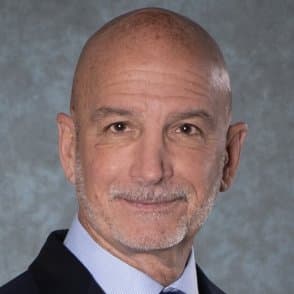
Bob Underwood, MD (Host): Welcome to Pediatric Frontlines from Shriners Children's, where we explore the best in pediatric care. I'm your host, Dr. Bob Underwood. Dr. Scott Kozin joins us as our expert to discuss how cutting-edge innovations like 3D modeling and advanced nerve transfer techniques are innovating upper extremity surgery, and improving outcomes for pediatric patients. Dr. Kozin, welcome to Pediatric Frontlines.
Scott Kozin, MD: Thank you.
Host: Yeah. So, tell us how is 3D modeling currently being used to plan and guide upper extremity surgeries such as fracture repair, joint reconstruction, or tendon transfers?
Scott Kozin, MD: It really is a remarkable advancement in how we take care of children. And the way 3D modeling works is we obtain a CAT scan of the injured limb and then the non-injured limb. So now, you have mirror images via CAT scan. And then, from these CAT scans, they make models. So, they make bony models. But once they make the models, then we meet with the engineers And we design the surgery so that the injured arm after corrective osteotomies where we cut the bone or realign the joint will match the injured arm.
And then, once we've done the surgery virtually, then the companies that we work with will make jigs that fit correctly on the bone with a slot of how to cut the bone. And it'll tell you even the number of screws, the length of the screws. It's really remarkable. And then, once you're done with these series of jigs, the injured limb will be the same as the uninjured limb and will match perfectly. And it really makes a difference in children especially.
Host: Just amazing in terms of the preparation before surgery ever happens. So, what are the main benefits of 3D modeling for both surgeons and for the patient in terms of surgical accuracy and recovery outcomes?
Scott Kozin, MD: Both the patient and the surgeon benefit. It allows you to look at the deformity and then allows you to correct the deformity with extreme accuracy and precision. So, we use it in upper extremity. My partners use it in the legs, and my spine partners also use it in the spine. So, it's really become rampant in orthopedics, in complex deformities.
So when the deformity is complex and difficult to understand, you need the three-dimensional analysis with the CAT scan. And then, you need the engineers to help you design the cuts to make one side match the other, and then they make the jigs. And then, when you're done, voila! It matches perfectly.
Host: So also, for the patient, how does the 3D modeling help improve the preoperative understanding for the patient and for the families? I mean, you actually have a model to be able to show them.
Scott Kozin, MD: Yeah. It's a bone model, a foam model that you can show them what the deformity looks like and how we're going to make it match the uninjured arm with a separate bone model. The neat thing about the surgery itself is doing the surgery virtually and deciding where you can cut the bone. The engineers may know what the bone looks like, but they'll just say, "Cut it here." And you'll say, "Well, I can't cut it there because there's an artery there, or there's a nerve there. How about I come from the other side?" So, the dialogue between us and the engineers is back and forth to ensure that we can correct the bone appropriately, but that we can actually access the bone surgically safely. It is a really neat experience to go through with the engineers. And then, to apply it and to see it work is fantastic.
Sometimes it can be a singular cut. Sometimes it can be three, four, five, six, seven cuts. Sometimes you have to cut both bones. But in the end, if you do it correctly and you take your time, the injured arm will match the uninjured arm for sure. And that's going to improve their outcome.
Host: Yeah. And that's just amazing to think about in terms of the innovation that it's taken to be able to do that. So, what about nerve transfer surgery? What are the latest innovations in nerve transfer surgery for patients that have lost upper extremity function due to trauma or any kind of neurologic injury?
Scott Kozin, MD: Nerve transfer surgery has been a game-changer. And what we've realized over the last couple decades is that God gave us redundancy in some of our nerves, or God gave us some extra nerve that we can use from a normal nerve. And then, we place that into a nerve that's been damaged. a nerve transfer is almost like a tendon transfer. But instead of taking a tendon, you're taking a piece of a nerve that's expendable, meaning you don't need it. And it works. And then, you put it into a non-working nerve. It's changed the game for all sorts of nerve injuries like brachial plexus injuries or traumatic peripheral nerve injuries. But it's really made it so that we can hone in on nerve recovery, which 20 years ago was unattainable.
Because what happens with after a nerve injury is over time the muscles degenerate and becomes atrophic. So, it's a race against the clock. Sometimes we can do a nerve transfer right near the muscle. So, it gets reinnervated or gets its nerve supply back fast, and it prevents all this atrophy that occurs over time, and then it preserves their function because you've restored their muscle activity.
Host: Absolutely phenomenal and totally a game-changer and very different from when we went through our training in terms of our understanding of what could be done after nerve damage. So, can you explain the differences between a nerve transfer, nerve grafting, and tendon transfer? When is each one of those utilized?
Scott Kozin, MD: The way we think about it is primary nerve surgery is nerve surgery. It's time-dependent. It has to be done fairly close in proximity to the injury, because over time the muscle degenerates. So when you have the nerve that's been severed, cut in half, you can put it back together, which is called a nerve repair. If it's been stretched to the point that it's torn, there's going to be a gap in between the nerve. And then, you perform what's called a nerve graft. Where you take nerves from the leg and you splice it in between, like a splice of wire, that's a nerve graft.
And then, the last was the nerve transfer that we spoke about. Obviously, the best thing to do is to take a cut nerve right away and put it together, but that doesn't happen all the time. Sometimes there's the delay in terms of the patient being referred. And sometimes the nerve is stretched before it tears. Then, we look at nerve grafting like we spoke about, where we splice it back together with the intercalary or intervening nerve graft from the leg. And then, sometimes we'll add nerve transfer to it because now we're getting closer to the muscle, which promotes regeneration. Because after a nerve injury, the nerves can regenerate for a couple years, but then they kind of peter out. So, we have to get to that muscle before the petering out occurs, and that's often a combination of nerve grafting and nerve transfers. If we're outside the window, so we're a couple years from the injury, we really can't fix the nerve anymore, because it can't regenerate to the muscle, because the muscle's atrophic and not going to recover. Then, we move into nerve transfers. So, nerve transfers are distinct, we call them secondary surgeries. Primary's nerve; secondary is tendon transfer.
And tendon transfer, it is the same principle. You take and you look, first of all, for a tendon that's expendable, meaning that you can live without it. For example, when I extend my wrist, I have two tendons that extend my wrist. I can live with one just fine. So, I can take one of those tendons that's now working and it's expendable. And then, I move it into another tendon to promote function. So, one of the common tendon transfers we do for people who can't make a fist, we'll take a wrist tendon, just one of them. We'll leave one behind. And then, we'll transfer it to the finger flexors so they can bend their fingers. So, that's the concept of tendon transfers.
The reason I equate it to nerve transfers, it's a little bit the same principle, whether it's a nerve or a tendon has to be working, it has to be available, and has to be expendable for us to use it as a donor. So, donor for us is where we get the tendon and nerve from. And recipient is where we put it into, whether it be nerve or tendon. So primary, nerve; secondary, tendon.
Host: So allograft, in these circumstances, the harvested one is from the patient themselves. And so, how do surgeons determine whether a patient is a good candidate for a nerve transfer? You kind of got into, you know, timing-wise, but who's a good candidate for nerve transfer?
Scott Kozin, MD: So, good candidates for nerve transfers are a couple of different categories. If the patient presents a little bit later, maybe they come from overseas or maybe it takes a while to get to the institution, you want to get back to that muscle faster. So, that's the timing we spoke about.
The other candidates for nerve transfers that are really good is if they have an injury that has to grow back really far. Because like I said before, as the nerve grows back, it kind of peters out. So, an example would be if you cut your funny bone nerve, your ulnar nerve up here, it has to go all the way down into the hand for fine function. That's a long way to go. And it's unlikely to make it there before the muscle dies. So in those cases, we may do a nerve graft for sensation, because that can occur years and years after injury. But for the fine motor, we may take a piece of a working nerve here called your anterior interosseous nerve and put it into the ulnar nerve to try and get restoration of dexterity. So, that's an example where we use a combination of nerve grasp for sensation and nerve transfers for function. Because if you just graft, it won't make it down, meaning the nerve won't regenerate into the hand and time to maintain function of those little teeny muscles in her hand.
Host: Right. Fine motor skills, really important. This is new and evolving. So, what are some of the emerging research trends that clinicians and patients should watch for in the next five years regarding upper extremity repair and functional restoration?
Scott Kozin, MD: The biggest upcoming advances is going to be in nerve regeneration, meaning to make sure that nerves regenerate, which is important like we spoke about, but to make them regenerate faster, which going to be really, really good. And there are some medications that allow for faster regeneration of nerves.
Tacrolimus is one of them. That's used in transplant patients, and that promotes nerve regeneration. So, there's a lot of work being done on trying to figure out what properties of tacrolimus, this chemotherapy agent, that we can use to promote nerve regeneration and, at the same time, take away the bad effects of having a chemotherapy agent.
It's interesting we kind of fell into it because we started to realize that hand transplant patients who take Tacrolimus have better restoration of motor function from nerve regeneration and feeling from sensation than we ever anticipated. So, the backfill is let's find out why tacrolimus is so effective and let's take out the chemotherapy and let's promote nerve regeneration.
So, I think that is going to be the holy grail, or one of the holy grails, is to make the nerves grow faster and grow longer. And then, the second holy grail is going to be to maintain the muscle viability for a longer period of time. So, that nerve that's coming down the corner can reinnervate a muscle that doesn't become atrophic and kind of die over time.
So in nerve regeneration, I think they're the two advancing fields. In addition to pharmacologic means, there's electrical means that may promote nerve regeneration. So, nerve stimulation done at the time of surgery and even after surgery seems to promote how quickly a nerve grows downstream. So, we're already starting to use some of the nerve regeneration via electrical stimulation in our clinical practice, and there's a whole bunch of trials on both electrical stimulation and trials on tacrolimus-like medications to promote nerve regeneration.
Host: Amazing. So, overall, what role has research played for you personally throughout your medical career?
Scott Kozin, MD: So for me, research has been an integral part of my career. The concept of Shriners Children's is really interesting to me. We call it the tripartite mission. So, we take care of patients, which is really important. the second part of the tripartite is research. So, almost all of us at Shriners Children's does some form of research, whether it be basic science or clinical research. And then, the third tripartite is education firm believers in educating the next generation and educating students and nurses and pharmacists and therapists, and that whole cadre of people.
So, that tripartite mission is one of the reasons I've been at Shriners for so long. So, research is incredibly important. In fact, we are just investing about 150 million into a research institute that's located adjacent to Georgia Tech. So, we're in it for the long haul because the future of medicine and the future of Orthopedics is going to be in research. And the Shriners hospital has realized it, and now they're putting their money where their mouth is, per se, right, to build this institute to promote primary research garnered at making the care and treatment we provide better for the kids that we care for.
Host: Which kind of gets into closing out my questions is, as the new chief medical officer at Shriners Children's, how will you carry the spirit of innovation forward? I mean, that was a great example that you just gave.
Scott Kozin, MD: So as my new role as Chief Medical Officer, right now, it's only been a couple months. So, I'm trying to figure out how to make it all work, because it's a big responsibility. Yeah, there's 22 hospitals that are part of this system, hospitals and clinics. There's 20 in United States, one in Mexico City, and one in Montreal.
But collectively, I think it'll be easy to carry the spirit of innovation forward. Because for the last hundred years, we've innovated. People don't remember we started because of polio. Polio's long gone. But we've continued to innovate along the way. So, the way that we carry forward innovation is we make sure that we find the best people, whether they be scientists or physicians or therapists, whomever. And once we find them, we bring them into the Shriners family and we let them run with it. Because if you bring in people who have fire in the belly and understand the tripartite mission, they'll run with it. And we just have to steer them in the right direction as chief medical officer and make sure they go down the right track. And then, lo and behold, there'll be future discoveries that innovate and change how we take care of kids, right? There's a lot of research done in genomics. There's a lot of research being done in cartilage replacement. So, sky's the limit of what we can do.
Host: Amazing work that you're doing. And, you know, thank you for bringing that spirit to Shriners Children's. It's really going to be amazing stuff. Dr. Kozin, thank you for being on today. We really appreciate it.
Scott Kozin, MD: No, and thank you for your time. And I believe in the mission and vision. And my goal is to carry the mission and vision forward for the next hundred years.
Host: That's phenomenal.
Scott Kozin, MD: Thank you very much.
Host: Thank you. For more information, including the full range of care disciplines, please visit shrinerschildrens.org. To hear more Pediatric Frontlines episodes, please subscribe wherever you listen to podcasts.
About the Speaker
Scott Kozin, M.D.
Scott Kozin, M.D., graduated from Duke University, completed medical school at Hahnemann University in Philadelphia and did an orthopedic residency at Albert Einstein Medical Center. In 1992, he completed a fellowship at the Mayo Clinic focusing on hand and microvascular surgery.
Dr. Kozin cared for adults and children until 2000, when he devoted his practice and research to children at Shriners Children's Philadelphia. Later, he was appointed chief of staff at the hospital.
Since that time, Dr. Kozin has been an advocate for improving the lives of children via research, education and patient care. He has published over 100 peer-reviewed papers, mainly on brachial plexus injury, spinal cord injury and congenital differences. He routinely travels to developing countries to operate on children in need.
Dr. Kozin was president of the American Society for Surgery of the Hand 2014. He implemented the Touching Hands Project to foster hand care around the globe with a focus on developing and underserved countries. In addition, Dr. Kozin was a key member in the first pediatric hand transplant in 2015.
In April 2026, Dr. Kozin became chief medical officer of Shriners Children's.


Keep In Touch
Join our mailing list to stay up to date on everything that's happening at Shriners Children's.
Next Steps
Share Your Story

Give to Shriners Children's

