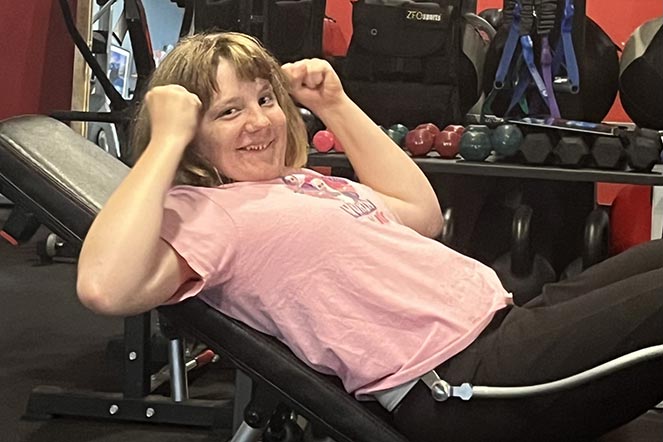
When Caitlyn was born at 34 weeks, her parents thought their biggest challenge would be helping their newborn through cancer treatment.
Instead, they were beginning a journey that would teach them to embrace the unexpected.
Shortly after birth, Caitlyn was diagnosed with stage 4 congenital neuroblastoma. She was flown to Sacramento from their hometown of South Lake Tahoe for specialized care and began chemotherapy when she was just 3 days old. Before she was 1, she had completed eight rounds of chemotherapy.
“We thought we would get through cancer treatment, take her home and move on with life,” her mother, Jennifer, said.
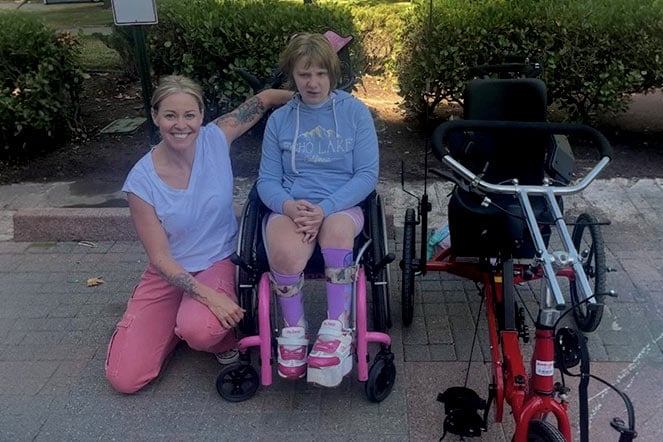
But as Caitlyn grew, new diagnoses emerged. The cancer resulted in a spinal cord injury that left her paralyzed from the knees down. Later diagnosed with autism and intellectual disability, she now functions at a toddler level in many areas of communication.
For Jennifer and her husband, each diagnosis brought another adjustment.
“At one point, it felt like diagnosis after diagnosis,” Jennifer said. “We did not have a clue what to expect with physical and mental disabilities and intellectual delays.”
Yet through every challenge, they focused on moving forward, one step at a time.
An Anchor Through the Storm
Caitlyn’s connection to Shriners Children’s Northern California began in infancy through Pediatric Orthotic and Prosthetic Services (POPS).
POPS manager Michael Wadekamper, CPO, first created tiny hand splints to help support her thumbs while she was still in the neonatal intensive care unit.
Soon after, she came under the care of Loren Davidson, M.D., medical director of the inpatient rehabilitation program. Fifteen years later, he remains one of the most important members of her care team.
“Dr. Davidson has been an anchor in a storm,” Jennifer said. “He has always been the one to understand her the best: her developmental stages, her autism, her communication and how her spinal cord manifests.”
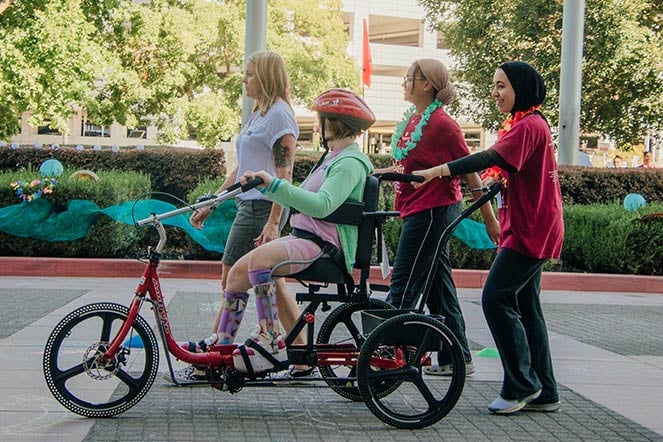
Over the years, Caitlyn has undergone 15 surgeries. Four orthopedic procedures performed at Shriners Children’s helped improve her mobility and make bracing more effective, including surgeries to address clubfoot, ankle deformities and leg-length differences. POPS has continued to provide the orthotic devices that have helped her stand and walk.
Because Caitlyn’s spinal cord injury affects her body in ways similar to conditions such as spina bifida, her care often requires collaboration among multiple specialists.
Jennifer said Dr. Davidson has always helped her family see the bigger picture.
Most recently, that guidance became especially important when Caitlyn developed a serious pressure wound that threatened both her health and mobility.
As the family sought treatment options, Dr. Davidson coordinated with multiple specialists and helped them carefully evaluate the risks and benefits of additional orthopedic procedures.
“As parents, you just want to fix the problem,” said Jennifer, who also works in the medical field. “When it comes to our daughter, she’s my kid, not my patient. I have no objectivity with her, and we need input for complicated situations.”
Ultimately, his guidance helped the family choose a path that protected Caitlyn’s long-term mobility.