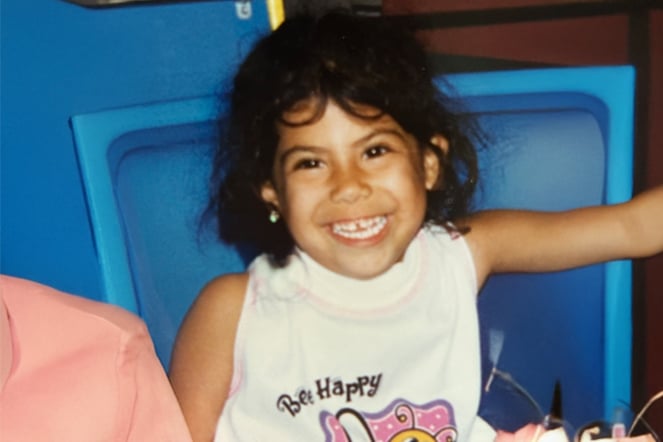
When Mariah was born and placed in her father's arms for the first time, he immediately noticed something concerning.
Her chest appeared significantly sunken whenever she cried or breathed, but doctors reassured her parents that she would simply “grow out of it.” Instead, as Mariah grew older, she developed severe asthma and relied heavily on inhalers and nebulizer treatments. By the time she was 5 years old, her nighttime wheezing had become so severe that her family knew something more was wrong, even as they continued searching for an explanation.
“At the time, what I had was unheard of. No doctors, nurses or medical staff could tell my parents what was wrong with me,” Mariah said.
Determined to find answers, Mariah's family continued searching for help. Then one day, her older sister, who was serving in the Army and living out of state, called home with a lead. While searching online, she had come across a hospital website featuring a child whose chest looked remarkably similar to Mariah's. Hoping they had finally found someone who could explain what was happening, Mariah's parents quickly reached out. Soon after, they scheduled a consultation and drove from their home in San Antonio to Shriners Children's Texas. In 1999, when Mariah was 7, she finally received the answers her family had spent years searching for.
During her first visit, pediatric surgeon Laurens Pickard, M.D., diagnosed Mariah with pectus excavatum, a congenital chest wall deformity that causes the breastbone to sink inward. For the first time, Mariah and her family found themselves surrounded by people who understood her condition.
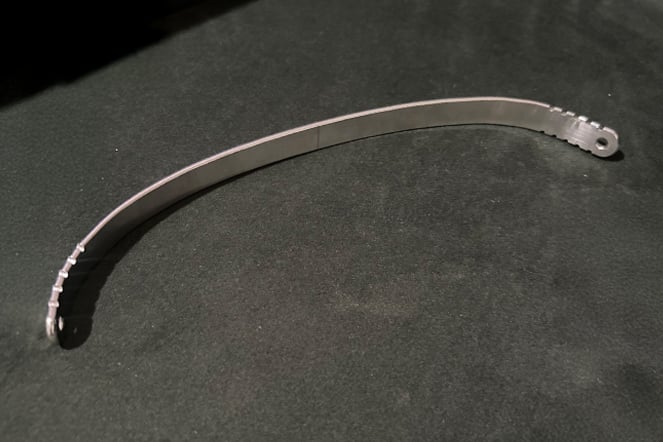
“After multiple appointments, I learned I would need the Nuss procedure, which has two parts,” Mariah said. “I had my first surgery at age 8, and a titanium bar was placed in my chest for two years. During that time, I returned for regular checkups. When I was 10, I underwent a second surgery to have the bar removed.”
The titanium bar was designed to lift and reshape Mariah's chest wall, correcting the severe sunken appearance. Despite having the bar in her chest, Mariah stayed active and even participated in cheerleading competitions during treatment. The surgeries were a success, but what Mariah remembers most is not the procedures themselves. It’s the people who helped her through them.