


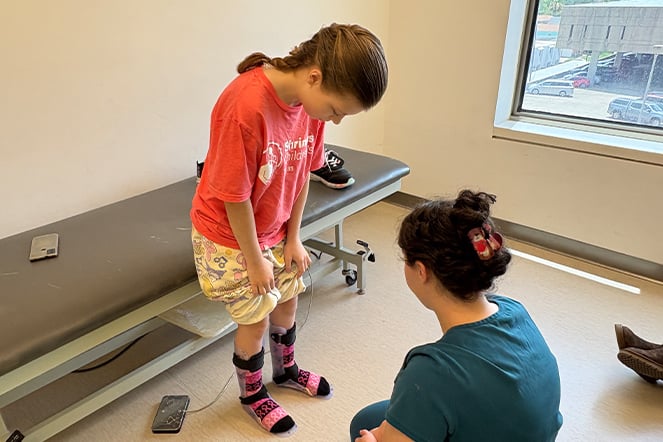
Elizabeth and prosthetist Hannah Zesiger work together in POPS.
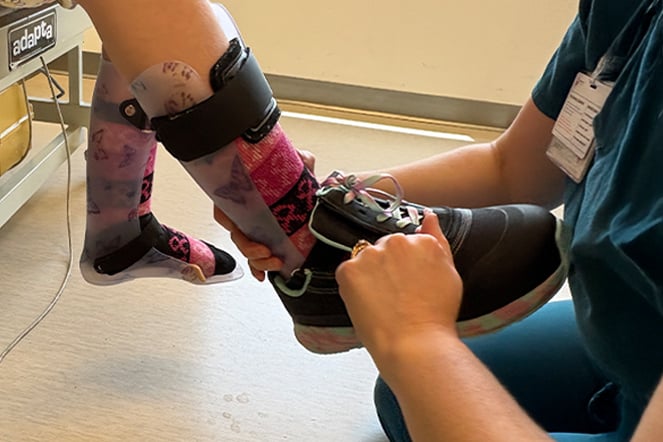
Hannah Zesiger puts Elizabeth's shoes on over her AFOs.
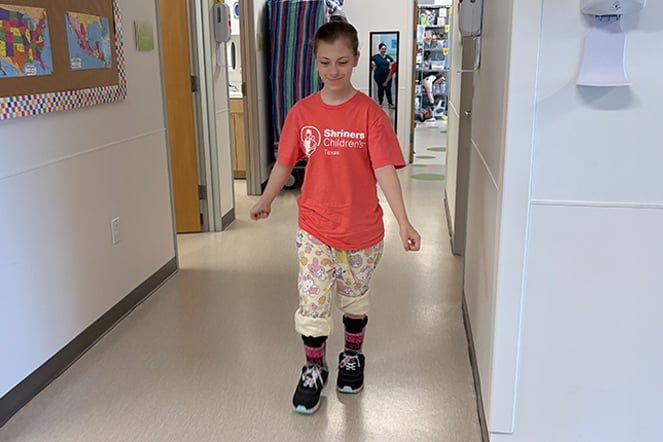
Elizabeth walks down the hallway in the POPS department.

Meet Elizabeth.
Instead of walking heel-to-toe, she began walking on her tiptoes, and over time, it became her standard way of walking. Now, at 11 years old, Elizabeth is going through corrective treatment at Shriners Children’s Texas.
Toe-walking is fairly common in toddlers as they first start learning balance and coordination, and most kids outgrow it by the age of 2 or 3. When it continues beyond that without a clear cause, it’s often called idiopathic toe-walking. While it may seem harmless, persistent toe-walking can lead to negative physical changes later, including reduced ankle mobility and imbalance issues.
For Elizabeth, what began as a simple walking habit led to tightening in her Achilles tendon and calf muscles. Eventually, her foot could no longer rest flat on the ground. She experienced frequent tripping and fatigue with any physical activity.
“Continuing to walk on your toes causes your Achilles tendon to tighten, and whenever those are too tight, the foot doesn’t ever go flat,” said Hannah Zesiger, MS, L/CPO, a prosthetist at Shriners Children’s Texas. “So Elizabeth got to that point where her foot physically wouldn’t go flat.”
Continuing to walk on your toes causes your Achilles tendon to tighten, and whenever those are too tight, the foot never goes flat.
At Shriners Children’s Texas, Elizabeth began a non-surgical treatment plan designed to restore flexibility and improve her gait. A key part of her care was serial casting, where a series of casts gradually stretches the tendon and brings the foot closer to a natural position. This type of cast is similar in appearance to one you might have after a fracture or broken bone. After casting, she transitioned into ankle-foot orthoses (AFOs), which are custom braces that help maintain that stretch and support proper walking. With consistent follow-through, many children can avoid surgery and regain normal movement.
Elizabeth’s goal is simple but meaningful: to walk comfortably enough to enjoy a day at the beach. Her story is a reminder for parents. Occasional toe-walking in young children can be normal and harmless, but if it persists, it’s important to seek evaluation. Early treatment can prevent long-term complications and help children move freely and confidently.

Hannah Zesiger puts Elizabeth's shoes on over her AFOs.


