As they learned more about limb differences and prosthetic technology, the couple began researching the benefits of introducing prosthetic devices early in childhood. They discovered that early exposure can help children become comfortable with a prosthesis and view it as a natural option rather than something entirely unfamiliar later in life. That's what led them to Shriners Children's Texas and the team in Pediatric Orthotic and Prosthetic Services (POPS).
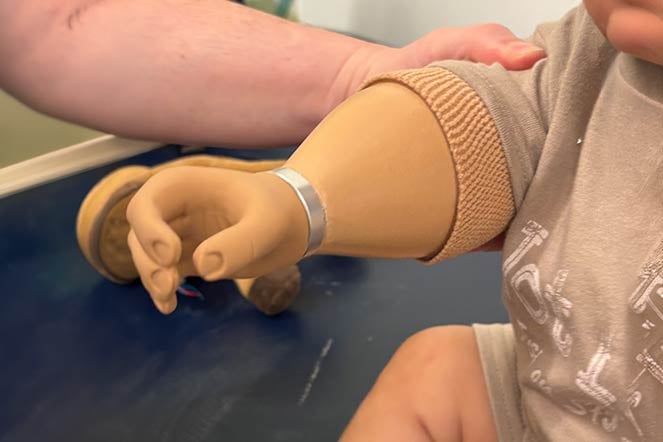
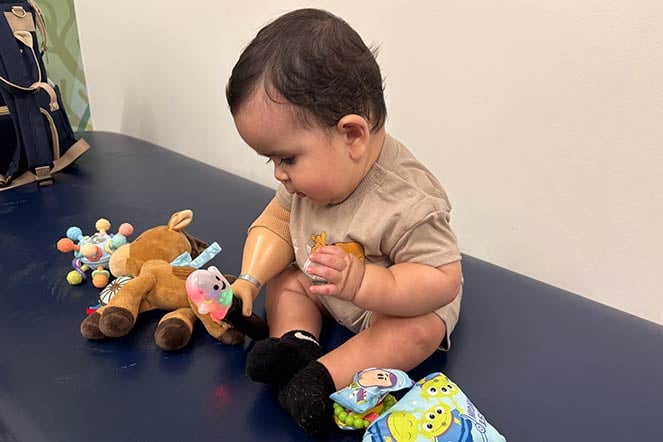
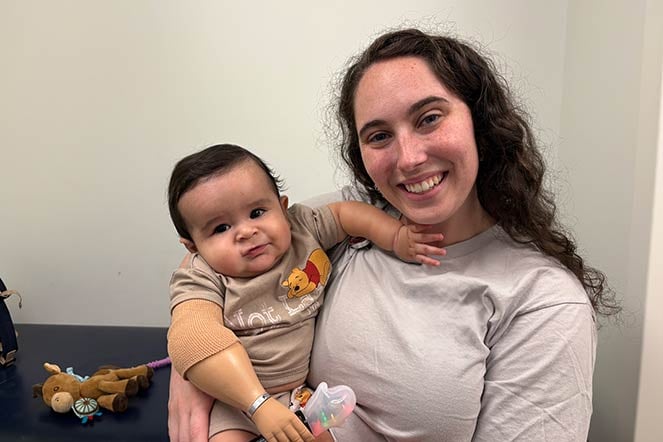
Alyas now wears a "fit-to-sit" prosthesis, an introductory device designed to help him become accustomed to having something attached to his arm while supporting his overall development. Therapists work with him on simple activities that encourage him to use both sides of his body, interact with objects in front of him, and understand how a prosthesis can be part of his daily life. The goal isn't to make him dependent on the device. Instead, it's about creating familiarity and providing opportunities for the future.
That could become especially important as technology continues to advance. One day, Alyas may decide he wants a more sophisticated prosthetic device, perhaps even a robotic arm controlled by muscle signals. If that day comes, his early experiences will give him a foundation to build upon.
"His parents really wanted to give him the option of having a prosthesis so that he can get used to having it on him," said Hannah Zesiger, MS, L/CPO, a certified prosthetist-orthotist at Shriners Children’s Texas. "In the future, if he needs a more functional one, he will be more likely to be successful."
For Jasmine and Andrew, having access to those options makes a huge difference, being young parents who are still establishing careers while building their family. Specialized prosthetic care and ongoing therapy can be a financial challenge. The resources and support they have received through Shriners Children's Texas has provided access to care that will allow Alyas to begin exploring options at a very young age.
That's what matters most to Andrew and Jasmine. The prosthesis isn't about changing who Alyas is. It's about ensuring that as he grows, he has every opportunity to decide for himself what works best. By introducing him to a prosthesis now, they're helping to ensure every future opportunity remains open to him.