


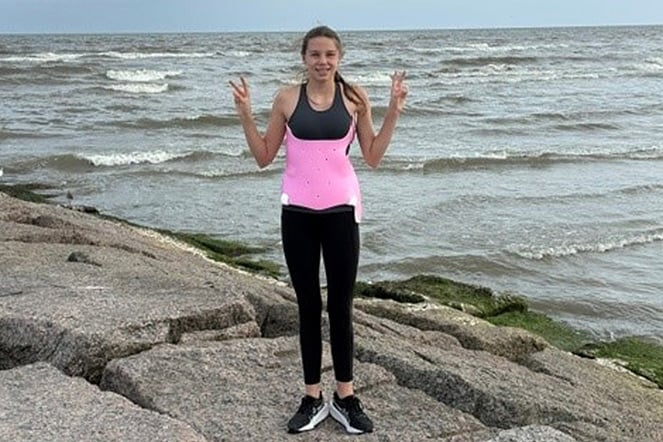
Adley visits the beach in Galveston while wearing her brace.
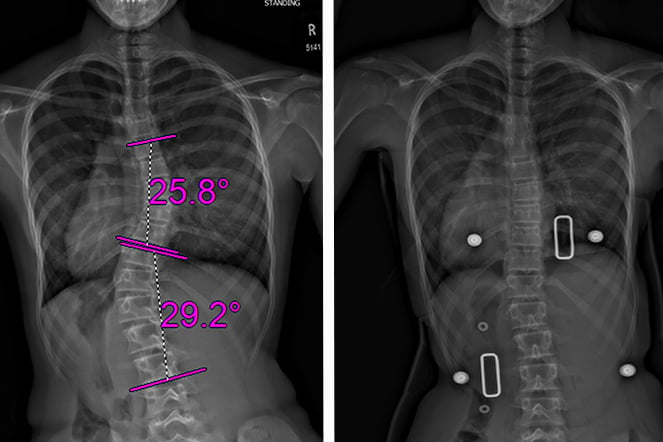
An X-ray shows the before-and-after effects of wearing the brace after just one week.
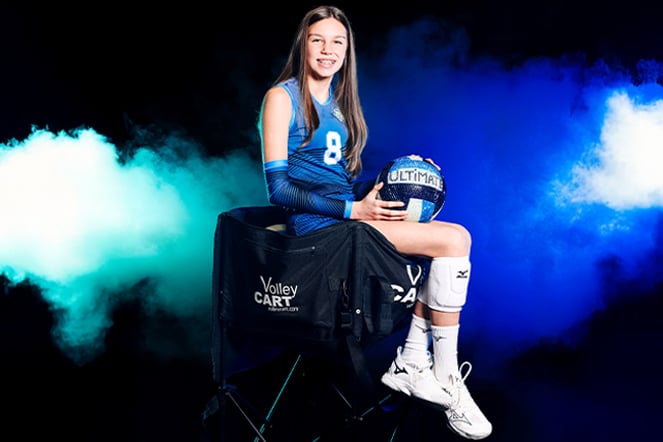
Adley poses for her volleyball portrait.

Meet Adley.
Wearing a scoliosis brace can bring a whole new set of concerns about fitting in with peers. 13-year-old Adley has already experienced that reality. Just one week after receiving her brace, she attended an engineering camp where two girls kept staring at her without saying anything. Finally, Adley decided to address the situation directly.
"Do you want to ask me about it?" she asked them confidently. It was a moment that perfectly captured how she is approaching her scoliosis diagnosis: with a determination to make sure people see her as a person, not just as the girl with the brace.
Adley learned she had scoliosis after a routine school screening. Follow-up appointments confirmed she would need to begin brace treatment. This led her family to Shriners Children’s Texas, where she received a scoliosis brace from Pediatric Orthotic and Prosthetic Services (POPS). The adjustment to wearing a brace has been challenging. The brace can be uncomfortable and makes simple tasks much more difficult, such as bending over to pick up a pencil. But perhaps the hardest part has been navigating the social side of wearing a brace at an age when fitting in feels especially important.
For Adley’s mom, Jessica, coming to Shriners Children’s Texas made a huge difference when it came to the emotional side of healing. “Treating not just her back, but the mental and the emotional part of it,” Jessica said.
Instead of hiding her brace, Adley has chosen to face it head-on. Shortly after receiving it, she invited some close friends over for a "brace party." Together they played games, including a competition to see who could correctly strap her into the brace the fastest. What could have been a source of embarrassment became an opportunity for friendship and understanding. By making her friends part of the experience, Adley removed much of the mystery surrounding the brace and created a real support system.
Treating not just her back, but the mental and the emotional part of it.
That positive attitude is important because brace treatment works best when patients wear it consistently. Adley will need to wear her brace for up to two years as she continues to grow. While that can sound daunting, early intervention gives her the best opportunity to keep the scoliosis from progressing and reduces the likelihood of more invasive treatment later. Every hour she spends wearing the brace is an investment in her future.
This is important because Adley is also a very active teenager. She is an avid reader who loves historical fiction, particularly stories set during World War II. She plays volleyball and tennis, and performs in her school band as a flutist. She dreams of becoming a veterinarian someday, especially one who cares for birds and other animals that often struggle to find specialized care.
Speaking of birds, she also happens to be a devoted chicken owner. Her family's flock of 13 chickens includes birds with names like Nugget, Black and Dark Stalker, and Adley is known to walk them on leashes complete with bow ties. She even has a special chicken purse for carrying them around.
When she's not caring for her chickens, Adley attends camps to explore new interests and looks ahead to the future. The recent engineering camp, which included hands-on projects and a visit to NASA, sparked an interest in chemical and mechanical engineering. Whether she eventually becomes a veterinarian or an engineer, one thing is already clear: Adley is not letting scoliosis slow her down.


