Michael's journey with Shriners Children's Northern California began before he could even walk.
Born in 2000 with an overgrowth condition known as CLOVES syndrome, Michael's journey through life has been a tapestry of resilience, support and a desire to give back.
He said, "I was at Shriners Children’s Northern California for as long as I can remember.”
Michael's condition required significant medical intervention early on. When he was just 15 months old, his left foot was amputated. Joel Lerman, M.D., his dedicated physician at Shriners Children’s Northern California, became central to his treatment and healing.
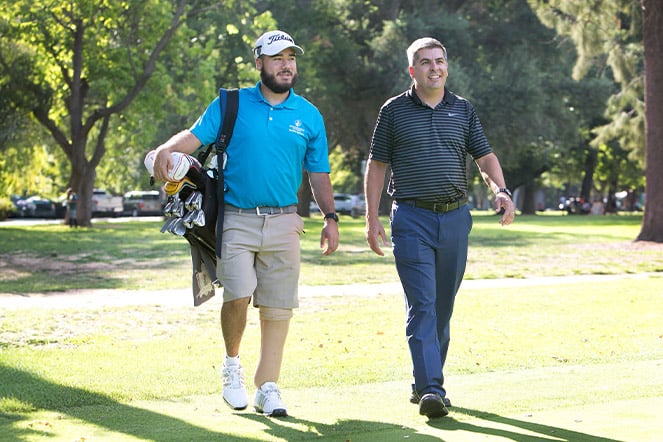
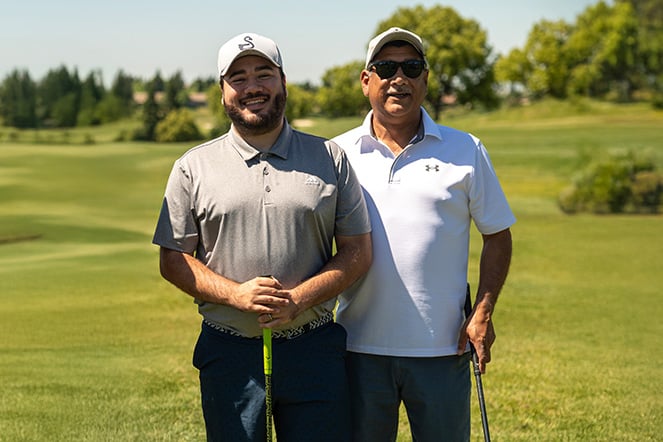
Throughout his 21 years as a patient, Michael actively participated in various events and programs. He took part in media interviews, represented Shriners Children’s Northern California at the Shriners Children's Open in Las Vegas, attended summer camps, cheered at Kings games and even enjoyed outings to the Ringling Bros. Circus. His involvement was a testament to his gratitude and the bond he felt with the Shriners Children’s community.
Living with CLOVES
The complexities of managing his condition became more pronounced, especially with the additional issues caused by CLOVES syndrome, like minor scoliosis, hip dysplasia, and increasing knee problems due to tissue growth. He underwent plastic surgery at 12 to debulk and reduce the fatty tissue in his legs. Additionally, Michael’s left side grows faster than his right, affecting his leg and, to a lesser extent, his arm and face.
His prosthetic foot, which he has had since infancy, has been both a tool and a challenge.
"The muscles in my leg aren’t very strong, and while my prosthetic doesn't affect my walking, running is a bit harder. It looks like I’m tripping," he laughed.
Michael's official diagnosis of CLOVES when he was 16 brought some clarity.
"Before that, I was diagnosed with Proteus syndrome, which wasn’t completely accurate,” he said. “Shriners Children’s helped enroll me in a Michigan State study on CLOVES that finally gave me the correct diagnosis.”
CLOVES syndrome is a rare genetic disorder that causes a combination of abnormalities in the skin, bones, joints, spine and blood vessels that are present at birth:
C: Congenital (present at birth)
L: Lipomatous (soft fatty masses called lipomas that can be found on the belly or back)
O: Overgrowth of fatty tissue in areas of the body that grow faster than other parts
V: Vascular malformations (blood/lymph vessel issues)
E: Epidermal nevi (skin lesions)
S: Spinal/skeletal anomalies (including scoliosis)
This breakthrough provided not just a name for his condition, but also hope, as new treatments from Europe are being tested by the FDA that could potentially slow down the growth of fatty tissue.