


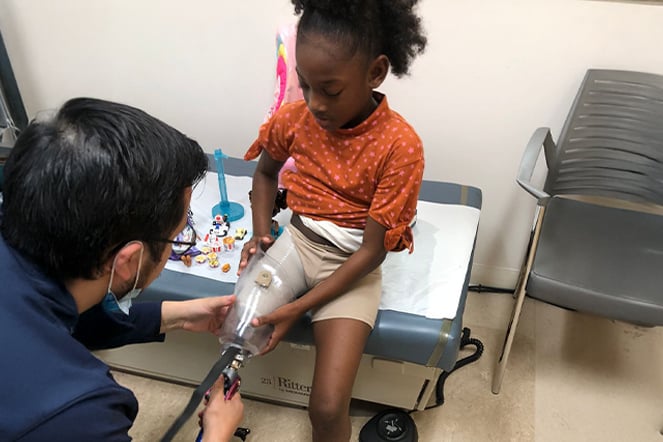
Brinae during her first prosthetic fitting.
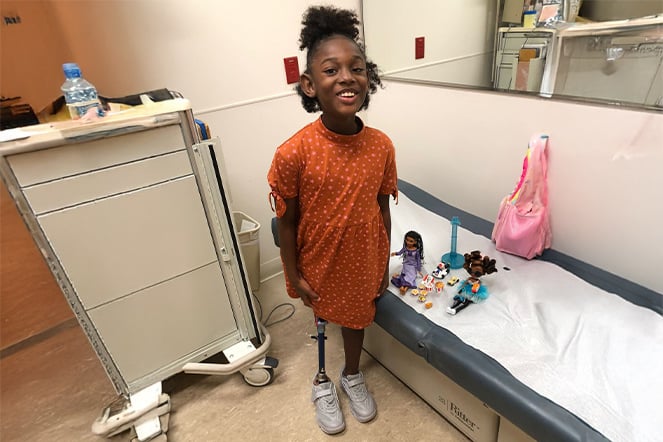
Brinae beams happily as she stands on her new prosthetic leg.
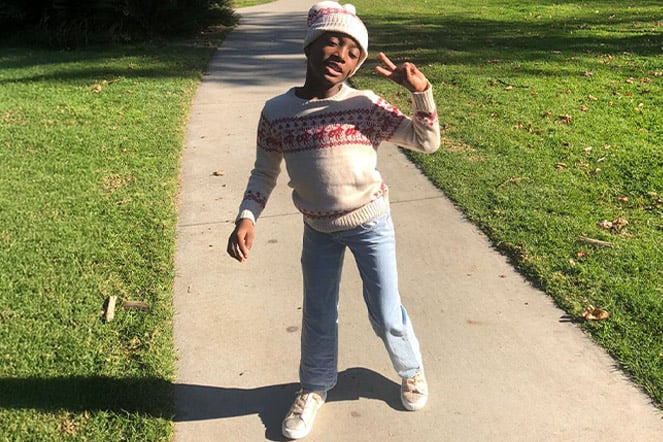
Brinae enjoys a walk to the center on a cold day.
.jpg%3Fh%3D454%26iar%3D0%26w%3D640&w=1920&q=75)
From a very early age, she found that every move she made showed the world beams of her light. When she was 6 years old, a terrible accident led to an infection that changed her life. To save her from this infection, her right leg needed to be amputated, dimming her light.
Her mother, Delva, became frightened and uncertain about her daughter’s future. She struggled to find a way to tell her young daughter she might not be able to dance again. Even with this uncertainty, she knew that if there were a way to help Brinae, she would find it.
With help from a family friend, Delva learned about Shriners Children’s. From that moment, their world began to change for the better. When she and Brinae first walked through the front door, Delva immediately felt warmth coming from every direction. Seeing how the staff spoke to and treated Brinae, she knew they had made the right choice.
During her visit, Brinae met other children who had faced similar challenges. She saw kids with prosthetic legs running, thriving and, most importantly, happy. For the first time in what felt like forever, Brinae knew she wasn’t alone and that her dream to dance again was within reach. She smiled, knowing she would be able to express herself through dance, and that once beaming light began to brighten.
At Shriners Children’s, we approach every patient as an individual with unique dreams and goals. In Brinae’s case, her dreams and goals were to run and dance, and our team knew what to do. She was molded and fitted for a prosthesis, and our Pediatric Orthotic and Prosthetic Services team began to build a new leg so that her dream could come true.
Through a thorough evaluation of each patients' needs and goals, the team at Shriners Children's develops a plan that focuses on lifestyle and comfort. For Brinae, achieving her goals meant developing a prosthesis that would allow her to balance high-performance movement with comfort. Once the team finds that balance and fit, patients begin a process that includes learning to safely use their prosthesis, building strength and learning basics like walking comfortably and confidently. For Brinae, this meant starting with a stable, locked knee for safety. Later, she transitioned to a free-swinging knee that allowed her more freedom of movement and the ability to dance with ease. Once her prosthesis was in place, Brinae began a six-month journey of rehabilitation and therapy.
She's small, but mighty.
This is where support from our rehabilitation team took over. Brinae’s therapy sessions became a space for healing and laughter. Each session helped her grow stronger, both physically and mentally. The sessions became so fun, Brinae forgot she was even in therapy. The team worked closely with her to help her get back to dancing. With time, her light grew bright once again.
Now 8, Brinae is back home in Belize dancing her heart out. Every day, her mother watches her proudly. “She’s small, but mighty,” Delva said. Those words continue to ring true. With the help of the dedicated team at Shriners Children's, Brinae overcame her challenges and achieved her dream. Her light shines brighter than ever.


