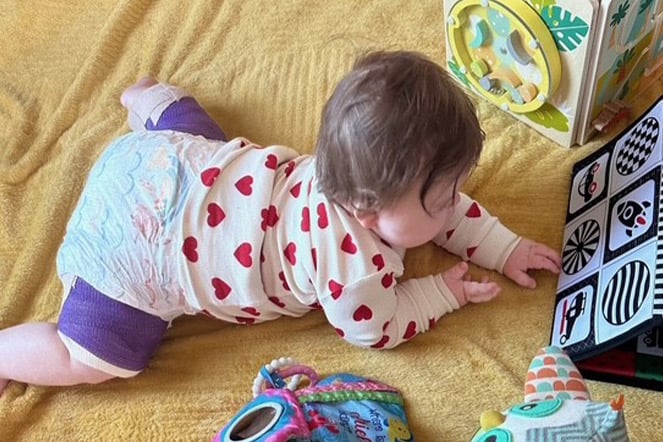
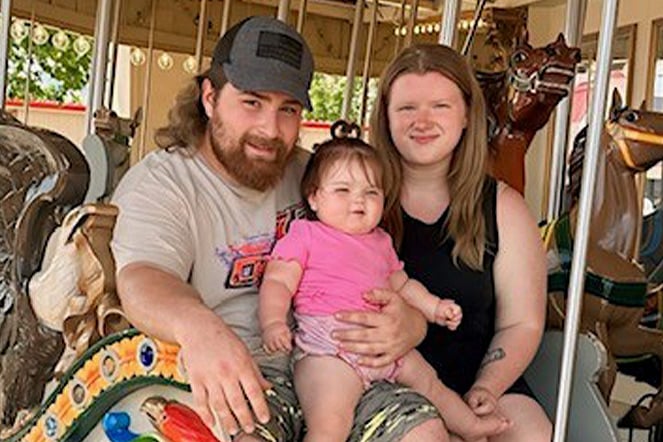
Within weeks, Brynlee was scheduled for surgery. Dr. Dede performed an open reduction at UPMC Children’s Hospital of Pittsburgh. Brynlee spent just one night in the hospital before returning home in a hip spica cast, which she wore for 11 weeks. While wearing the cast, her care team at Shriners Children’s Erie helped the family adjust, so life could continue as normally as possible.
As part of Brynlee’s care team, physical therapist Teresa Emerson, PT, played a key role in treating her torticollis and helping the family prepare for life after her hip surgery. Therapy focused on stretching and strengthening exercises for Brynlee’s neck, as well as supporting the development of age-appropriate gross motor skills.
Before surgery, Emerson educated Brynlee’s family on how the upcoming hip spica cast could affect her development, and offered strategies to adapt the home environment so Brynlee could continue engaging in activities in various positions.
After surgery, Emerson checked in regularly to monitor Brynlee’s progress and provide continued support. With all of Brynlee’s providers working under one roof, communication was efficient and coordinated, allowing the team to address needs in real time and easing the burden of multiple appointments for the family. “We felt completely supported,” Makayla said. “Everyone at Shriners Children’s Erie was just top tier. We always felt included in the decision-making process and like we were in the best hands.”
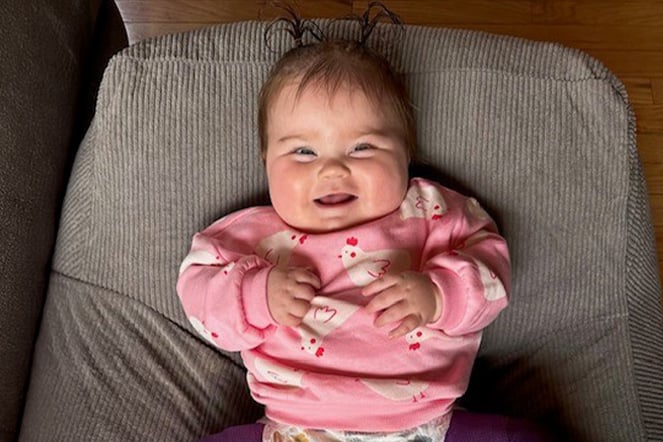
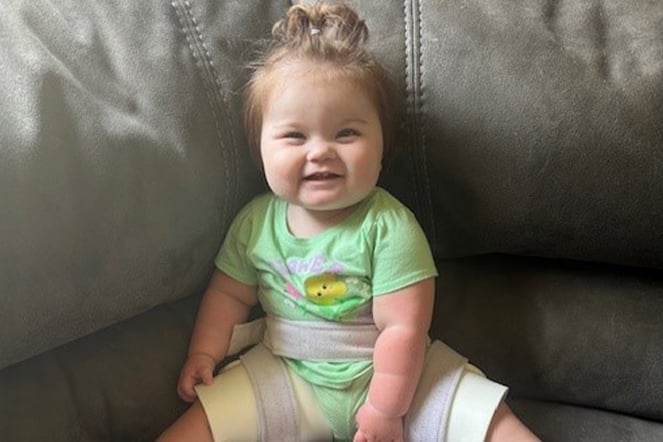
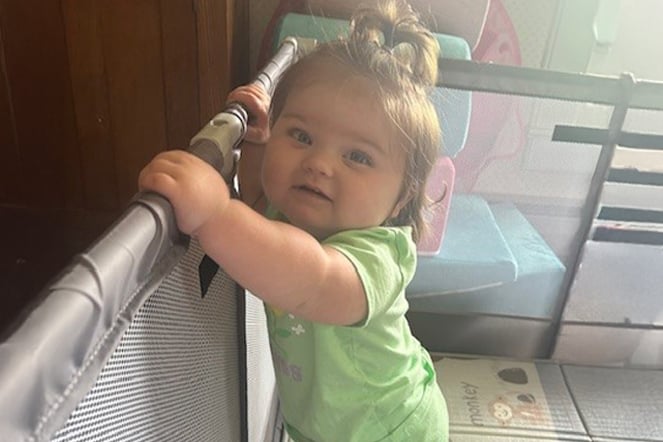
Now 10 months old and out of her cast, Brynlee wears a brace 16 hours a day to keep her hip immobilized in the optimal position for healing. She is growing strong and is learning to crawl. Brynlee also loves to swim and play outside, and is quickly catching up on any milestones that were delayed due to casting.
Reflecting on the journey, Makayla is deeply grateful for the early screening that set everything in motion. What began as a concern about Brynlee’s head movement led to a timely diagnosis that may have prevented long-term complications. “I’m so grateful that Shriners Children’s Erie screens for hip dysplasia in babies with torticollis,” she said. “Without that, we probably wouldn’t have known until she was a toddler. They take initiative and care beyond the obvious.”
Thanks to collaborative care team, early detection, treatment and therapy, Brynlee is now thriving. Makayla hopes other parents take comfort in knowing they’re not alone. “Follow your gut. Listen to your pediatrician. And ask questions,” she said. “Early screenings can completely change the path of your child’s health.”