Chloe
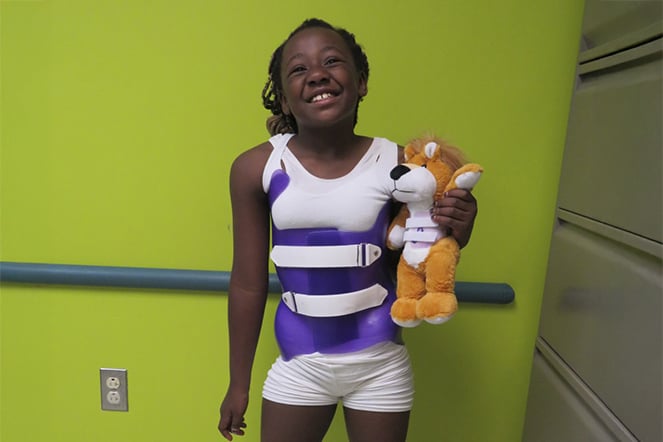
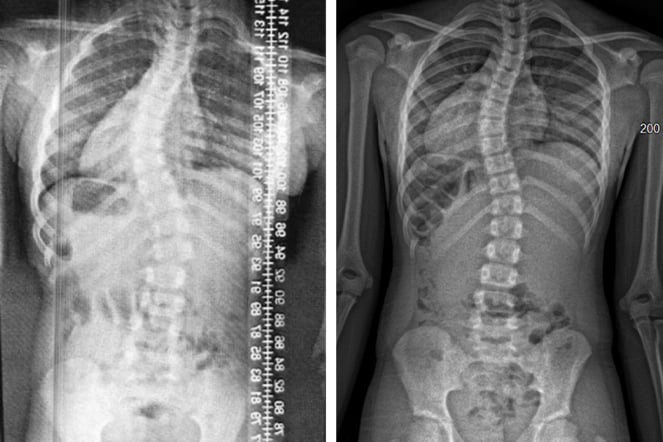
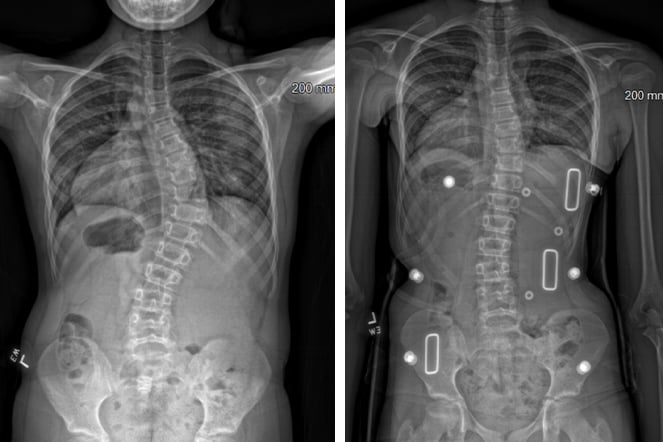
Shriners Children’s Erie Patient Ambassador Chloe was 12 when a routine pediatric checkup led to a scoliosis diagnosis. During the exam, her pediatrician noticed a rib hump when she bent over to touch her toes and sent her for X-rays to confirm the curvature. The news left Chloe feeling anxious, unsure how visible the curve would be to others and fearful that surgery was her only option.
At the time, she had never heard of bracing for scoliosis. Chloe began treatment with a back brace, an adjustment she found physically and emotionally challenging. “I felt kind of like a turtle,” she said, recalling moments of limited mobility and discomfort at school. Despite her best efforts and support from the POPS teams at both Shriners Children’s Erie and Shriners Children’s Philadelphia, bracing wasn’t enough to prevent curve progression. Eventually, surgery became the next step.
In 2021 Chloe underwent a vertebral body tethering (VBT) procedure, performed by pediatric orthopedic surgeon Joshua Pahys, M.D.
“Due to her determination and hard work, she recovered well and returned to all her activities sooner than expected,” Pahys said. “Her journey is emblematic of how well kids can do even when faced with surgery.” Chloe connected with another scoliosis patient before surgery, and their video calls helped calm her nerves and build confidence.
Recovery for Chloe was full of small victories. “I remember when I first got cleared to ride rollercoasters again by Dr. Pahys, and I treated it like a celebration,” she said.
Chloe credits the care teams at Shriners Children’s for helping her feel empowered and optimistic. Today, she’s passionate about raising awareness, encouraging early detection and breaking the stigma surrounding scoliosis. “You are never alone,” she said, urging newly-diagnosed teens to reach out and connect with others. Her journey taught her strength, patience and the importance of self-advocacy. Now she encourages others to share their stories, too.
Savannah
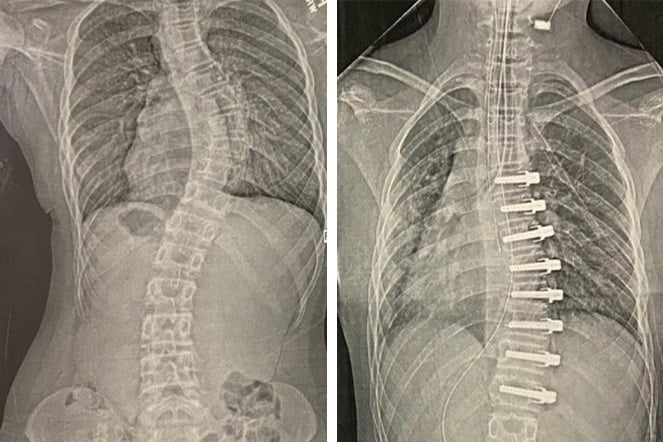
Shriners Children’s Erie Patient Ambassador Savannah was diagnosed with scoliosis years before her care journey began. Her primary care provider diagnosed her with scoliosis, but did not send her for an X-ray at that time. It wasn’t until Savannah began to experience shortness of breath during the school day that her mother, Tracy, decided to schedule a visit with a different physician, who ordered a chest X-ray. The results revealed an abnormal curvature in Savannah’s spine. Without hesitation, Tracy picked up the phone and called Shriners Children’s Erie.
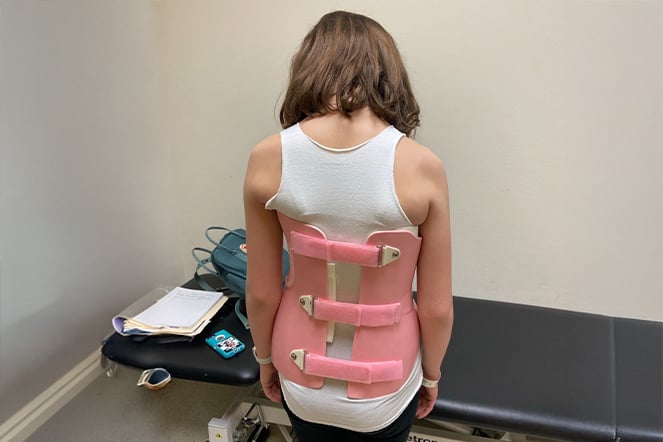
At Shriners Children’s Erie, Savannah and her family were met with answers. Under the care of Ozgur Dede, M.D., and Hannah Clark, MS, CPO, they learned that Savannah’s spinal curve measured 48 degrees, which is well past the 20-degree mark when bracing typically begins. “Because her curve magnitude was so severe, the team had to lay out all treatment options from the start,” said Hannah. “Bracing became the first step, with the understanding that if it was not effective, surgery might be necessary.”
From the very beginning, Savanah’s family made it clear that this wasn’t her fight alone. Her parents, Tracy and Brad, took their initial frustration and fear and channeled it into advocacy and support. The first night Savannah received her brace, she hosted a slumber party with her closest friends. Savannah showed off her brace, explained to her friends the importance of wearing it and answered all the questions they had while enjoying other slumber party activities.
Since being diagnosed, Savannah and her parents have hosted fundraisers for Shriners Children’s Erie and volunteered with local Shriners International clubs. They have also starred as guests on TV interviews, received a proclamation from Pennsylvania Governor Josh Shapiro, and are currently working with Pennsylvania State Senator Michelle Brooks to lower the age at which public schools screen for scoliosis.
The stories of Abagail, Chloe and Savannah highlight the unique nature of every scoliosis journey and the crucial role personalized care plays at each stage. Early detection is key to successful treatment, often making the difference between non-invasive management and surgical intervention. When families, schools and healthcare providers are informed and prepared to recognize the early signs, children have a much better chance of managing their condition effectively with minimal disruption to their daily lives. That’s why raising awareness and promoting education around scoliosis are so important. Advocating for routine screenings, informed care and open dialogue can help ensure more children are diagnosed early, receive the support they need and are empowered to thrive throughout their journey.