


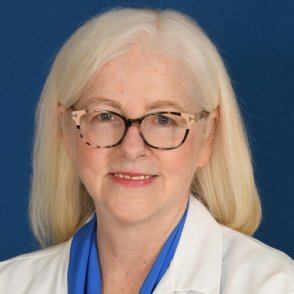
Renowned burn surgeon Colleen Ryan, M.D., discusses the latest advancements in research and burn care at Shriners Children’s Boston.
Bob Underwood, MD (Host): Welcome to Pediatric Frontlines from Shriners Children's, where we explore the best in pediatric care. In this episode, we'll take a close look at burn treatment, innovative recovery research, and the evolving tools that help children and families heal after their serious burn injuries. Joining us to share her decades of experience and expertise on this important topic from Shriners Children's Boston, Dr. Colleen Ryan. Dr. Ryan, welcome to this program.
Colleen M. Ryan, MD: Well, I thank you Dr. Underwood. It's really my pleasure to be invited to this forum for a conversation about our research, which we're very proud of.
Host: Yeah and, well, you should be. So Shriners Children's has a number of hospitals that care for burn injuries. What is their role in the field of burns for pediatric patients?
Colleen M. Ryan, MD: The Shriners Hospital is actually a critical resource in the field in many ways. First of all, the whole science of care for the very, very seriously injured is held in the hands of just a few people. The clinical expertise, there are right now about 300 practicing Burn Surgeons in the United States.
And of them, there's only a few that are Pediatric Burn Surgeons, and most of them work at the Shriners. For this reason, the expertise in the management of a pediatric burn patient, which is very different from an adult burn patient, is that body of knowledge is held here within the four Shriners hospitals.
So for that reason it's very important. And that's just one reason. So for the care of the patients, the education, and for the solid foundation that they've provided for years, in forwarding the research in this field.
Host: It is absolutely huge. It really kind of sets the standard, I think, for a lot of what happens around pediatric burn care. For sure. So you've been working on a program. I want you to tell me a little about the Life Impact Burn Recovery Evaluation or LIBRE Program, including what has been your involvement and what are some of the goals? What are recent outcomes or results that the program has developed?
Colleen M. Ryan, MD: Well, if I start at the beginning, if I could, I began my career as a doctor in the eighties and wound up here at the Shrine in 1989 is when I started, shortly after I, I finished my residency and my fellowship and they needed someone here. And so I came and I had always loved my burn rotations and I always loved taking care of children.
So I wound up here because they needed someone and I just loved it. And I stayed. Initially when I started, they were just dealing with getting children to survive. It was just the late eighties where finally we were able to actually get children to survive these massive injuries, and that's where outcomes stopped.
So early in my career, I did a lot of work on mortality, and as I got older and as the children grew older with me, I thought it was very important to understand exactly what happened to them. One of the things that we've realized through research, is that burns is really a chronic condition in many cases.
And there's a lot of things even a small burn, there's no, like little burn. A small burn can actually change the trajectory of a child's life, cause a problem with the family and the growth. And really change the family's whole life. So in order to improve it, we have to have a way to measure it.
And the LIBRE is a way to measure it. So our scientists that we've gathered are people that are expert at making these very soft concepts into math. We've gathered people that have expertise in testing. Like, when you go to the doctor, you only have a limited time with the doctor. So we want to make sure that if we really understand everything that happens to burn patients, that we have a complete list, and understand where they sit in all of that. And so by using one of these tests that spans the whole field, we can understand exactly where we need to concentrate, and we can look at whether our therapies are useful or not to the children and find out which ones are effective, when we should use them and really be stewards of the donations that we receive from so many people.
So that is what the LIBRE is about, and it's complex because the, as children grow the things that happen to them and the things that are important to them are different depending on their age group.
So what we did was we gathered parents and children and clinicians and other stakeholders in rooms, in large focus groups. And we asked them what's important. We took that information and combined it with reviews of the literature and information from many clinicians and sat down with an experienced group and made a whole set of questions. And then we tested that on 500 children for each age group.
And we came up with these questionnaires that are going to help us to treat our patients. And this is all going to be the basis of maybe in the future it'll be Dr. Robot. And if it's Dr. Robot, we can be reassured that in that Dr. Robot part of data, it's going to be the patient's voice.
Host: Yeah, it really is clinical outcomes measured from the patient's point of view and what's important, and it's a more holistic view too, not just the clinical piece that we're so used to measuring. So just wonderful work behind that. So I know of a previous interview you mentioned being interested in monocytes.
So monocytes are a type of blood cell that undergoes significant differentiation in a burn injury. So why are they important and what do they tell us about what's happening with the physiology of burn and burn recovery?
Colleen M. Ryan, MD: The burn injury is like the space program. When you think about all the things that can happen to a burn patient, particularly a burn child, physiologically, the infections; they're the sickest people in the hospital and when you figure out what's happening to them and you learn about it, it's the spinoffs to other conditions are unbelievable. Years and years ago the work that Dr. Burke and Dr. Yannas did on artificial skins; that has gone to other fields in engineering like the artificial liver or the other sorts of engineering where they're looking at individual cells.
So there's many things like that. In terms of the monocytes, we're finding that they're very sensitive to different kinds of infection and they have a pattern, particularly with fungal infections, which are becoming a real challenge, particularly as we have our children coming from international places. They've been out there for a while and they're, they come to us late and they've often been treated with many different antibiotics, and their wounds have been open for a long time. And they come in and they're emotionally exhausted, they're physiologically exhausted, and they have not just bacteria, but fungus in their wounds and the monocytes, we found that, we can tell when we've adequately treated a fungal infection by watching them. So, this is all preliminary data, so it has to be tested and there's many theories. So we have to have the full work to make sure that we can have something to bring to the clinic, but it looks promising.
So something like that I think would be very important and would help us not expose some children to some very powerful medications that might harm them.
Host: Yeah, absolutely. I mean, when it comes to fungal infections, sometimes we're talking about some pretty powerful meds. That yeah, if they could be avoided but to have a biomarker to help us understand where we are with that would be huge. So what are some new treatments or therapies for minimizing scarring, enhancing healing, and what are those therapies that are gaining traction in research circles right now?
Colleen M. Ryan, MD: Well, that's a great question. As I think of my career, some of the probably the most important leaps have been out of this very hospital. The whole concept of the treatment of laser and scarring; that has been absolutely phenomenal. How we can take some of these horrible scars and flatten them, take away some of their symptoms, make them feel better, make them look better. Dr. Matt Donlan who just retired; some of his surgical concepts in terms of how to reconstruct the face after a burn really revolutionized the field. In the early days they would see a wound and they would just take skin from everywhere and just close the wound.
And there wasn't really a whole artistic concept of the face which he brought to the field, as a true plastic surgeon. So, there's been innovations like that. Dr. Sheridan has been really brilliant with some of the critical care that he's brought and he has experience all over the world in disasters. He's been in Afghanistan, he's been on the boats treating the tsunami patients. He's been down in Central America and, really one of the people who truly understands the critical illnesses that these, uh, children can have and understands it in a way that few others can.
And, as these children from the children of war, as they're coming to our hospitals, that's highly complex. And it's not just infections, it's infections and other kinds of medical illnesses that are rarely seen. His experience in Africa, his experience in other sorts of austere environments like children that haven't eaten or children that are mentally exhausted.
The multidisciplinary care and the psychiatry here is also excellent. Dr. Stoddard really is one of the experts in disaster child psychiatry. And any burn is a disaster of one and of one family. So, that's really another extraordinary thing that's done here.
It's really the whole group and all of burns's nursing, our nurses, have also made tremendous gains in the field.
Host: And that's phenomenal to look at healing as more than just the physical burn itself. And to think about it from that perspective is so meaningful, I think, to, to these patients and their families as well. So there's also some advances in dressings for burn wounds. So how have these advances been used for wound care patients?
Colleen M. Ryan, MD: That's a great question. Another great advance, I think has been some of these dressings that are available to us. And one of the most important things is how they address pain. So if you think about, what the child has gone through, first of all to have the burn. In the past the treatment was also just as painful, having to go undergo those dressing changes.
And that was terrible. Now we have child has a scald injury. They're not brought into the hospital for two weeks like they were in the past and undergo surgery and have a donor site and all this. What we do is we would bring them into the clinic.
The play therapists would bring toys and they distract them. And we have highly experienced nurses that can go in there and in half a minute, get their wounds, debrided it's like, look out there, it's snowing. And the kid goes like this, and then the dressing's all done. So we do it without morphine.
We're not exposing the kids to narcotics. And then after that we have a dressing that we can put on, a technological dressing, that can then go on the child and then we wrap them up and then they're pain free and there's no dressing until the wound is healed.
And then we bring them in and the dressing comes off and the wound is completely closed. And the dressing material moves with the child. It's really another remarkable advance. So, we're working against scarring. We're working against pain, we're working towards resiliency of the child and the family.
The things like LIBRE, we don't just look at the physical things that happened. We look at the things that happened to the family and the different age groups. When you hear the things that are happening to these very little ones, and then when you move up to the teens and they put it in their own words, it's just heartbreaking.
I feel defective, what can you do about that? And you really have to understand and almost put a spin on it. You have to be a spin doctor and get them to really re-look at their injury as a badge of honor and of their strength. Get them involved in peer support. Get them to understand how to help others because that seems to really bring forth the best in a lot of these children.
Host: Yeah, absolutely. So let's talk about some new technology, virtual reality, other innovative technologies. How have they improved rehab for individuals recovering from significant burn injuries?
Colleen M. Ryan, MD: Well, the virtual reality has been useful in pain. It's just like, when that look at the snow, you have that the virtual reality on and they can be doing their game and you can be doing their painful physical therapy. And they're not knowing it. There's other things that we've done research on like particular video games that can mimic the motions that they're supposed to do for their therapy. So we've turned it into a video game.
That was another interesting thing. The different advances in orthopedics that we have here at the Shrine, blending them in with the burn clinicians. That's been enormously useful, particularly in situations where you have destroyed bone, in the very, very deep injuries. The, just combining them together, often makes for a better outcome.
Host: Dr. Ryan, while we've got the stage today, anything else that you'd like to add or discuss?
Colleen M. Ryan, MD: Well, I'm just very grateful. I think I have the best job in the world. I was a surgeon and operated here for a long time and now as I'm reaching, not quite at the end of my career, but as I grow older, I'm enjoying using my clinical knowledge, still seeing patients, but using it, my understanding of the clinical world to address some of the things that I saw and hopefully make them better.
Host: Oh, that's awesome. Well, thank you for the fascinating discussion. For our audience, for more information about burn care, visit shrinerschildren's.org/burns. And for other topics, including the full range of care disciplines, please visit shrinerschildren's.org. To hear more episodes of Pediatric Frontlines, please subscribe wherever you listen to podcasts.
About the Speaker
Colleen Ryan, M.D.
Colleen Ryan, M.D., has treated children with burn injuries at Shriners Children's Boston since 1989. She has followed many children as they have grown into adulthood. Now, Dr. Ryan's focus is improving the pathway to recovery for these children and their families. In addition to her clinical work, she has a large, internationally-renowned research laboratory for studying long-term outcomes and is active in burn prevention and disaster preparedness policy for response to burn surge events.


Keep In Touch
Join our mailing list to stay up to date on everything that's happening at Shriners Children's.