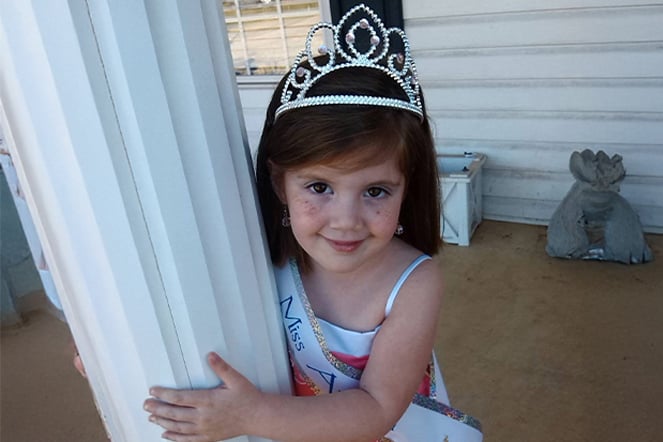
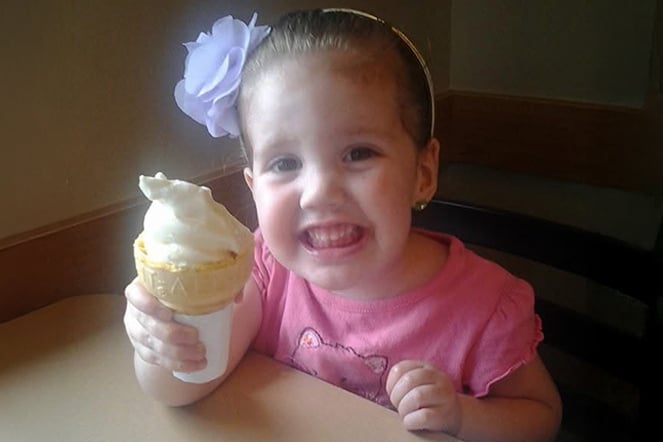
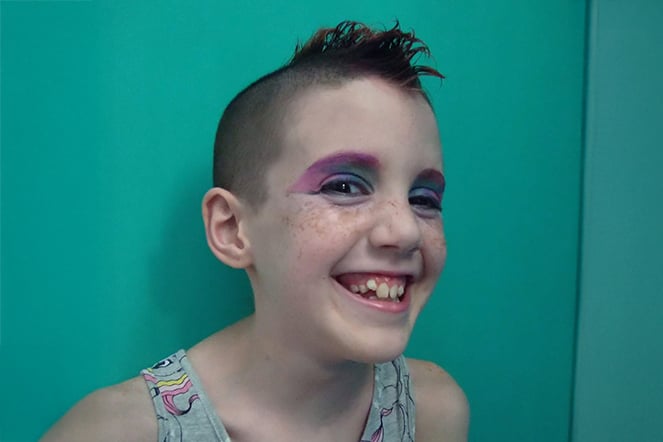
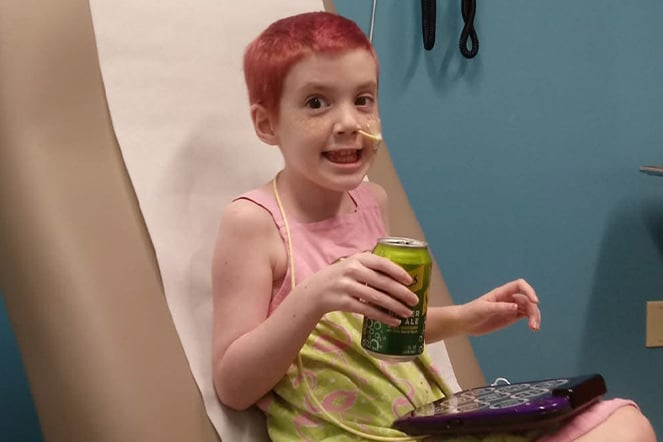
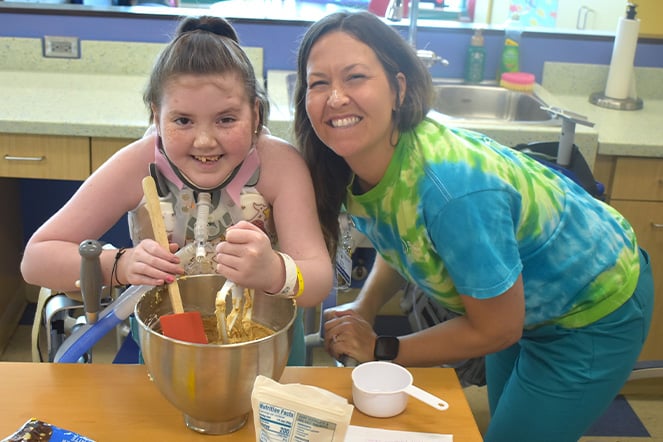
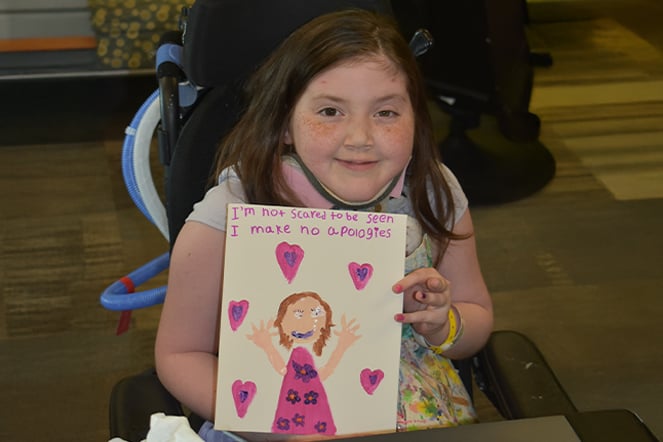
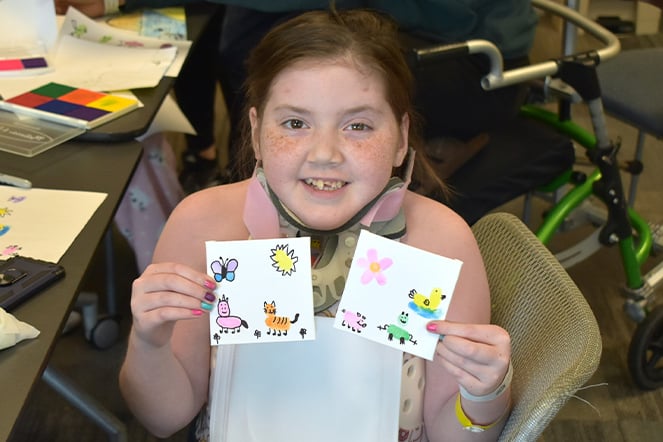
Charlotte is one of the most caring and empathetic children you could ever meet.
Any time she receives a special treat, whether that be Harry Potter chocolate, grape soda or desserts, she shares them immediately with her fellow patients, nurses and staff members. She makes every person in the room with her feel special and wanted. She greets everyone with a big smile on her face and when she asks how you’re doing, she really cares and listens to your answer. She is wise and mature beyond her years and is destined for greatness.
Charlotte’s persistent positive attitude is even more admirable as she has had to face various medical challenges throughout her 14 years. When Charlotte was 7, the day after Christmas, she woke up unable to walk. During her stay at her local hospital, she was diagnosed with stage 4 neuroblastoma, a type of nerve cancer, on her spine in the form of a tumor. The day after this diagnosis, Charlotte had emergency surgery to remove the part of the tumor that was compressing her spine. The surgery helped her to walk again.
Charlotte had active cancer for years and underwent 17 rounds of chemotherapy and a 28-day proton therapy radiation cycle. Today, Charlotte still has cancer in her body, but it is referred to as not being “hot,” or active. The initial surgery led to scoliosis, a condition in which the spine curves, marking just the beginning of her journey.
During summer 2024, Charlotte was struggling to walk again and began using a walker. By Christmastime 2024, she could not walk at all and, in turn, arrived at Shriners Children's Philadelphia mid-January 2025 for medical care. Due to the rare nature of Charlotte's medical diagnoses, many doctors refused to operate. However, word got through to Steven Hwang, M.D., a neurosurgeon at Shriners Children's Philadelphia, who personally reached out to Charlotte's family to offer to treat and eventually perform surgery in Philadelphia. Charlotte’s mother, Chelsea, said “Charlotte was denied by three different surgeons that refused to do what Dr. Hwang was able to do, and his confidence made our family feel much more secure. We could not be more grateful for what Shriners has been able to do for us.”
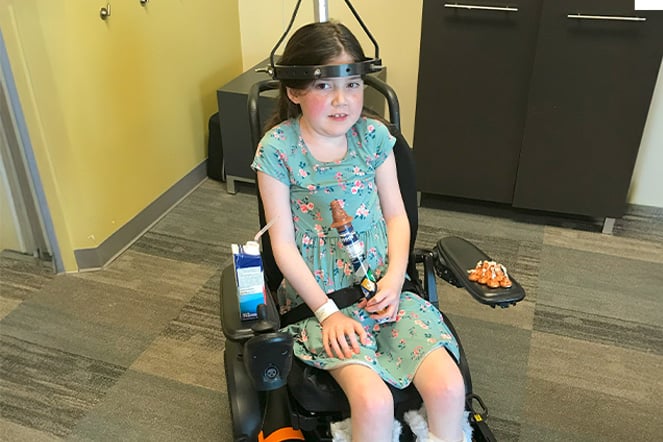
When Charlotte arrived in Philadelphia, she could not move her legs or feet at all. She was treated for kyphosis, a type of scoliosis in which the upper spine curves forward abnormally, first with halo gravity traction. A metal ring (halo) is surgically attached to the skull with screws and connected to a pulley system (traction), with weights gradually added to slowly straighten the head and spine before surgery.