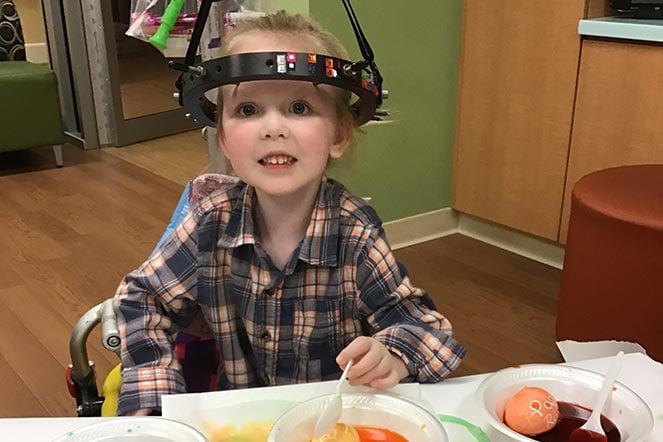
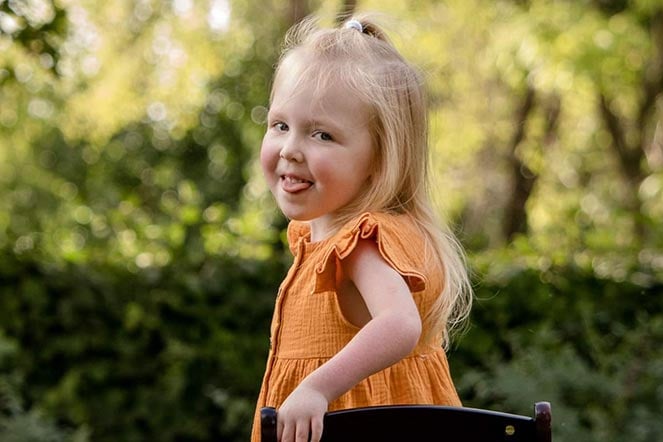
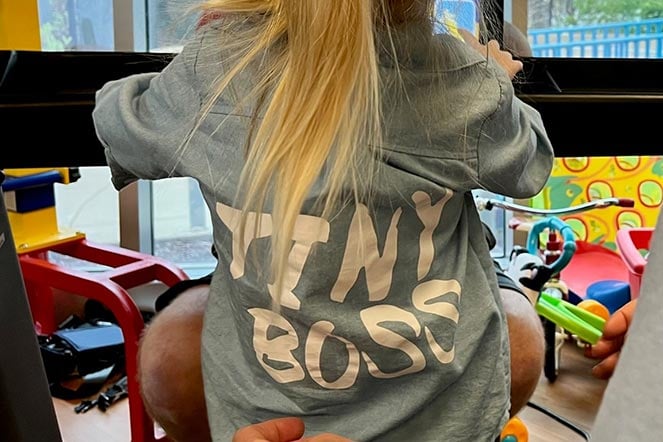
“We’ve noticed improvements height-wise and energy-wise, and her mood has been great. It’s funny to say but she’s been a lot happier in traction. Her energy is through the roof. She’s moving like crazy,” he continued.
This reaction to living in traction is common.
“As we improved her spinal alignment her lung volumes also improved, allowing her to breathe easier, burn less calories to breathe which gives her more energy! The other aspect is that, I am convinced, these children are in constant discomfort, but don’t know that this is normal as they always have it and I think assume everyone feels like they do. This may be why they don’t complain about pain, since it is hard for them to think about pain abstractly and quantify it for us. When they are in traction their pain improves and they now understand how they are supposed to feel, which is without pain or discomfort. The improvement in her energy is common when kids with very bad spine deformity and smaller lung volumes get into halo-gravity traction,” said Luhmann.
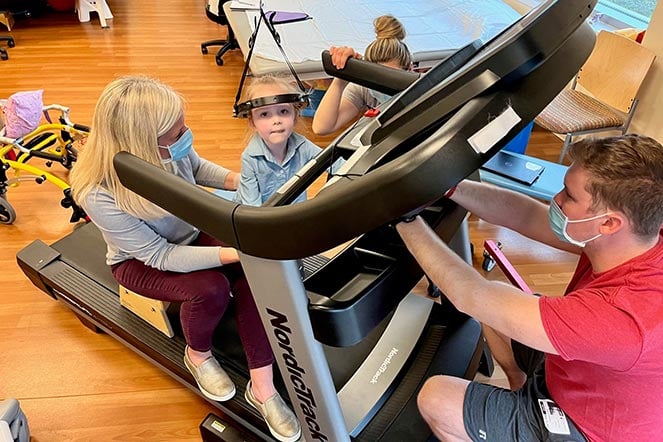
While in traction, Kennedy built her endurance in physical therapy to walk a mile a day on the treadmill. This is a major feat for any 3-year-old, let alone one who had been living with a highly diminished lung capacity.
Amazingly, during her time in traction, Kennedy started playing a recorder and enjoyed blowing on a pinwheel. Maybe the most rewarding change for Kennedy’s parents: her voice grew strength.
“That’s what’s made this experience ok. We’re seeing so many positive things and really it’s like the anxiety of the surgery and the recovery from that at this point. This process has been nothing but positive,” said Karissa.