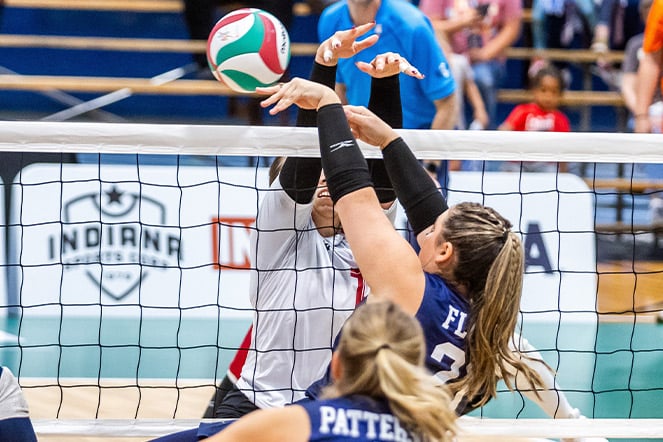
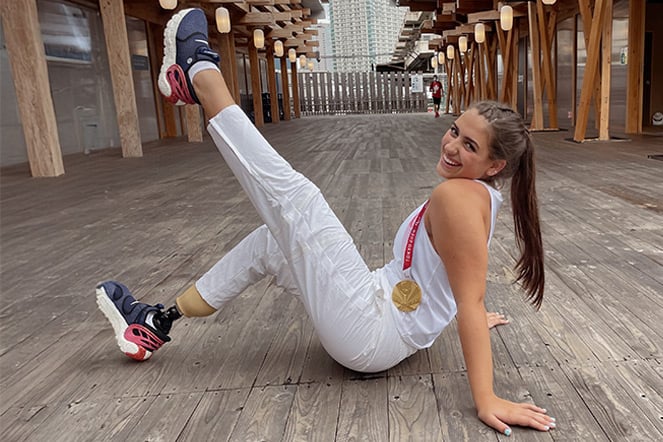
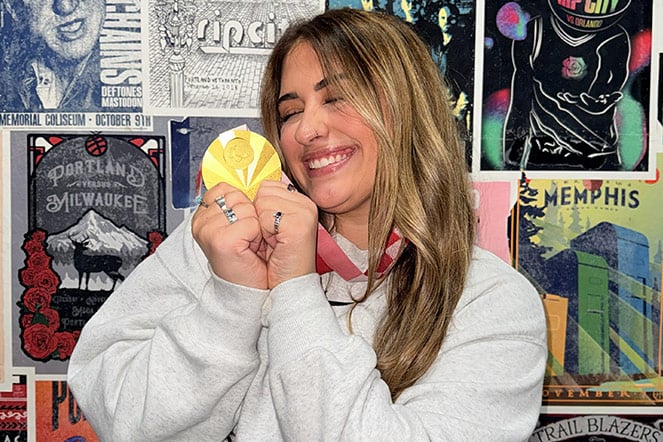
Debout sur le podium à Tokyo avec ses coéquipières, elle a finalement pris conscience de la gravité du moment.
« C’est à ce moment-là que j’ai vraiment réalisé que nous avions gagné, et que j’avais remporté ma première médaille d’or », a raconté Annie. « Et je savais que c’était quelque chose qui resterait gravé dans ma mémoire pour toujours. »
Le parcours d’Annie jusqu’au podium en volley-ball assis aux Jeux paralympiques de 2020 n’est pas le fruit du hasard. Et il n’a pas été sans difficultés non plus, dont certaines sont survenues avant même sa naissance.
La mère d’Annie, Linda, était enceinte de 20 semaines lorsqu’elle a appris, lors d’une échographie, que sa fille à naître avait une hémimélie fibulaire, une condition où une partie ou l’ensemble du péroné (l’os du mollet) est manquant. Après la naissance d’Annie, la famille a consulté un médecin local, puis un second médecin à Seattle, avant de décider que l’amputation était la meilleure solution.
À l’âge de 9 mois, Annie a subi l’amputation de sa jambe droite, sous le genou. Elle a reçu sa première prothèse à 11 mois et a commencé à marcher peu après.
« Quelqu’un m’a dit un jour que le seul handicap qu’Annie aurait jamais serait celui que nous lui infligerions », a mentionné Linda. « Je m’en suis toujours souvenu. »
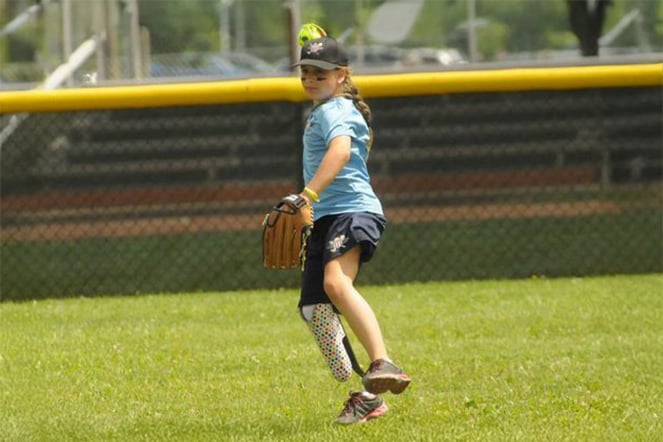
Issue d’une famille de sportifs, Annie s’est beaucoup investie dans le sport, en commençant par le T-ball en maternelle, puis le basketball et enfin le soccer, où elle a été la joueuse vedette de son équipe tout au long de l’école primaire.
À l’âge de 7 ans, Annie pratiquait plusieurs sports. Elle avait besoin de prothèses capables de répondre à ses exigences sportives. Par le biais d’une connaissance rencontrée à la Challenged Athletes Foundation, sa famille a appris l’existence de l’Hôpital Shriners pour enfants de Portland, particulièrement leur département Services d’orthèses et de prothèses pédiatriques (SOPP). C’est là qu’Annie a rencontré pour la première fois le directeur des SOPP, Todd DeWees, MHA, CPO.
« J’ai pratiquement grandi avec Todd », a dit Annie. « Il a joué un rôle tellement important dans mon enfance. Il m’a vraiment aidée à grandir et à me développer en tant qu’athlète. »
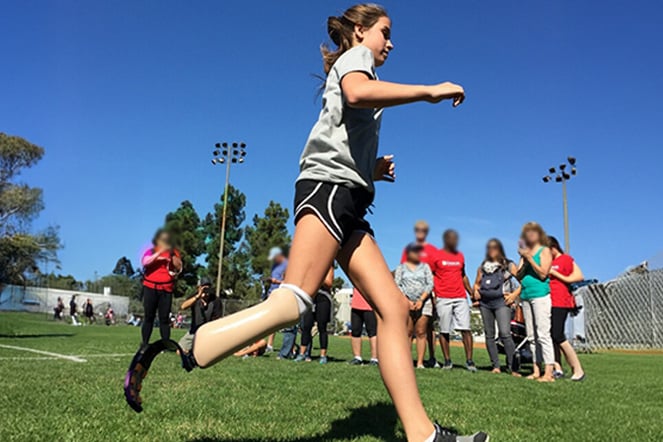
Todd a aidé Annie à trouver différentes prothèses adaptées à ses sports. Elle avait une jambe plus adaptée au softball, et une autre au soccer. Elle avait 10 ans lorsqu’il lui a fabriqué sa première lame de course, et il a travaillé avec le Centre d’analyse du mouvement sur place pour surveiller et corriger tout problème de démarche.
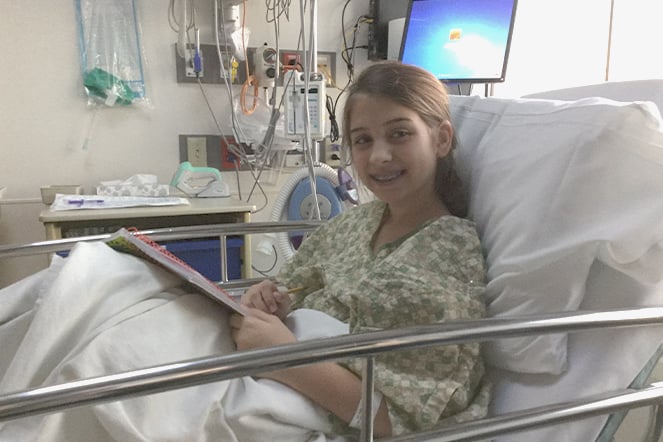
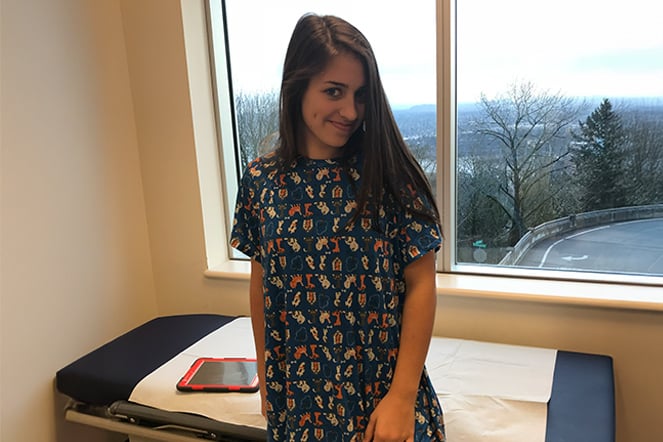
Au fil de sa croissance, Annie a eu besoin de deux interventions chirurgicales, toutes deux pratiquées à l’Hôpital Shriners pour enfants de Portland. Elle a subi la première intervention lorsqu’elle était en quatrième année, pour redresser son genou et fixer la direction de l’os au fur et à mesure de sa croissance. Elle a dû utiliser des béquilles pendant plusieurs mois, travaillant avec le département des services de thérapie pour s’assurer que sa jambe grandissait droite. Un an plus tard, Annie a subi une seconde intervention chirurgicale pour retirer les plaques.
« Beaucoup d’enfants handicapés peuvent être traumatisés », a indiqué Annie. « Mais pour moi, aller aux Hôpitaux Shriners pour enfants a changé ça. Cela m’a permis de rencontrer d’autres personnes qui me ressemblaient et de découvrir des communautés que je n’aurais jamais rencontrées autrement. »