Quick Summary of Our Scoliosis Care

Scoliosis occurs when a child’s spine curves into a C or S shape instead of growing straight. At Shriners Children’s, pediatric orthopedic specialists treat more than 10,000 children with scoliosis each year, creating personalized care plans based on each child’s age, growth and curve severity. Treatment options may include observation, scoliosis-specific exercises, Mehta casting, bracing and advanced surgical procedures when needed.

Families can also learn how to recognize symptoms, understand the different types of scoliosis and their causes, and explore the most effective treatment options for their child.

Frequently Asked Questions About Scoliosis

What are the signs and symptoms of scoliosis in children?

Your child’s pediatrician or their school nurse may have been the first to screen for scoliosis in school or notice the curve in your child’s spine. As your child continues to grow, you can look for other scoliosis symptoms to share with their pediatrician and orthopedic specialist. Pay special attention during their teen years when growth spurts are common. Look for symptoms like:

  • Leaning to one side
  • One shoulder appearing higher than the other
  • One shoulder blade sticking out farther than the other
  • One hip appearing higher than the other
  • Head appearing not properly centered over the body
  • When bending from the waist, the ribs on one side are higher
  • Waistline appearing flat on one side
  • Clothes not fitting correctly
  • Hems that aren’t hanging evenly

Talk to us about anything you’ve noticed or have questions about. Once your child is a Shriners Children's patient, we’ll keep a close eye on them, too, with X-rays and other imaging as needed.

What treatment options are available for scoliosis in children?

When you and your child meet our scoliosis treatment team, you’ll discover we're always moving forward. Our physicians stay active in the medical community, continue their training and eagerly incorporate the latest evidence-based treatments for scoliosis into their practices. Often it is our own physicians developing the methods for these treatments, while working in partnership with the FDA and industry partners.

Every scoliosis treatment plan is as unique as your child. Possible treatments and related services include:

Observation

Sometimes the best treatment is time. Your child’s doctor will talk to you about the measurement of the curve in their spine and what that measurement means for his or her treatment. If the curve measures less than 20 degrees, our spine team will examine your child and take low-dose X-rays every four to six months during their growing years to see how the curve is changing (also called curve progression). In most cases, if the curve is not progressing, your child will not need treatment.

Scoliosis-specific Exercises

If your child does not wear a back brace, they may safely perform scoliosis-specific exercises. They'll be shown how to do them by our trained and certified therapists, learning individualized exercises to improve the alignment of their posture and minimize the progression of the spinal curvature. They'll perform these exercises daily to increase their strength and maintain the correction. This approach addresses the 3-D characteristics of scoliosis and is based on the Schroth Method.

Mehta Casting

Mehta casting is an option for children typically between 6 months and 5 years, and it can be used instead of bracing. Casting is often used to delay or prevent the need for surgery.

A Mehta cast is a plaster cast applied from a child’s collarbone to the bottom of their spine. Once the cast hardens, it holds the spine in position by applying gentle pressure. Children need a new cast every two to three months, with each one straightening the spine a bit more. Some children may transition to a brace as they get older.

Bracing

Our orthopedic physicians may recommend a brace if the curve is moderate (between 25 and 40 degrees) or if it is progressing. The brace will need to be worn until your child stops growing or until their doctors recommend a different type of treatment. It's important to note that bracing is not always effective and sometimes the curve increases anyway. In this instance, surgery may be necessary.

Halo Traction

This is a unique form of treatment for severe cases of scoliosis, offered at a limited number of pediatric hospitals in the United States. Shriners Children’s is finding excellent results with halo traction, an inpatient treatment option.

The halo is a ring device held in place on a child’s skull using several pins. It is held upright through a pulley system attached to a bed, a wheelchair or walker. A child’s head is lifted upward to lengthen the spine and stretch out surrounding soft tissue. By stretching the spine, there is an increase in the vertical height of a child's chest, which improves lung capacity and breathing.

On average, patients see a correction of 35% or more after three to four weeks in traction. A halo treatment is followed by spinal correction surgery to maintain this significant improvement. A team of child life specialists, physical and occupational therapists and other members of the care team partner with our surgeons during a child’s long-term stay at Shriners Children's for the halo process. The result is often life-changing.

Growing Rods

During a scoliosis surgery, two telescoping rods are inserted through the back and attached to the spine above and below the curve, with hooks or screws. Children return for treatment every six months to have the rods lengthened to match their growth. With a growing rods treatment, the spine continues to grow while being guided by the rods to create better alignment of the spine.

MAGEC Rods

The MAGEC (MAGnetic Expansion Control) Spinal Bracing and Distraction System is composed of two magnetic, telescoping rods that are gradually lengthened from outside of the skin using a magnet. This pioneering procedure for young children with scoliosis helps reduce the number of surgeries they may experience during childhood, which decreases their exposure to general anesthesia and limits the number of scoliosis surgeries they would experience over several years.

Vertebral Body Tethering

Our pediatric spine surgeons are leading the way in this treatment. The Vertebral Body Tethering System differs from a typical scoliosis surgery called a “spinal fusion,” which involves implanting stiff metal rods along either side of a child’s spine to straighten the curve.

Rather than stiff metal rods, The Tether™ uses a strong, flexible cord attached to the spine. When the vertebrae are pulled by the cord, it puts pressure on the tall side of the vertebrae on the outside of the curve. This pressure slows the growth on the tall side of the vertebrae, so that the short side can grow and catch up. The system permanently straightens the spine using a child’s own growth process. Unlike spinal fusion, the spine is still able to bend and flex, rather than being fixed in place with the stiff metal rods.

Spinal Fusion Surgery

The goal of this surgery is to fuse the spine, correcting the spine curvature and preventing further progression. Fusion surgery involves attaching rods, hooks, wires or screws to the curve and placing small pieces of bone over the spine. The bone pieces (taken from the child during surgery or donated) will grow together with the child's spinal bone, fusing it in the proper position. Although the spine may not be made completely straight, the curve will be less than it was before surgery.

A surgeon may recommended spinal fusion for a child who is at least 10 years old with a curve greater than 45 degrees and increasing; or for a child whose curve is greater than 50 degrees once they have finished growing.

Specific treatments and services may vary by location. Please contact a specific location for more information.

How is scoliosis diagnosed in children?

Scoliosis is typically first identified during a school screening or pediatrician visit using the forward bend test. Diagnosis is confirmed with a spinal X-ray. If the X-ray shows a curvature of 10 degrees or greater, the next step is a referral to a pediatric orthopedic specialist for further evaluation.

What are the different types of scoliosis and what causes them?

As you interact with your child’s team of physicians, surgeons and physical therapists, you may hear them refer to your child’s condition in one of these ways:

  • Idiopathic scoliosis: the most common type of scoliosis. In these cases, the cause is unknown.
  • Idiopathic infantile scoliosis: occurs in children under 3; they can be born with the curvature or it may develop as they grow.
  • Idiopathic juvenile scoliosis: affects children between 3 and 10.
  • Idiopathic adolescent scoliosis: generally occurs in children 10 and older; girls are more likely than boys to develop idiopathic scoliosis.
  • Congenital scoliosis: occurs when the vertebrae don’t form in a typical way during pregnancy.
  • Neuromuscular scoliosis: can occur at any age. The scoliosis is caused by a neuromuscular condition, such as spina bifida, cerebral palsy or muscular dystrophy.
  • Syndromic scoliosis: occurs when a curve of the spine develops at any age as part of a syndrome, such as Marfan syndrome and Ehlers-Danlos syndrome, Down syndrome (trisomy 21), Prader-Willi, Retts syndrome and Beale’s syndrome.

Causes of Childhood Scoliosis

As a parent, you may wonder if you could have done anything to prevent scoliosis in your child. In about 80% of cases, the cause is unknown (described as idiopathic scoliosis). There’s likely a genetic factor, meaning the risk of a child developing it can be passed from a parent or previous generation; we're studying the genetic relationship at our Genomics Institute in Tampa, Florida. Other causes of scoliosis include muscle diseases (such as cerebral palsy, spina bifida or muscular dystrophy), birth defects in the development of the spine during pregnancy and spinal cord injuries.

Does scoliosis cause pain in children?

Most children with scoliosis do not experience pain, particularly in mild or moderate cases. Pain may occur in more severe curves or when another underlying condition is present. If your child is experiencing pain, it should be discussed with their care team.

Can scoliosis be cured in children?

Scoliosis cannot always be cured, but it can often be effectively treated and managed. Non-surgical treatments like bracing and scoliosis-specific exercises can help prevent curves from worsening. Advanced surgical procedures including vertebral body tethering and spinal fusion can significantly correct severe spinal deformities and prevent further progression.

How serious is my child’s scoliosis?

Severity is measured using an X-ray of the spine. The degree of curvature helps providers determine how advanced the scoliosis is. Curves under 20 degrees are typically monitored. Curves between 25 and 40 degrees may require bracing. Curves greater than 45 degrees in a growing child, or over 50 degrees in a child who has finished growing, may require surgical intervention.

Nos médecins primés et reconnus au niveau international traitent plus de 10 000 enfants atteints de scoliose chaque année.

Aux États-Unis, 2 à 5 % des enfants développent une scoliose, c’est-à-dire une courbure de la colonne vertébrale en forme de C ou de S au lieu d’une ligne droite. Avec le temps, la courbure peut s’aggraver, ce qui la rend plus visible et provoque des douleurs. Dans les cas où la courbure de la colonne vertébrale est plus grave et n’est pas traitée, elle peut avoir un impact sur le cœur, les poumons et d’autres organes internes qui grandissent et deviennent plus encombrés.

Le diagnostic de la scoliose chez l’enfant est assez simple. Si une radiographie montre une courbure de la colonne vertébrale de 10 degrés ou plus, l’étape suivante consiste à rencontrer un médecin spécialisé en orthopédie pédiatrique pour un examen.

Notre philosophie est d’envisager toutes les options pour votre enfant. Cela va des traitements non chirurgicaux comme les exercices spécifiques à la scoliose et les plâtres Mehta, en passant par les traitements chirurgicaux avancés comme le système MAGEC pour la croissance guidée de la colonne vertébrale, la fixation du corps vertébral et la fusion vertébrale. Ensemble, nous créerons un plan de traitement adapté à l’âge de votre enfant, à la gravité de son état et aux activités qu’il aime.

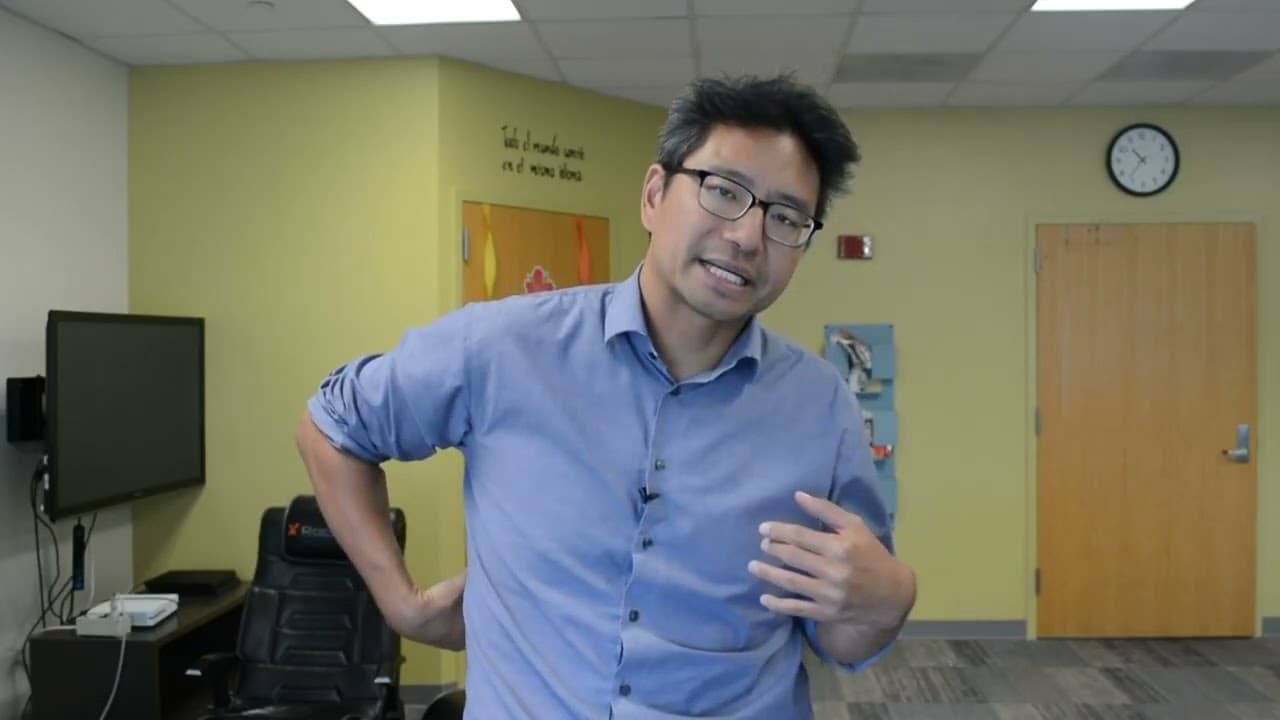
Aperçu de la scoliose avec le Dr Steven Hwang

Le Dr Hwang de l'Hôpital Shriners pour enfants de Philadelphie nous offre un bref aperçu de la scoliose. Les Hôpitaux Shriners pour enfants traitent la scoliose dans 20 emplacements à travers le pays, y compris à Montréal, au Canada, et à Mexico, au Mexique.
View Transcript

Dr Steven Hwang :

Bonjour, je m'appelle Steven Hwang. Je suis l'un des chirurgiens de la colonne vertébrale ici à l'Hôpital Shriners pour enfants de Philadelphie. Ici, nous traitons principalement la scoliose chez les enfants. La scoliose est essentiellement une rotation tridimensionnelle de la colonne vertébrale. Comme on voit souvent une courbure chez les enfants, on peut remarquer une certaine symétrie des épaules ou parfois une proéminence des côtes dans le dos. Parfois, leur taille peut être un peu latérale. Vous-même ou vos enfants avez peut-être vu qu'il y avait des dépistages dans les écoles ou chez les pédiatres. Les enfants se penchent en avant et on regarde leur dos pour rechercher l'une de ces asymétries qui permettent d'identifier les enfants atteints de scoliose. Beaucoup de ces enfants viennent nous voir ici et nous aidons à les gérer de différentes manières.

Il existe de nombreuses options différentes pour aider à traiter ces enfants. Je pense que vous avez entendu parler certains enfants aujourd'hui. Certains traitements impliquent des tractions et des chirurgies, ou différents types d'appareillages. Nous avons une variété d'options ici à Philadelphie. Merci beaucoup de nous aider à soigner certains enfants et à en aider d'autres. Nous apprécions vraiment toute l'aide et les ressources dont nous disposons, et cela nous aide également à aider les autres.

Un diagnostic de scoliose peut être stressant pour toute la famille. Ces facteurs de stress peuvent inclure des craintes quant à l’avenir de votre enfant et l’insécurité de prendre les bonnes décisions. Soyez rassuré que si votre enfant est diagnostiqué avec une scoliose, vous disposerez d’une équipe de soins des Hôpitaux Shriners pour vous guider. Les chirurgiens, les physiothérapeutes, les ergothérapeutes et les autres fournisseurs de soins de votre enfant comprennent les préoccupations des enfants et des parents qui traversent cette épreuve.

Nous avons vu des enfants avec une scoliose progresser avec succès tout au long de leur enfance, devenant des enfants actifs à la maternelle, des gymnastes au primaire et des adolescents ayant confiance en eux, qui fréquentent leurs amis et qui réussissent dans les sports. Vous trouverez ici des informations sur la scoliose pédiatrique et les options de traitement disponibles.

Les traitements et services spécifiques peuvent varier selon le lieu. Veuillez contacter un établissement spécifique pour plus d’informations.

Tout le monde aux Hôpitaux Shriners a fait un très bon travail en me tenant informée. Le fait de connaître tous les détails de la procédure m’a beaucoup apaisée.
Rachel, Portland

Le système MAGEC pour la croissance osseuse guidée

Lors de l’opération, une ou deux tiges MAGEC télescopiques sont fixées à la colonne vertébrale de l’enfant. Au fur et à mesure que votre enfant grandit, nous utilisons un contrôleur magnétique à l’extérieur de son corps pour allonger les tiges et finalement redresser sa colonne vertébrale. Le traitement n’est pas douloureux et ne nécessite aucune réadaptation.

Exercices spécifiques à la scoliose

Les exercices spécifiques à la scoliose proposés par les physiothérapeutes des Hôpitaux Shriners visent à corriger et à ralentir la progression d’une courbure vertébrale, à réduire la douleur et à améliorer la posture, la respiration et la qualité de vie.

Moulage Mehta

Les chirurgiens orthopédistes des Hôpitaux Shriners sont spécialisés dans l’application de moulages Mehta, une option pour traiter la courbure de la colonne vertébrale chez les enfants atteints de scoliose infantile.

Appareillage

L’équipe multidisciplinaire des Hôpitaux Shriners comprend des orthésistes qui créent des appareils orthopédiques pour répondre aux besoins individuels de chaque enfant, qu’il s’agisse de traiter une condition complexe ou une blessure courante.

Traction par halo

Les médecins qualifiés des Hôpitaux Shriners utilisent la traction par halo comme première étape pour corriger les scolioses graves, cyphoses et autres déformations sévères de la colonne vertébrale. Le traitement tire soigneusement la tête et la colonne vertébrale de l’enfant vers le haut, en appliquant un étirement lent.

Tiges allongeantes

Les Hôpitaux Shriners fournissent des tiges allongeantes aux enfants qui n’ont pas atteint la maturité squelettique. Elles sont placées le long de la colonne vertébrale pour corriger une courbure et permettre une croissance continue de la colonne.

Système MAGEC

Les Hôpitaux Shriners ont été les premiers à utiliser le système MAGEC pour le traitement de la scoliose précoce. Ce traitement magnétique d’allongement des tiges guide en douceur la croissance de la colonne vertébrale, sans interventions chirurgicales répétées.

Chirurgie de fusion spinale

La chirurgie de fusion vertébrale stabilise et corrige la courbure de la colonne vertébrale. Pour la scoliose et la cyphose, cela empêche une courbure supplémentaire de la colonne vertébrale. La stabilisation de la colonne vertébrale peut améliorer les mouvements, réduire la douleur et rétablir la fonction pulmonaire.

Prochaines étapes

Prendre rendez-vous

Les familles et les soignants qui cherchent un traitement doivent commencer par nous contacter pour prendre rendez-vous.

Connexion au portail patient

Les parents et les tuteurs des patients existants peuvent envoyer des courriels, demander des dossiers, prendre des rendez-vous, etc.

Référer un patient

Les médecins et les fournisseurs de soins peuvent demander des rendez-vous, initier des transferts ou nous contacter pour toute question.