From Embracing Sports to Enjoying the Outdoors, Harper is Unstoppable After Sustaining a Burn Injury

Kim was just arriving at a local lake near her home in Vermont, looking forward to enjoying some sunshine, when she received a call every parent fears.

Her 2-year-old daughter, Harper, had been taken to a local hospital after falling into a fire pit. Kim rushed to the hospital to be with her daughter. Upon arrival, Kim was told Harper’s injuries were severe, and she would need to be airlifted to Shriners Children’s Boston for specialized burn care. “I had absolutely nothing with me when I got in the helicopter with Harper that day,” Kim said.

Harper’s parents soon learned that she had sustained second- and third-degree burns on her hands, arms and feet, and would require surgery. She also had minor burns on her face and back. “We sent her into her first surgery, not knowing if she would be able to keep all her toes,” Kim said.

Robert L. Sheridan, M.D., chief of staff and director of the burn service at Shriners Children’s Boston, managed the acute phase of Harper’s recovery. One of the first surgeries he performed on her was debridement – removing her damaged tissue, which helps promote healing. He also utilized split thickness skin grafts on her right forearm, right foot and toes. This involves taking skin from an uninjured part of the body and applying it to the burn-injured skin.

Harper was hospitalized for about two weeks after her injuries. She had a split-thickness graft added to her palm one year after her injuries, then later had a full-thickness graft, which gave her hand more room to grow. A split-thickness graft is used when a larger area of the body requires covering. Full-thickness grafts are generally used for smaller areas of the body, such as the hands.

“A split thickness graft is a much larger graft, incorporating the full thickness of the epidermis and part of the dermis, which are the top two layers of the skin. During the acute phase of care, we are primarily working with split-thickness grafts,” explained Dr. Sheridan, who noted that grafting is possible even after a child is past the acute phase of care. “We might have a great result with a burn on a child’s hand at the age of 2, then at the age of 4 we start to see contracture, which requires attention to address function,” he said.

The staff makes you feel so at home. Some of the same people have been working there for a long time, so it is so nice to have them by your side as your kiddo grows.
Kim, Shriners Children's Boston patient mom

As Harper has grown, her care has moved into the scar management phase, with plastic surgeon Daniel Driscoll, M.D., who performed a z-plasty procedure on her thumb. This is a technique used to soften the appearance of a scar and improve the function of that part of the body by cutting into the scar with an incision that looks like the letter Z.

“A z-plasty is a way to treat a burn scar that has contracted and inhibits function. It borrows tissue from one direction to lengthen in another direction,” said Dr. Driscoll. He explained that it is helpful to have that extra tissue in one direction to work with. “Without the excess tissue, we would need to add skin like a graft during the z-plasty,” he said.

Dr. Driscoll is also employing UltraPulse laser therapy on Harper’s scars about twice a year. “Scars tend to get tighter as a child grows, so there is a need for long-term yearly follow-up. As she grows, we will continue to see if she needs interventions such as lasers to soften the scars, z-plasty and grafts to treat functional contractures. It is a process that levels out after growth phases slow down,” Dr. Driscoll said.

Kim is grateful for the care Harper is receiving at Shriners Children’s Boston. “The staff makes you feel so at home. Some of the same people have been working there for a long time, so it is so nice to have them by your side as your kiddo grows,” Kim said.

Child life specialist Brooke has been working with Harper since she first came to Shriners Children’s Boston. Harper’s older sister, Khloe, was 4 at the time of Harper's burn injury and saw her sister fall into the fire pit. “This was obviously very difficult for Khloe. Brooke was so great about including Khloe – she got to participate in activities with Harper and received toys. They were so great about helping us keep her included, even though the focus was on her sister,” said Kim.

Now, almost seven years after her burn injury, Harper is an active 8-year-old who loves sports. “She plays basketball, softball, soccer and she wrestles. I call her my Honey Badger,” Kim said. Harper is also involved in two local 4-H clubs. When she’s not playing sports, Harper loves to swim and play outside, ride bikes and fish. “Planning her surgeries around all of her activities and impacting those as little as possible can certainly get tricky sometimes,” Kim noted.

Meet Harper

She is an active 8-year-old who is thriving after sustaining a burn injury.

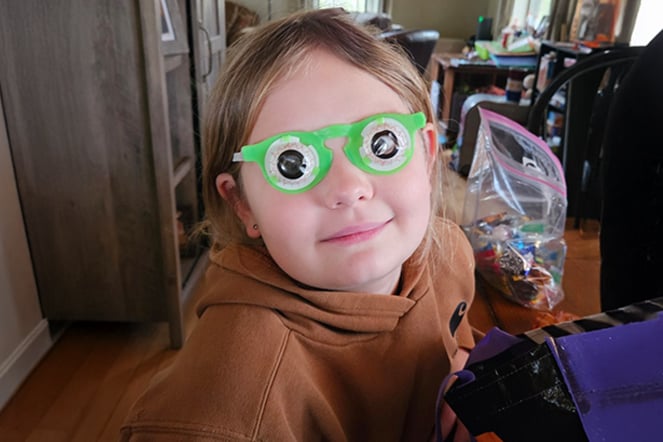
Harper shows off her fun glasses.

Harper shows off her fun glasses.

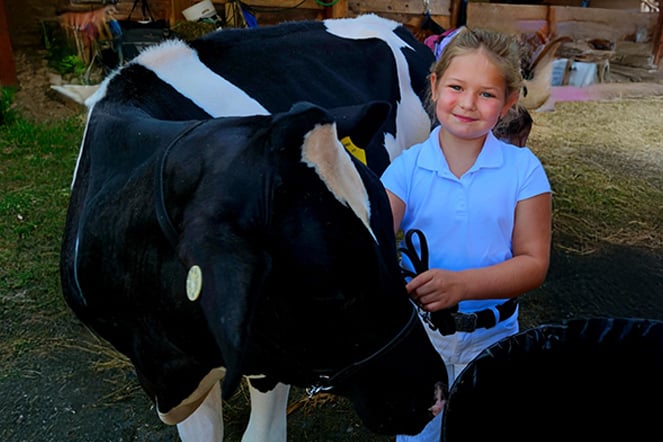
Harper stands with a cow at a 4-H event.

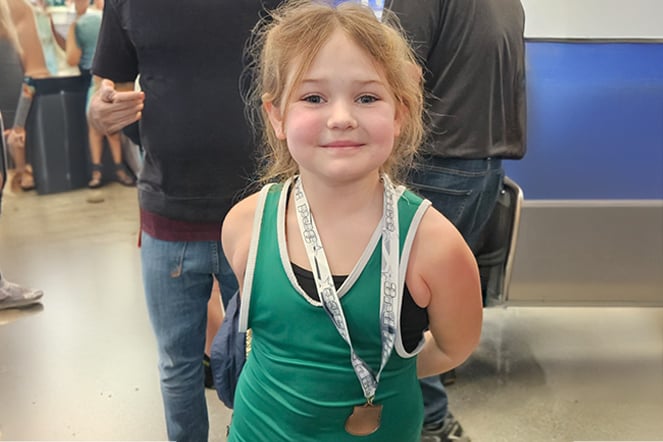
Harper wins a medal.

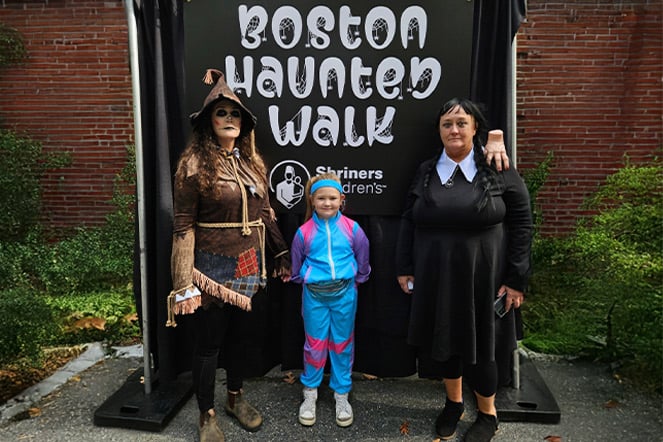
Harper participates in Shriners Children's Boston's signature fundraising event, the Boston Haunted Walk, with her mother and grandmother.

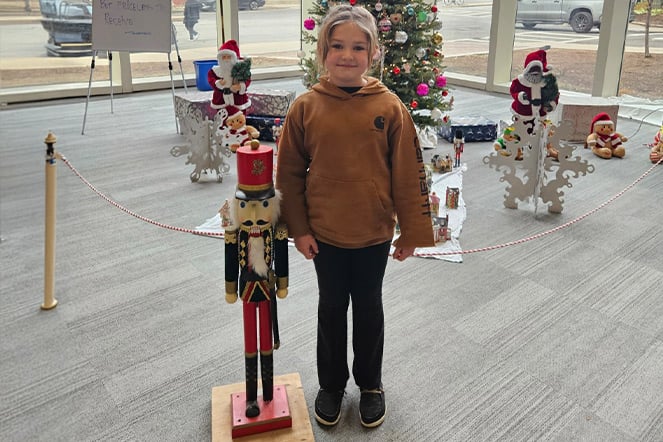
Harper stands with a nutcracker in front of the hospital's Christmas tree.

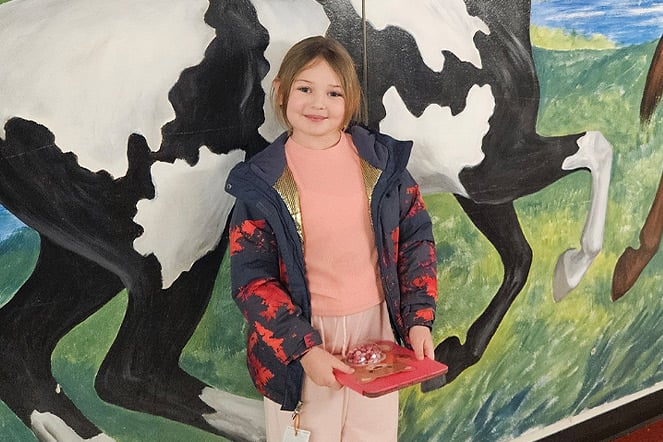
Harper smiles in front of an art installation painted by a Shriners Children's Boston nurse.

Next Steps

Partagez votre histoire

message icône vide
Nos patients et leur famille sont au cœur de tout ce que nous faisons dans les Hôpitaux Shriners pour enfants. Nous vous invitons à nous faire part de la manière dont l’équipe des Hôpitaux Shriners a aidé votre enfant.

Faites un don aux Hôpitaux Shriners pour enfants

icône de cœur
Grâce à la générosité de donateurs comme vous, nous avons aidé plus d’un million d’enfants à mener une vie plus épanouissante, indépendamment de la capacité de paiement de leur famille.

Contactez-nous

icône de lettre
Vous avez une question ou une demande? Vous devez prendre rendez-vous? Nous sommes là pour vous.