Quick Summary of Our Scoliosis Care

Scoliosis occurs when a child’s spine curves into a C or S shape instead of growing straight. At Shriners Children’s, pediatric orthopedic specialists treat more than 10,000 children with scoliosis each year, creating personalized care plans based on each child’s age, growth and curve severity. Treatment options may include observation, scoliosis-specific exercises, Mehta casting, bracing and advanced surgical procedures when needed.

Families can also learn how to recognize symptoms, understand the different types of scoliosis and their causes, and explore the most effective treatment options for their child.

Frequently Asked Questions About Scoliosis

What are the signs and symptoms of scoliosis in children?

Your child’s pediatrician or their school nurse may have been the first to screen for scoliosis in school or notice the curve in your child’s spine. As your child continues to grow, you can look for other scoliosis symptoms to share with their pediatrician and orthopedic specialist. Pay special attention during their teen years when growth spurts are common. Look for symptoms like:

  • Leaning to one side
  • One shoulder appearing higher than the other
  • One shoulder blade sticking out farther than the other
  • One hip appearing higher than the other
  • Head appearing not properly centered over the body
  • When bending from the waist, the ribs on one side are higher
  • Waistline appearing flat on one side
  • Clothes not fitting correctly
  • Hems that aren’t hanging evenly

Talk to us about anything you’ve noticed or have questions about. Once your child is a Shriners Children's patient, we’ll keep a close eye on them, too, with X-rays and other imaging as needed.

What treatment options are available for scoliosis in children?

When you and your child meet our scoliosis treatment team, you’ll discover we're always moving forward. Our physicians stay active in the medical community, continue their training and eagerly incorporate the latest evidence-based treatments for scoliosis into their practices. Often it is our own physicians developing the methods for these treatments, while working in partnership with the FDA and industry partners.

Every scoliosis treatment plan is as unique as your child. Possible treatments and related services include:

Observation

Sometimes the best treatment is time. Your child’s doctor will talk to you about the measurement of the curve in their spine and what that measurement means for his or her treatment. If the curve measures less than 20 degrees, our spine team will examine your child and take low-dose X-rays every four to six months during their growing years to see how the curve is changing (also called curve progression). In most cases, if the curve is not progressing, your child will not need treatment.

Scoliosis-specific Exercises

If your child does not wear a back brace, they may safely perform scoliosis-specific exercises. They'll be shown how to do them by our trained and certified therapists, learning individualized exercises to improve the alignment of their posture and minimize the progression of the spinal curvature. They'll perform these exercises daily to increase their strength and maintain the correction. This approach addresses the 3-D characteristics of scoliosis and is based on the Schroth Method.

Mehta Casting

Mehta casting is an option for children typically between 6 months and 5 years, and it can be used instead of bracing. Casting is often used to delay or prevent the need for surgery.

A Mehta cast is a plaster cast applied from a child’s collarbone to the bottom of their spine. Once the cast hardens, it holds the spine in position by applying gentle pressure. Children need a new cast every two to three months, with each one straightening the spine a bit more. Some children may transition to a brace as they get older.

Bracing

Our orthopedic physicians may recommend a brace if the curve is moderate (between 25 and 40 degrees) or if it is progressing. The brace will need to be worn until your child stops growing or until their doctors recommend a different type of treatment. It's important to note that bracing is not always effective and sometimes the curve increases anyway. In this instance, surgery may be necessary.

Halo Traction

This is a unique form of treatment for severe cases of scoliosis, offered at a limited number of pediatric hospitals in the United States. Shriners Children’s is finding excellent results with halo traction, an inpatient treatment option.

The halo is a ring device held in place on a child’s skull using several pins. It is held upright through a pulley system attached to a bed, a wheelchair or walker. A child’s head is lifted upward to lengthen the spine and stretch out surrounding soft tissue. By stretching the spine, there is an increase in the vertical height of a child's chest, which improves lung capacity and breathing.

On average, patients see a correction of 35% or more after three to four weeks in traction. A halo treatment is followed by spinal correction surgery to maintain this significant improvement. A team of child life specialists, physical and occupational therapists and other members of the care team partner with our surgeons during a child’s long-term stay at Shriners Children's for the halo process. The result is often life-changing.

Growing Rods

During a scoliosis surgery, two telescoping rods are inserted through the back and attached to the spine above and below the curve, with hooks or screws. Children return for treatment every six months to have the rods lengthened to match their growth. With a growing rods treatment, the spine continues to grow while being guided by the rods to create better alignment of the spine.

MAGEC Rods

The MAGEC (MAGnetic Expansion Control) Spinal Bracing and Distraction System is composed of two magnetic, telescoping rods that are gradually lengthened from outside of the skin using a magnet. This pioneering procedure for young children with scoliosis helps reduce the number of surgeries they may experience during childhood, which decreases their exposure to general anesthesia and limits the number of scoliosis surgeries they would experience over several years.

Vertebral Body Tethering

Our pediatric spine surgeons are leading the way in this treatment. The Vertebral Body Tethering System differs from a typical scoliosis surgery called a “spinal fusion,” which involves implanting stiff metal rods along either side of a child’s spine to straighten the curve.

Rather than stiff metal rods, The Tether™ uses a strong, flexible cord attached to the spine. When the vertebrae are pulled by the cord, it puts pressure on the tall side of the vertebrae on the outside of the curve. This pressure slows the growth on the tall side of the vertebrae, so that the short side can grow and catch up. The system permanently straightens the spine using a child’s own growth process. Unlike spinal fusion, the spine is still able to bend and flex, rather than being fixed in place with the stiff metal rods.

Spinal Fusion Surgery

The goal of this surgery is to fuse the spine, correcting the spine curvature and preventing further progression. Fusion surgery involves attaching rods, hooks, wires or screws to the curve and placing small pieces of bone over the spine. The bone pieces (taken from the child during surgery or donated) will grow together with the child's spinal bone, fusing it in the proper position. Although the spine may not be made completely straight, the curve will be less than it was before surgery.

A surgeon may recommended spinal fusion for a child who is at least 10 years old with a curve greater than 45 degrees and increasing; or for a child whose curve is greater than 50 degrees once they have finished growing.

Specific treatments and services may vary by location. Please contact a specific location for more information.

How is scoliosis diagnosed in children?

Scoliosis is typically first identified during a school screening or pediatrician visit using the forward bend test. Diagnosis is confirmed with a spinal X-ray. If the X-ray shows a curvature of 10 degrees or greater, the next step is a referral to a pediatric orthopedic specialist for further evaluation.

What are the different types of scoliosis and what causes them?

As you interact with your child’s team of physicians, surgeons and physical therapists, you may hear them refer to your child’s condition in one of these ways:

  • Idiopathic scoliosis: the most common type of scoliosis. In these cases, the cause is unknown.
  • Idiopathic infantile scoliosis: occurs in children under 3; they can be born with the curvature or it may develop as they grow.
  • Idiopathic juvenile scoliosis: affects children between 3 and 10.
  • Idiopathic adolescent scoliosis: generally occurs in children 10 and older; girls are more likely than boys to develop idiopathic scoliosis.
  • Congenital scoliosis: occurs when the vertebrae don’t form in a typical way during pregnancy.
  • Neuromuscular scoliosis: can occur at any age. The scoliosis is caused by a neuromuscular condition, such as spina bifida, cerebral palsy or muscular dystrophy.
  • Syndromic scoliosis: occurs when a curve of the spine develops at any age as part of a syndrome, such as Marfan syndrome and Ehlers-Danlos syndrome, Down syndrome (trisomy 21), Prader-Willi, Retts syndrome and Beale’s syndrome.

Causes of Childhood Scoliosis

As a parent, you may wonder if you could have done anything to prevent scoliosis in your child. In about 80% of cases, the cause is unknown (described as idiopathic scoliosis). There’s likely a genetic factor, meaning the risk of a child developing it can be passed from a parent or previous generation; we're studying the genetic relationship at our Genomics Institute in Tampa, Florida. Other causes of scoliosis include muscle diseases (such as cerebral palsy, spina bifida or muscular dystrophy), birth defects in the development of the spine during pregnancy and spinal cord injuries.

Does scoliosis cause pain in children?

Most children with scoliosis do not experience pain, particularly in mild or moderate cases. Pain may occur in more severe curves or when another underlying condition is present. If your child is experiencing pain, it should be discussed with their care team.

Can scoliosis be cured in children?

Scoliosis cannot always be cured, but it can often be effectively treated and managed. Non-surgical treatments like bracing and scoliosis-specific exercises can help prevent curves from worsening. Advanced surgical procedures including vertebral body tethering and spinal fusion can significantly correct severe spinal deformities and prevent further progression.

How serious is my child’s scoliosis?

Severity is measured using an X-ray of the spine. The degree of curvature helps providers determine how advanced the scoliosis is. Curves under 20 degrees are typically monitored. Curves between 25 and 40 degrees may require bracing. Curves greater than 45 degrees in a growing child, or over 50 degrees in a child who has finished growing, may require surgical intervention.

Nuestros médicos galardonados son reconocidos internacionalmente y atienden a más de 10.000 niños con escoliosis cada año.

En los Estados Unidos, del 2% al 5% de los niños presentan escoliosis, que significa que la columna vertebral crece con una curvatura en forma de letra C o S, en lugar de desarrollarse en línea recta. Con el tiempo, la curvatura puede empeorar, lo cual da lugar a que sea más notoria y a que provoque dolor. En los casos en que la curvatura de la columna vertebral es más grave y no se realiza un tratamiento, el trastorno puede afectar el corazón, los pulmones y otros órganos internos al quedar presionados a medida que crecen.

El diagnóstico de la escoliosis en los niños es bastante sencillo. Si en la radiografía se observa una curvatura de la columna vertebral de 10 grados o más, el siguiente paso es realizar una consulta con un médico especializado en ortopedia pediátrica para que lleve a cabo un examen.

Nuestra filosofía es considerar todas las opciones para su hijo. Estas incluyen desde terapia con ejercicios específicos para la escoliosis y enyesado de Mehta hasta los tratamientos quirúrgicos más avanzados, como el Sistema MAGEC para el crecimiento guiado de la columna vertebral, la atadura del cuerpo vertebral y la fusión espinal. Juntos crearemos un plan de tratamiento que se adapte mejor a la edad de su hijo, la gravedad de su afección y las actividades que le gustan.

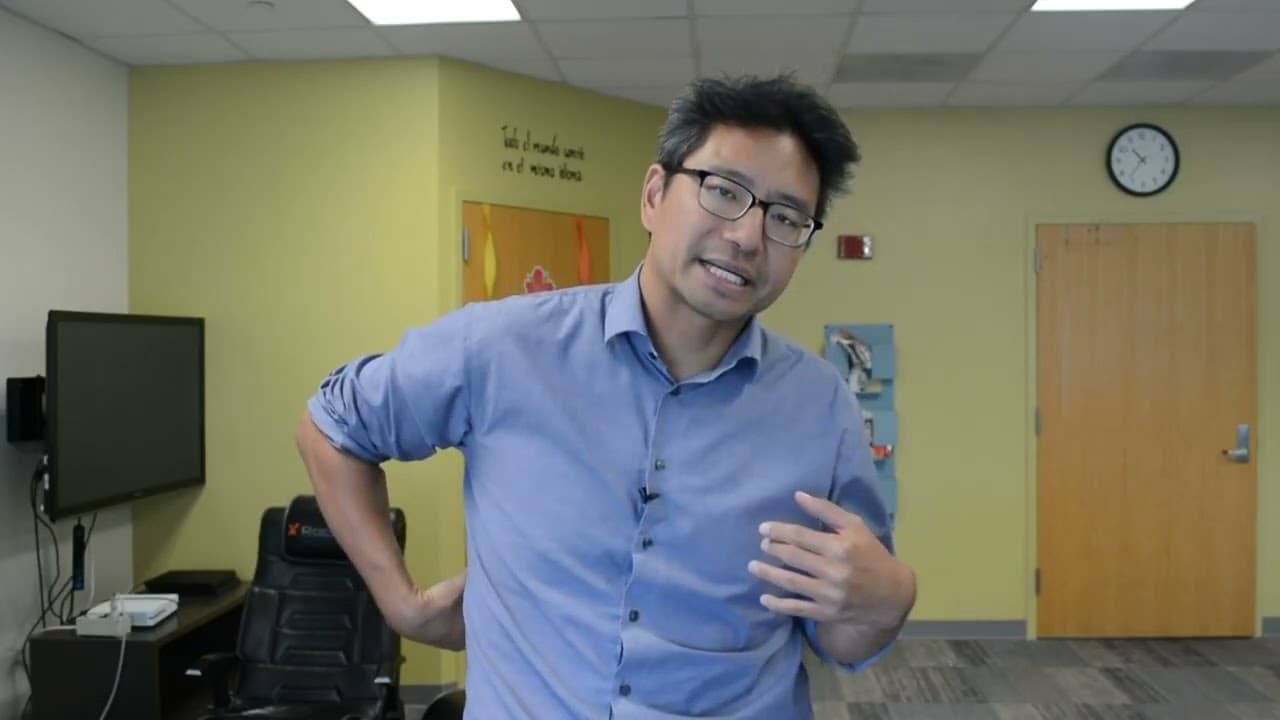
Descripción general de la escoliosis con el Dr. Steven Hwang

El Dr. Hwang del Hospital Shriners para Niños de Filadelfia nos brinda una breve descripción general de la escoliosis. Shriners Children's atiende la escoliosis en 20 ubicaciones en todo el país, incluidos nuestros centros en Montreal, Canadá y Ciudad de México.
View Transcript

Dr. Steven Hwang:

Hola, mi nombre es Steven Hwang. Soy uno de los cirujanos de columna vertebral aquí en el Shriners de Filadelfia. Aquí, principalmente tratamos la escoliosis en niños. Y así, básicamente, la escoliosis es una rotación tridimensional de la columna vertebral. Y por eso solemos ver una curvatura en los niños, podemos notar cierta asimetría en los hombros o en ocasiones una costilla abultada en la espalda. A veces, su cintura puede estar un poco hacia un lado. Usted mismo o sus hijos pueden haber notado la revisión en las escuelas o por parte de los pediatras. A menudo hacen que los niños se inclinen hacia adelante para poder mirar sus espaldas y buscar alguna de estas asimetrías para ayudar a identificar a los niños que tienen escoliosis. Muchos de esos niños vienen a nosotros aquí y los ayudamos a tratar esas cuestiones de diferentes maneras.

Existen muchas opciones diferentes para ayudar a tratar a estos niños. Creo que las han escuchado de algunos de los niños hoy. Algunos tratamientos involucran tracción y cirugías o diferentes tipos de métodos de dispositivos ortopédicos. Y tratamos una de gama de opciones aquí en el Shriners de Filadelfia. Así que, muchas gracias por ayudarnos a tratar a estos niños y a ayudar a otros niños. Realmente apreciamos toda la ayuda y los recursos que tenemos, y también nos ayuda a ayudar a otros.


Un diagnóstico de escoliosis puede ser estresante para toda la familia. Esos factores de estrés pueden incluir temores sobre el futuro de su hijo e inseguridad para tomar las decisiones correctas. Tenga la seguridad de que si a su hijo se le diagnostica escoliosis, habrá un equipo de atención de Shriners Children's que lo guiará. Los cirujanos de su hijo, los fisioterapeutas y los ergoterapeutas, entre otros proveedores de atención médica, entienden las preocupaciones de los niños y de los padres que están en este recorrido.

Hemos visto a niños con escoliosis progresar con éxito a lo largo de la infancia, convirtiéndose en niños activos de preescolar, gimnastas en la escuela primaria y adolescentes que socializan con seguridad con sus amigos y triunfan en los deportes. Aquí puede obtener más información sobre la escoliosis pediátrica y las opciones de tratamiento disponibles.

Los tratamientos y servicios específicos pueden variar según el centro de atención. Comuníquese con un centro de atención específico para obtener más información.

Todos en Shriners hicieron un trabajo realmente bueno al mantenerme informada. Conocer todos los detalles del procedimiento me tranquilizó mucho.
Rachel, Portland

Sistema MAGEC para el crecimiento ósea guiado

Con cirugía, una o dos varillas telescópicas MAGEC se conectan a la columna de su hijo. A medida que el niño crece, usamos un controlador externo al cuerpo para alargar las barras y enderezar la columna. El tratamiento es indoloro y no requiere rehabilitación.

Tratamientos innovadores

View All Related Treatments

Ejercicios específicos para escoliosis

Los ejercicios específicos para la escoliosis que realizan los fisioterapeutas de Shriners Children's están destinados a corregir y retrasar la progresión de la curvatura de la columna vertebral, reducir el dolor y mejorar la postura, la respiración y la calidad de vida.

Enyesado de Mehta

Los cirujanos ortopédicos de Shriners Children's se especializan en la aplicación de los enyesados de Mehta, una opción para tratar la curvatura de la columna vertebral en niños con diagnóstico de escoliosis infantil.

Dispositivos ortopédicos

El equipo multidisciplinario de Shriners Children's incluye ortopedistas que diseñan dispositivos ortopédicos para satisfacer las necesidades individuales de cada niño, ya sea para tratar una afección compleja o una lesión frecuente.

Tracción con halo

Los médicos expertos de Shriners Children's utilizan la tracción con halo como primer paso para corregir la escoliosis grave la cifosis y otras deformidades de la columna vertebral. El tratamiento tira suavemente de la cabeza y la columna vertebral del niño con un estiramiento lento.

Barras de crecimiento

En Shriners Children's, colocamos barras de crecimiento en niños que no han alcanzado la madurez esquelética. Estas barras se colocan a lo largo de la columna vertebral para corregir la curvatura de la columna y permitir su crecimiento continuo.

Sistema MAGEC

En Shriners Children's, fuimos pioneros en el uso del sistema MAGEC para tratar la escoliosis precoz. Este tratamiento de alargamiento con varilla magnética acompaña suavemente el crecimiento de la columna vertebral sin necesidad de repetir la intervención quirúrgica.

Cirugía de fusión espinal

La intervención quirúrgica de fusión espinal estabiliza y corrige la curvatura de la columna; y en el caso de la escoliosis y la cifosis, evita una mayor curvatura de la columna vertebral. Estabilizar la columna puede mejorar el movimiento, reducir el dolor y restaurar la función pulmonar.

Próximos pasos

Solicitar una cita

Las familias y los cuidadores que buscan tratamiento deben comenzar comunicándose con nosotros para programar una cita.

Iniciar sesión en el portal del paciente

Los padres y tutores de los pacientes actuales pueden enviar un correo electrónico, solicitar registros, coordinar citas y más.

Referir a un paciente

Los médicos y proveedores de atención médica pueden solicitar citas, iniciar transferencias o ponerse en contacto con nosotros si tienen preguntas.