


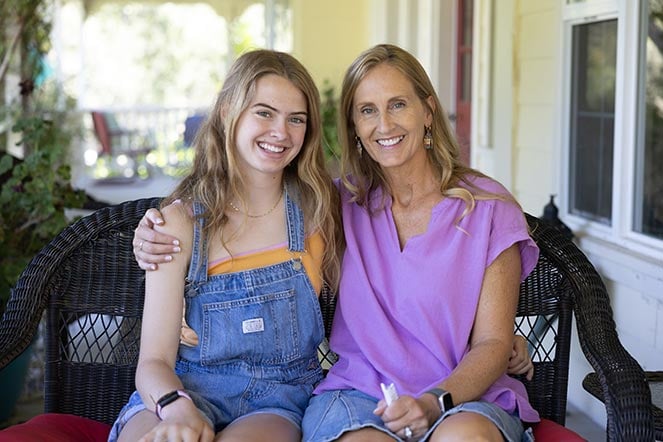
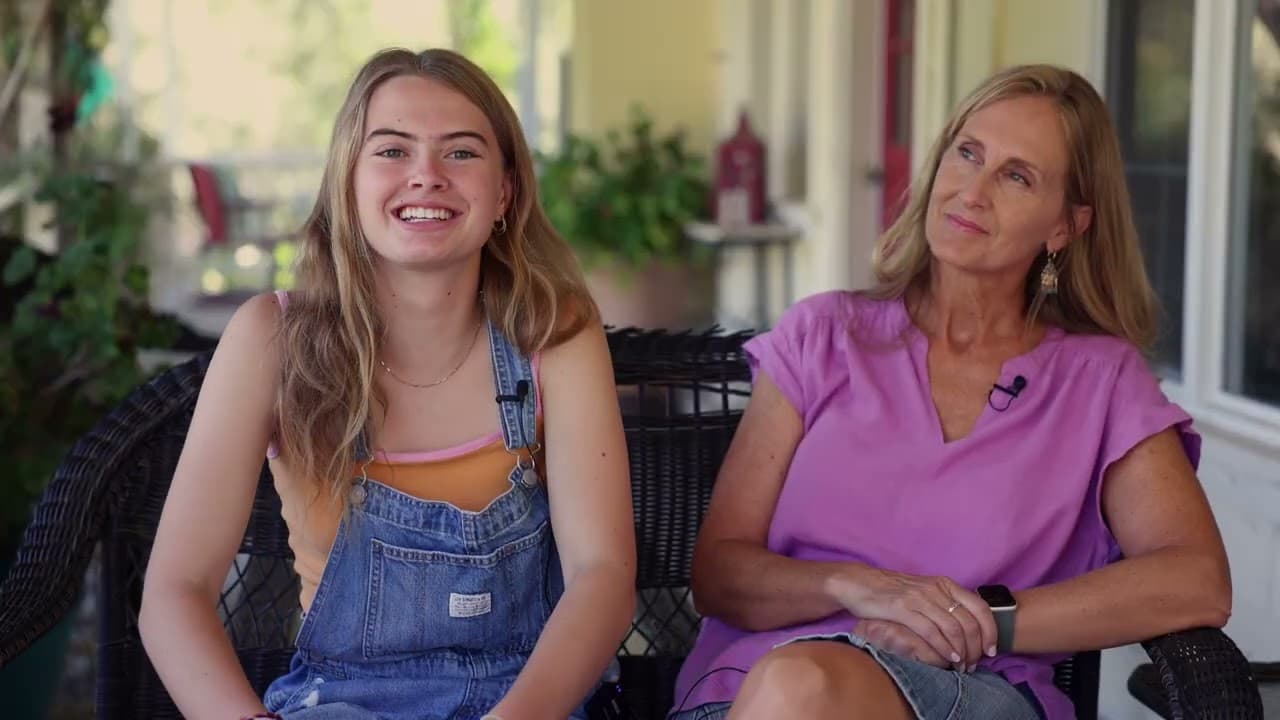
Claire sits with her mom, Audra.

Claire smiles at the pool.
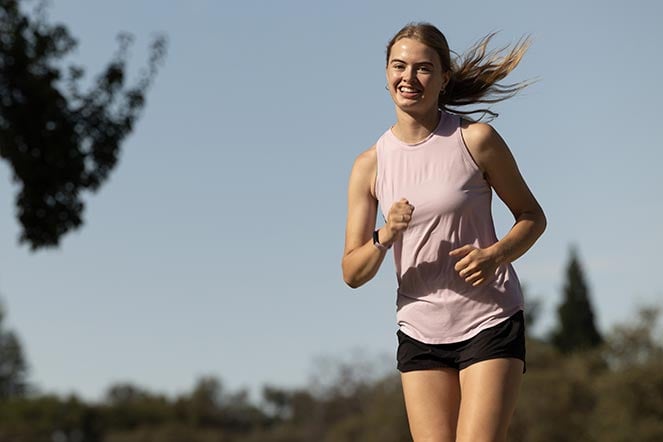
Running is one of the things that Claire loves to do.


When Claire started walking, her parents noticed something wasn’t quite right. After taking her to see her regular pediatrician, Claire was referred to Shriners Children’s Northern California. Her pediatrician suspected she had cerebral palsy (CP).
“When the doctor told us Claire had cerebral palsy, I was shocked and terrified,” said Claire’s mom, Audra. “Up until then, she was a normally functioning 5-year-old who just kept injuring herself. I wasn’t sure what cerebral palsy was and if it was chronic, degenerative or even deadly. Just like all parents, I wanted my child to have a happy, full life, and anything that threatened that goal was so upsetting. There were questions running through my mind such as ‘Will she be able to run and play?’, ‘Will she need to wear braces for the rest of her life?’, ‘Will this get worse?’, ‘Is this a condition that will affect her mentally?’, ‘Will she be able to lead a ‘normal’ life?’ It was such a scary time!”
The cerebral palsy program at Shriners Children’s Northern California is nationally and internationally renowned for its advancements in research and care. The surgeons leading the medical team are highly-esteemed by their peers, recognized as some of the world's foremost specialists in the field. These physicians have pioneered the use of technology to significantly advance research and treatment for CP.
Cerebral palsy is a general term applied to many conditions that can result from a disturbance to the developing brain. CP affects muscle tone, movement and coordination. This can make it difficult for a child to control the movement of their body. Common activities like speaking, standing or sitting can be challenging. Some children may have associated health conditions related to cognition, speech, vision, hearing, breathing issues, or difficulty eating and swallowing.
After physical medicine and rehabilitation physician Loren Davidson, M.D., assessed Claire’s walking, he concluded that she would benefit from serial casting and hard plastic braces to correct her gait. “Dr. Davidson was so good to her – and us,” said Audra.
When a joint is unable to extend or flex, one of the connected muscles may be too tight or too short. To assist in turning the joint in the correct direction, our orthopedic specialists may recommend serial casting. Because one of Claire’s feet turned inward, she greatly benefitted from this type of treatment, and has not had to have surgery on her foot because of it.
After casting, Claire moved on to wearing braces. Bracing is used to correct a condition, and in this case, provided support for Claire’s knee, ankle and foot. To get her casts and braces, Claire visited the Pediatric Orthotic and Prosthetic Services (POPS) department regularly. POPS designs, fits and manufactures orthotics and prosthetics for patients, and the team was able to design beautiful casts and braces for Claire. She recalls that she had ones that were pink with purple hearts, black for Halloween, tie-dye, and butterflies. You name it, they could do it. Having this personal touch to her care made something that was uncomfortable much more personal and fun.
“I love how patient-centered it is,” said Claire. “Everything is designed to be not scary at all.”
Thanks to the amazing work by Dr. Davidson, Dr. Davids and the POPs team, Claire’s gait was completely corrected, and she stopped having follow-ups at Shriners Children’s around age 10. However, this didn’t stop her from wanting to come back.
The best thing at Shriners Children’s is the attitude that everyone has – each kid has their own potential, and the staff do their best to help them reach their goals.
Claire is now a senior in high school. Thanks to Shriners Children’s Northern California, she is able to run the 200-meter in cross-country and swim the 50-meter freestyle and 100-meter butterfly for her school, things she would not have been able to do without receiving care.
“I would run and swim sideways,” she said. “One of my legs was stronger than the other and it made it difficult to go in a straight line. Now that everything is fixed, I can do all of the sports I want. A club sport in college would be really fun.”
As she nears the end of high school and looks to college, Claire is exploring her options. “I know I want to go into the medical field and work with patients,” she said.
Claire currently spends her time volunteering at the hospital, and is interested in shadowing doctors to see what each job is like – maybe even the doctors that helped treat her all those years ago. “The best thing at Shriners Children’s is the attitude that everyone has – each kid has their own potential, and the staff do their best to help them reach their goals,” she said.
Like many families, Claire’s mom was concerned about the costs that would be associated with her care.
“Although we have health insurance, medical appointment copays and any necessary scans, tests or procedures can add up quickly,” said Audra. “Knowing that anything not covered by our insurance was covered by Shriners Children’s was such a relief. We didn’t need to consider the cost of any of it when making decisions. It was a freeing feeling, and I am so thankful.”

Claire sits with her mom, Audra.
Claire smiles at the pool.
Running is one of the things that Claire loves to do.


